Gifts Unwrapped!
All around the world people give presents, at birthday parties, weddings, funerals or as offerings. What is the secret of a good gift? And what do you do if you don’t like a gift, or you feel it’s too little? Can you say so, or is that inappropriate? Dutch people even ask for the receipt, but would someone do that in Japan or Thailand, for example?
Cadeau, hoezo? (in English Gifts Unwrapped!) is a colorful, lavish and interactive exhibition about the art of giving. In the exhibition you can discover what a wedding dress, dolls and mangoes have in common.
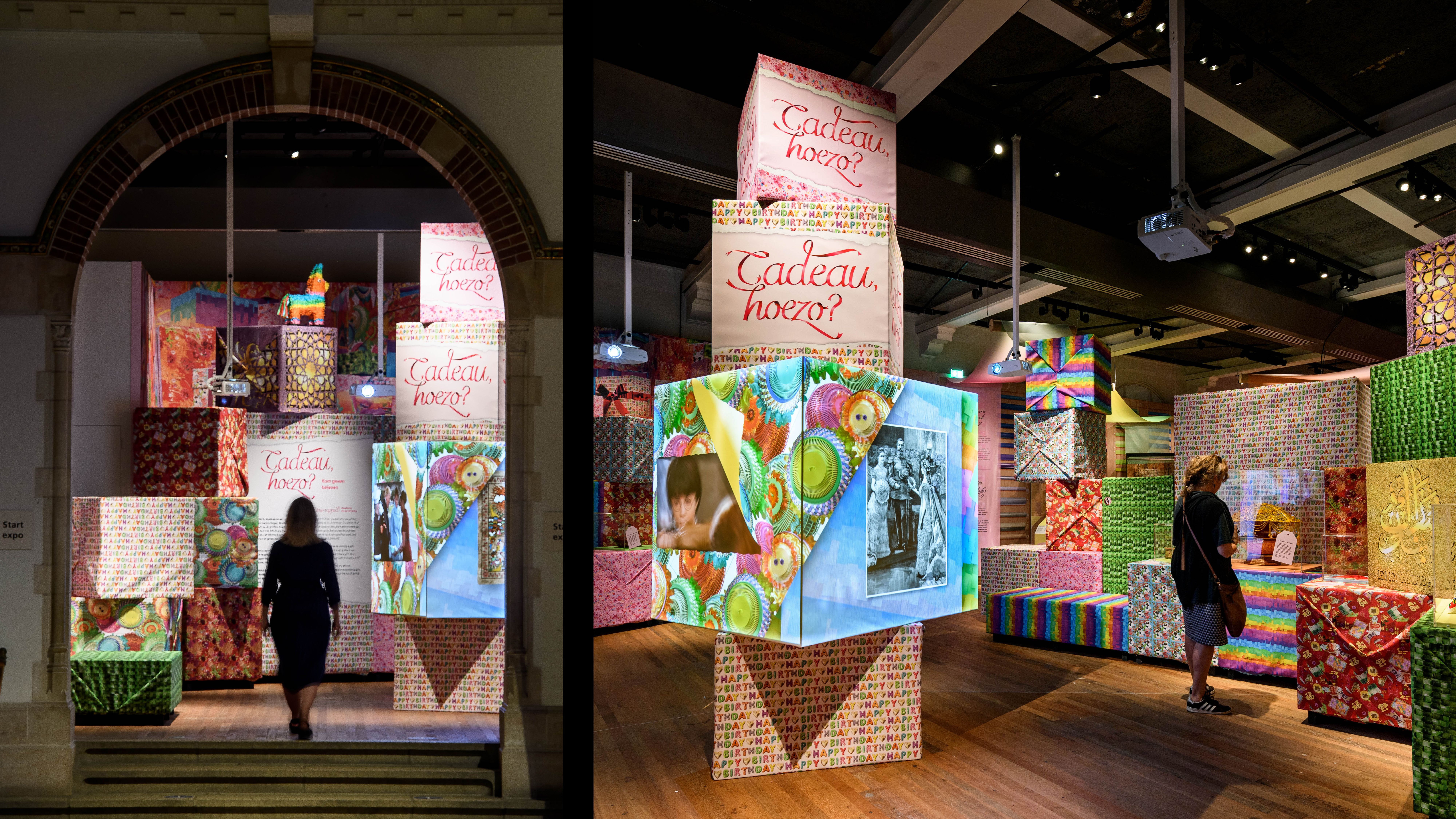
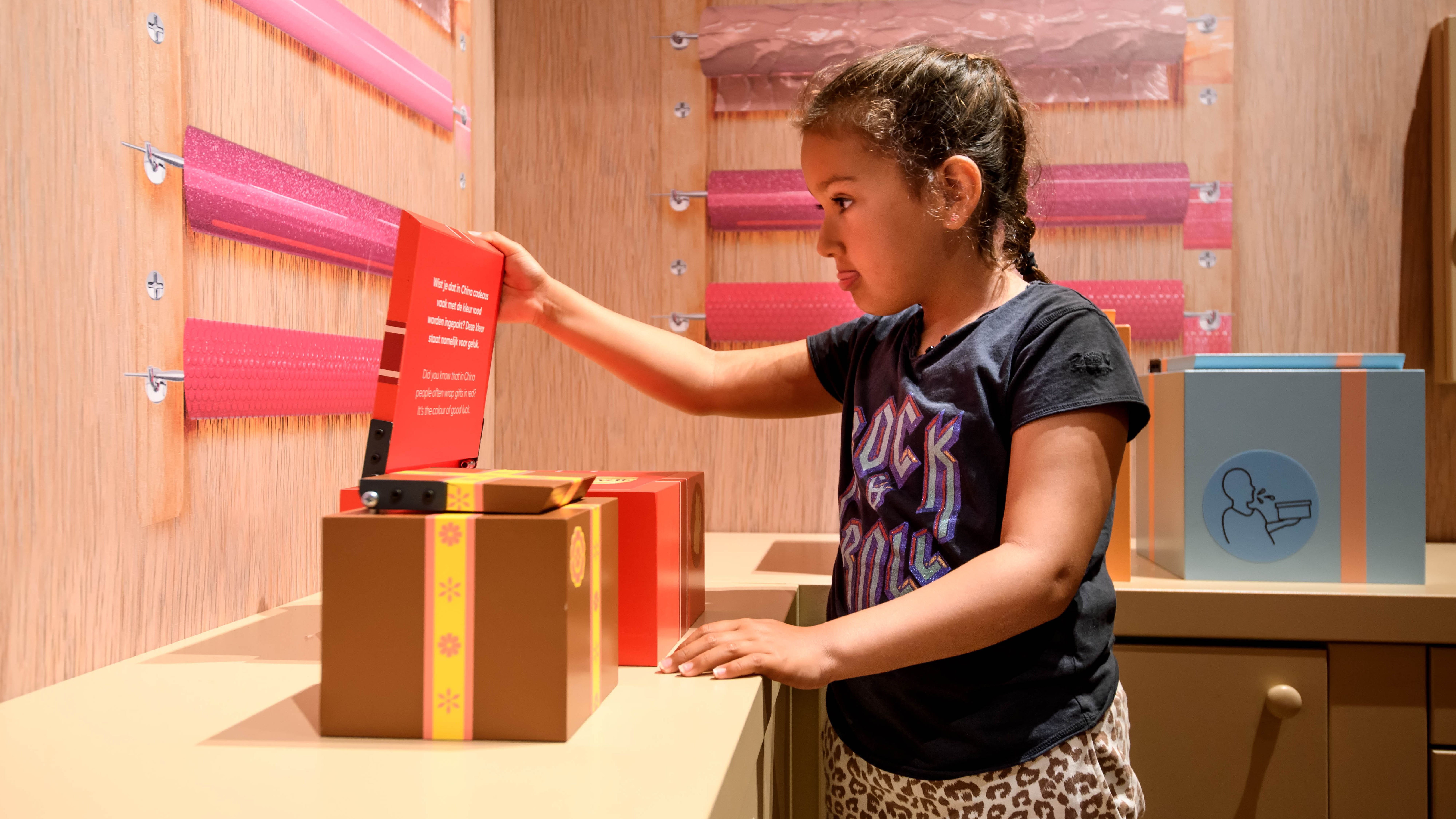
The exhibition is divided in different areas, which creates a clear visitor journey. It starts with the first thing you get when you receive a gift – the package. The most amazing packages from all over the world are respectfully displayed in a life size landscape build of gifts. You see a video - projected on a tower of gifts - with an edit of videos that you find in the world of familiar pop culture (movies and series). The gifts are wrapped in wrapping paper, that three-dimensional artist Carol Civre has designed. Unique pieces of design, inspired on wrapping methods all over the world, it gives a truly international welcome. Amongst the different designs, there is for example a Christmas gift wrapping with a Santa with brown skin, a wrapping paper with a pinata structure and an Arabic glitter box print, inspired by the Eid Mubarak.
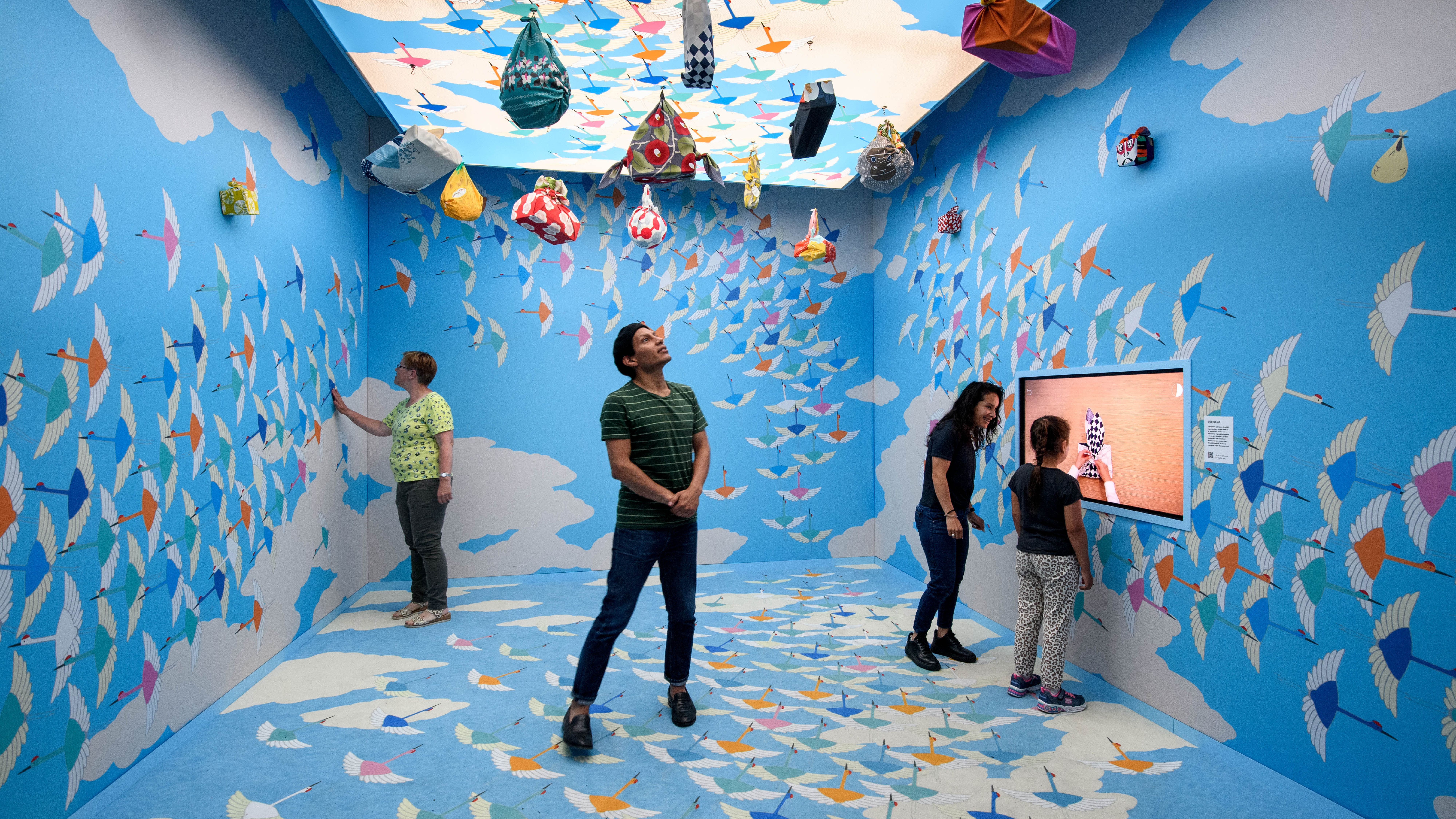
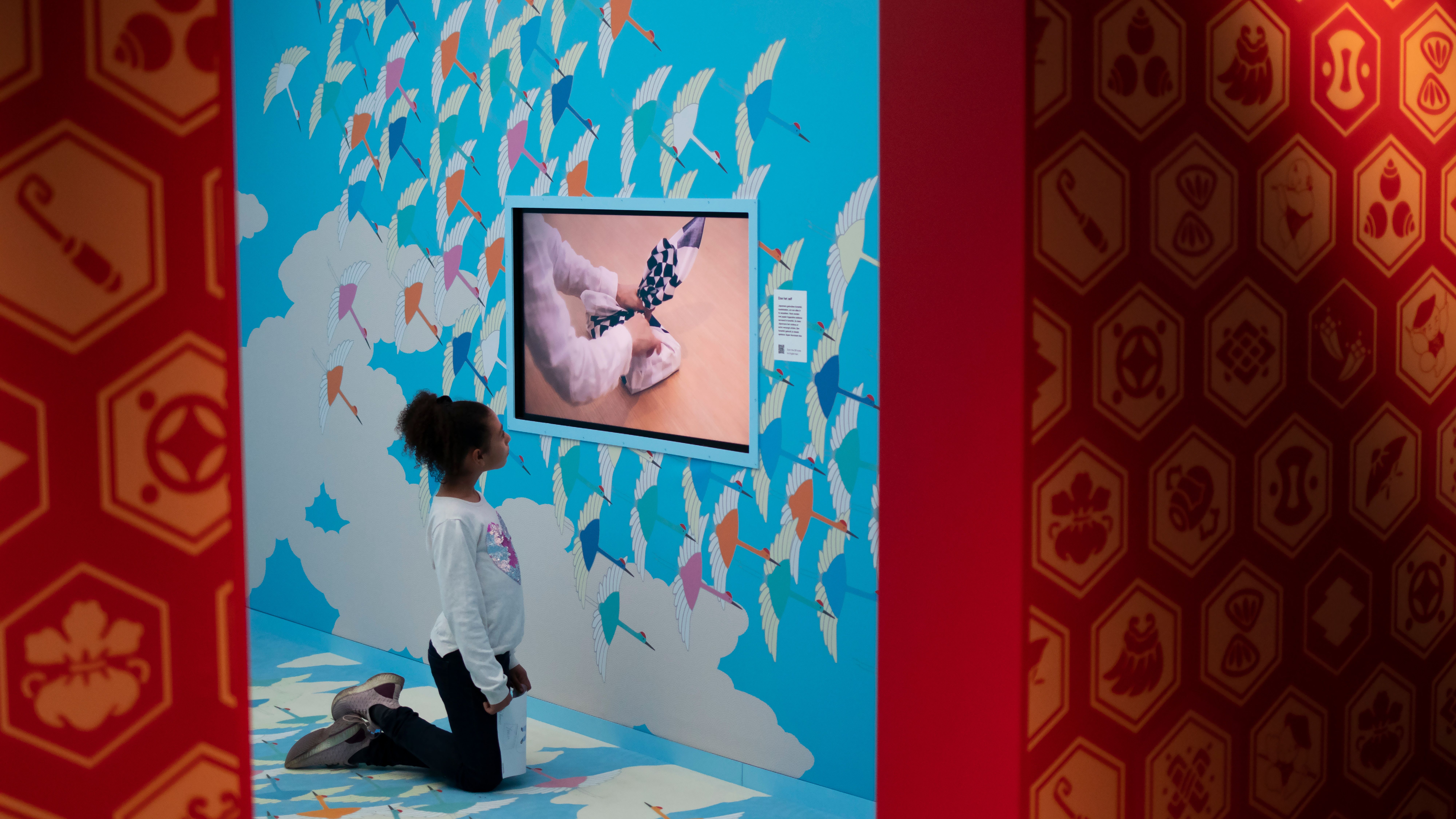
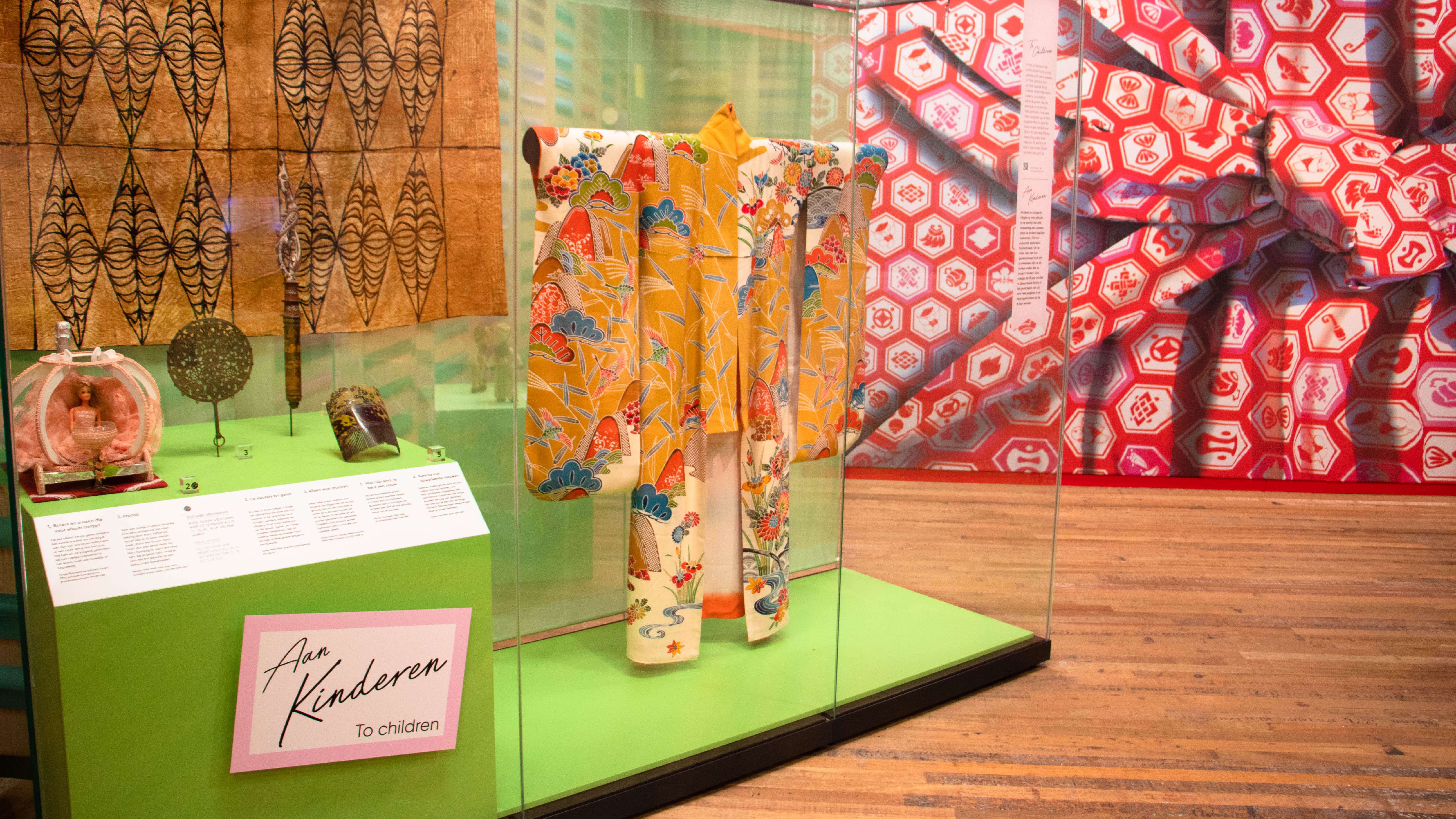
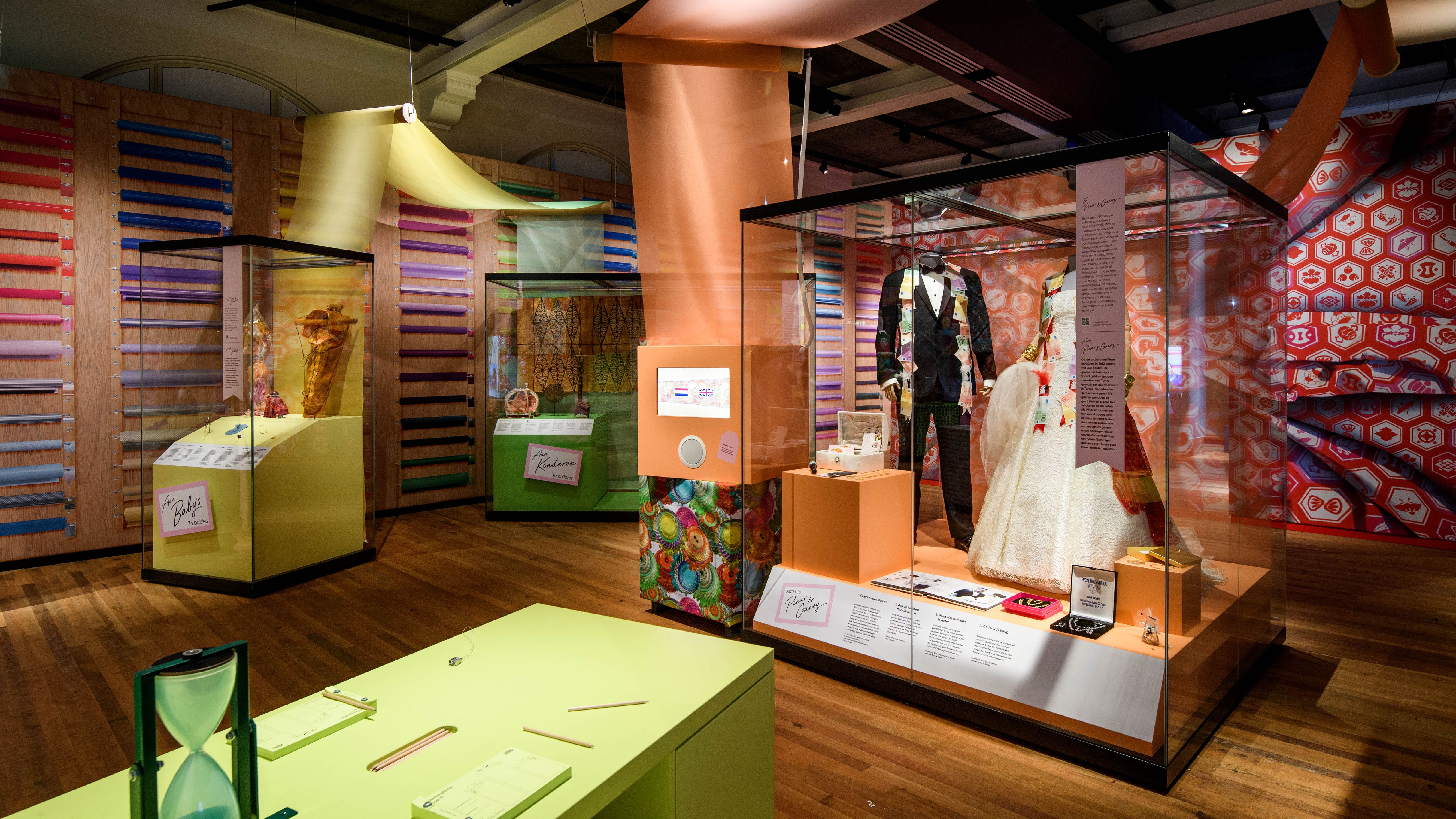
The second space is getting more personal. The persons and the occasions for whom the gift is for, form the central subjects of this space. When someone is in love, is getting married, when there is a baby born and when it is someone’s birthday. In these life events, the visitors of the exhibition learn what kind of gifts are given in all different kind of cultures. In this same area you will be surprised by a huge present, that stands in the middle of the space. It looks like it is packed with a furoshiki – a Japanese wrapping cloth. You can step in the gift and become a gift yourself. The furoshiki is especially designed for the exhibition and also available in a smaller size in the museum shop. With the designers from Japan for this Furoshiki installation and with Carol Civre from New York and the other designers from the Netherlands, we definitely had a divers and international team – that perfectly fitted the project.
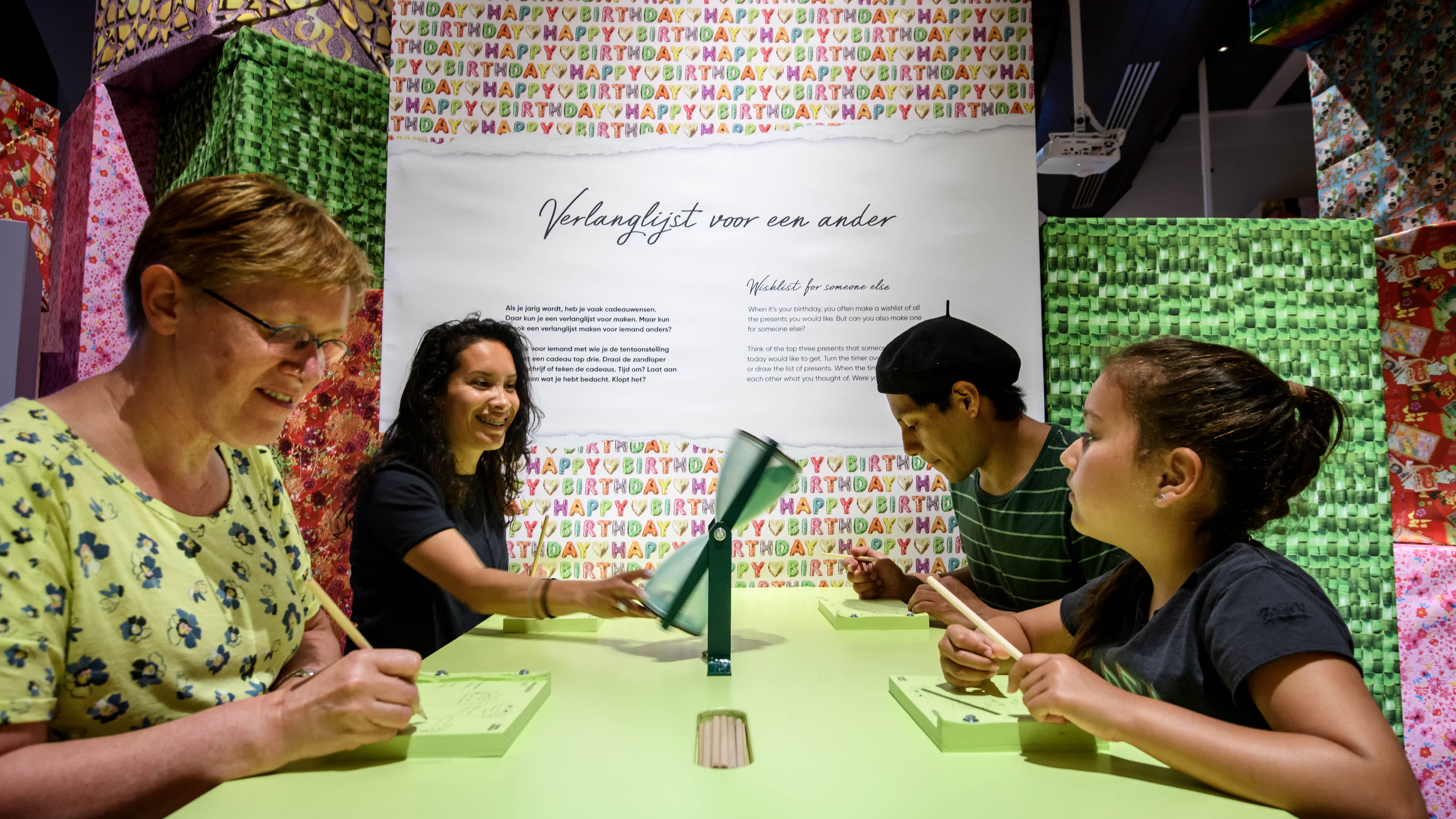
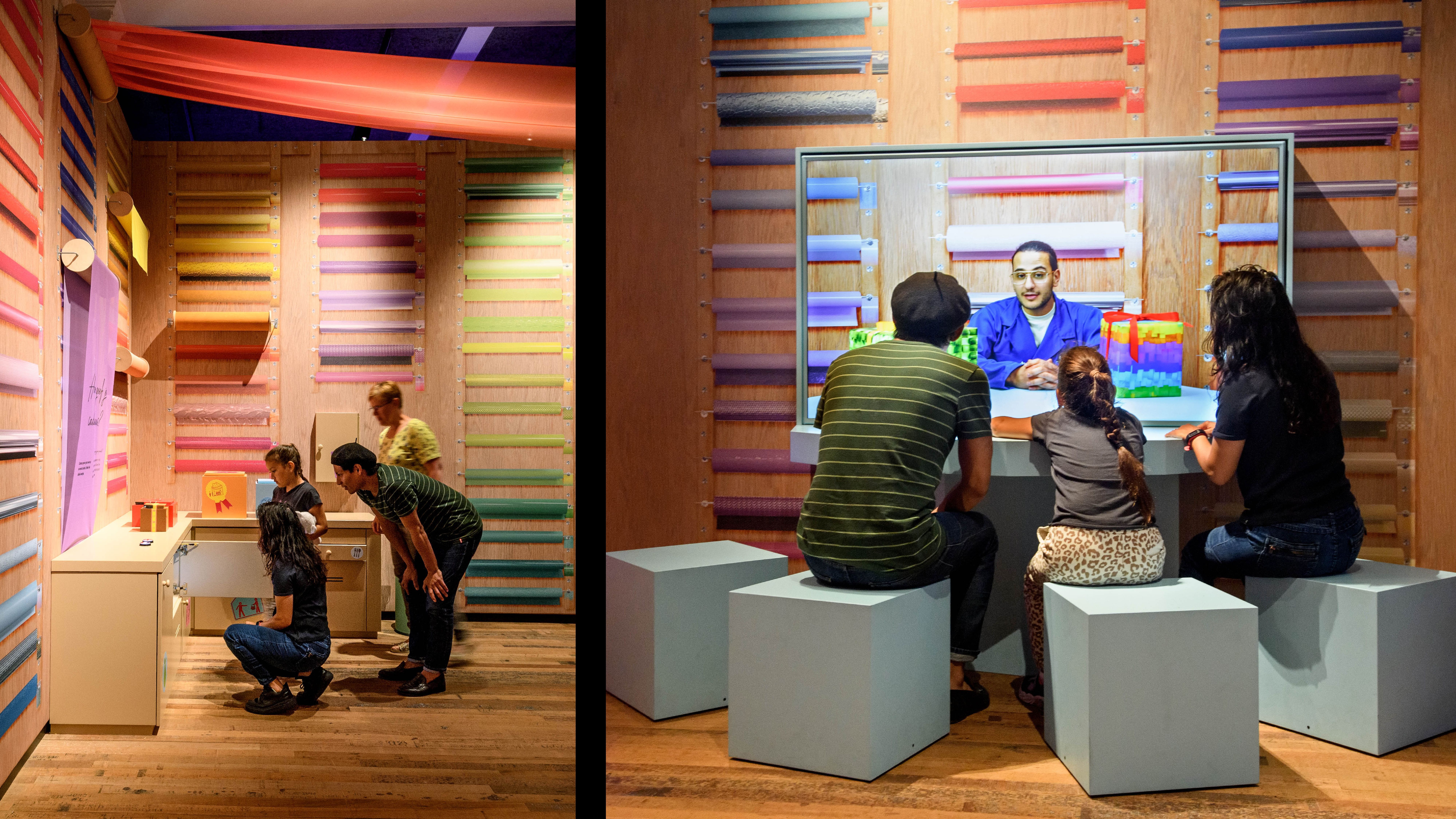
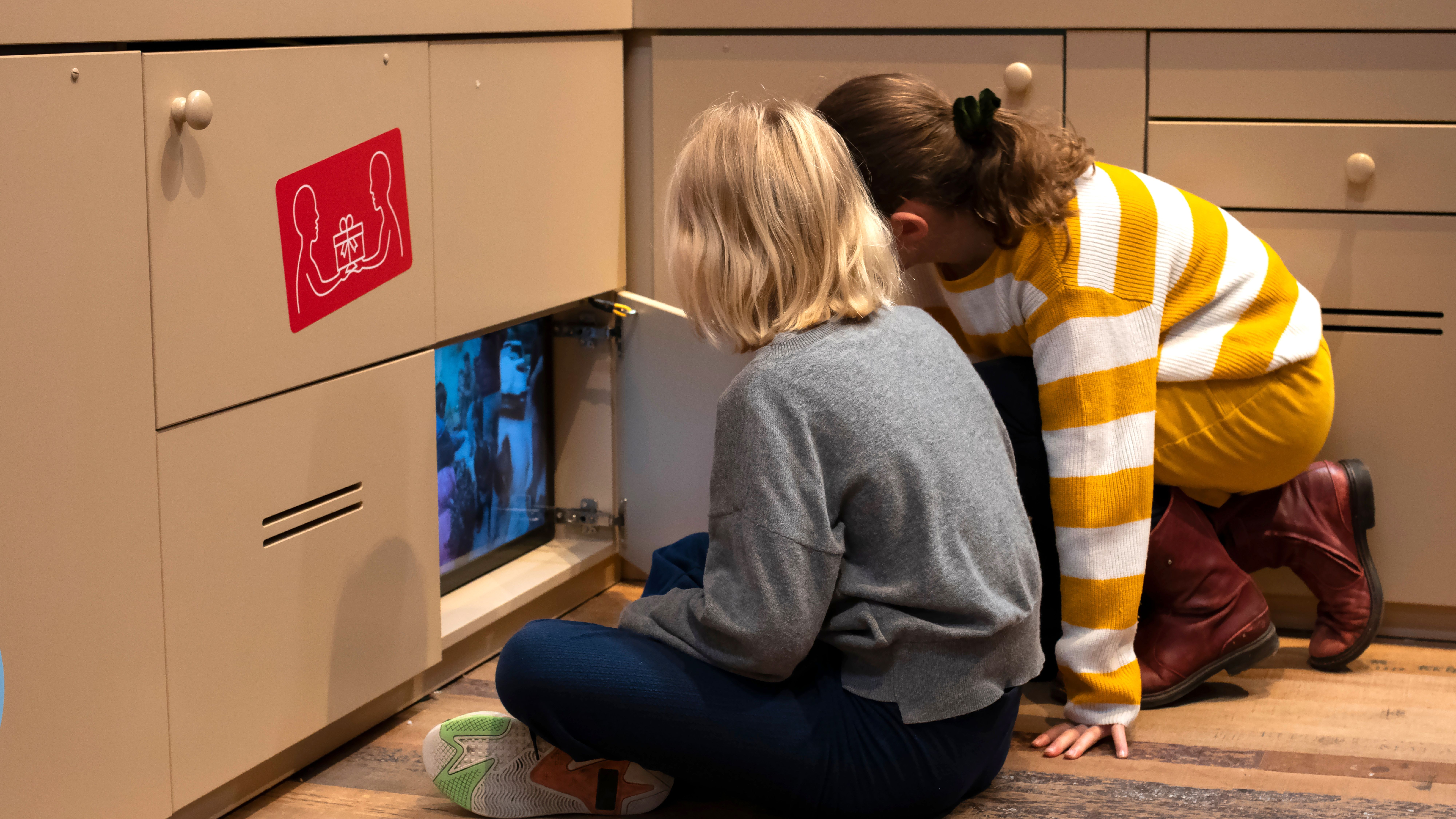
Next to the furoshiki gift - there are three other amazing interactives in this area. You can write a Wish List for someone else, you can do a virtual interactive present quiz with a ‘gift scientist’ on a life size screen and there is ‘packaging station’, where you can discover al kind of interesting facts in the form of video’s, sounds, text and images. The typography has a handmade touch and is set on roles of gift wrapping paper coming from the ceiling. And the smaller details such as titles are set on typical ‘to:/from:’ stickers.
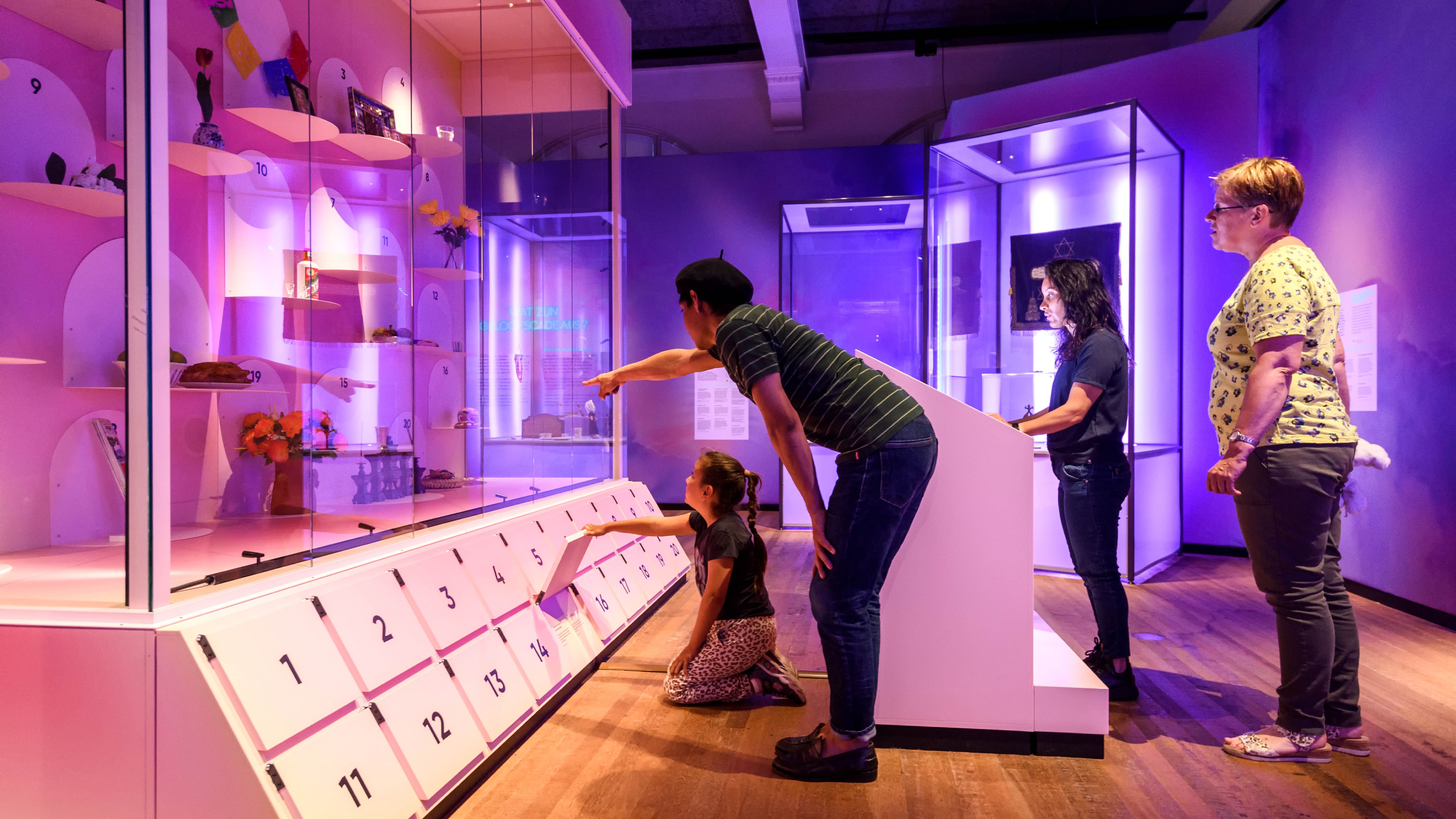
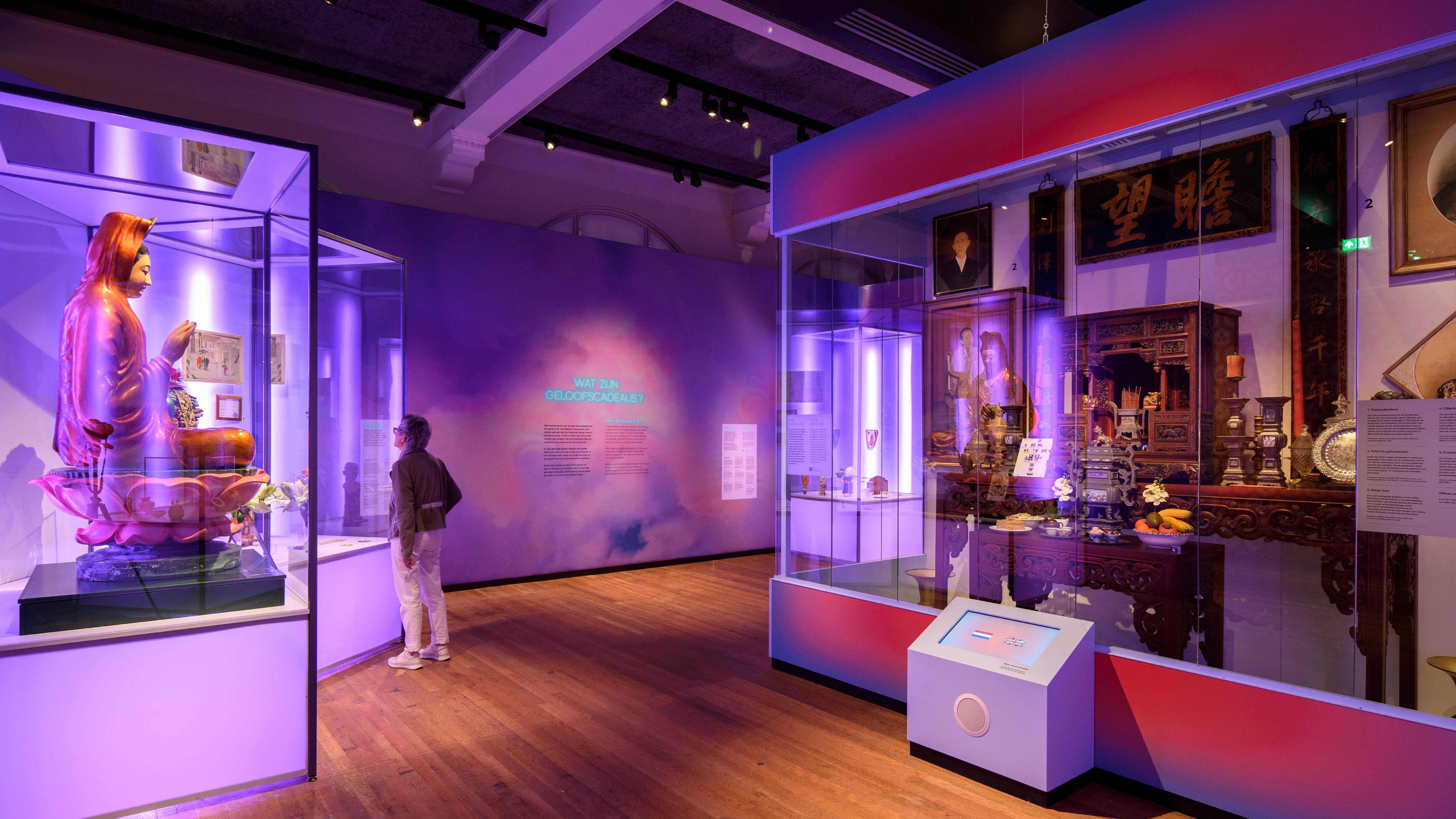
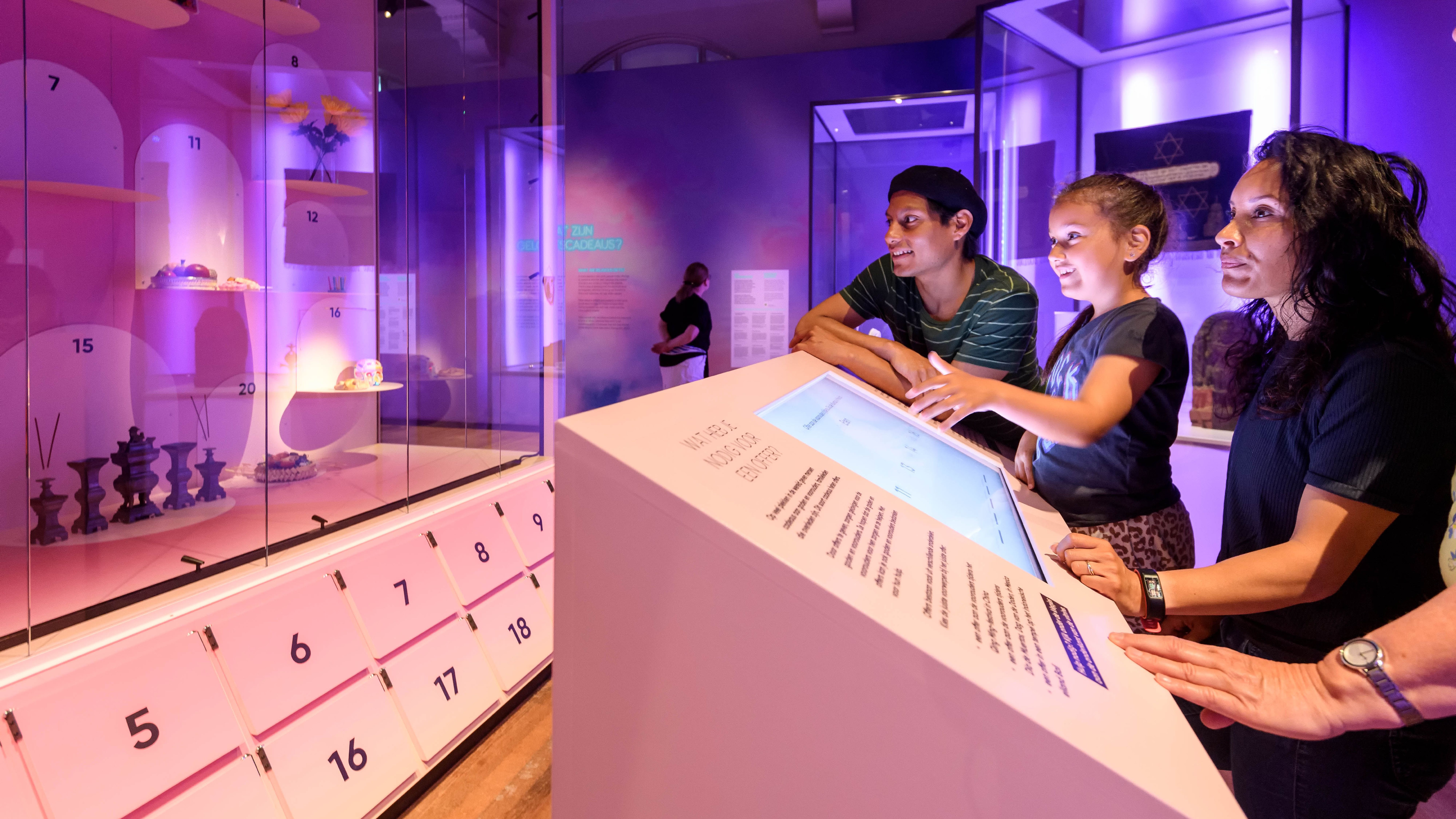
In the next area , you will find yourself in the spiritual space. What kind of offerings do people give to their ancestors and their gods? Here you can play the ‘What do need to give an offering?’, where you have to collect a few elements to complete an offering, for example on the occasion of the Dia de Muertos. The game works with the combination of the digital and analog world. People can see the elements and have to choose the numbers on the screen, and learn about the offering. The area is designed with a spiritual atmosphere with soft purple and pink clouds and a vibrant glowing typography. Welcome to a higher sphere.
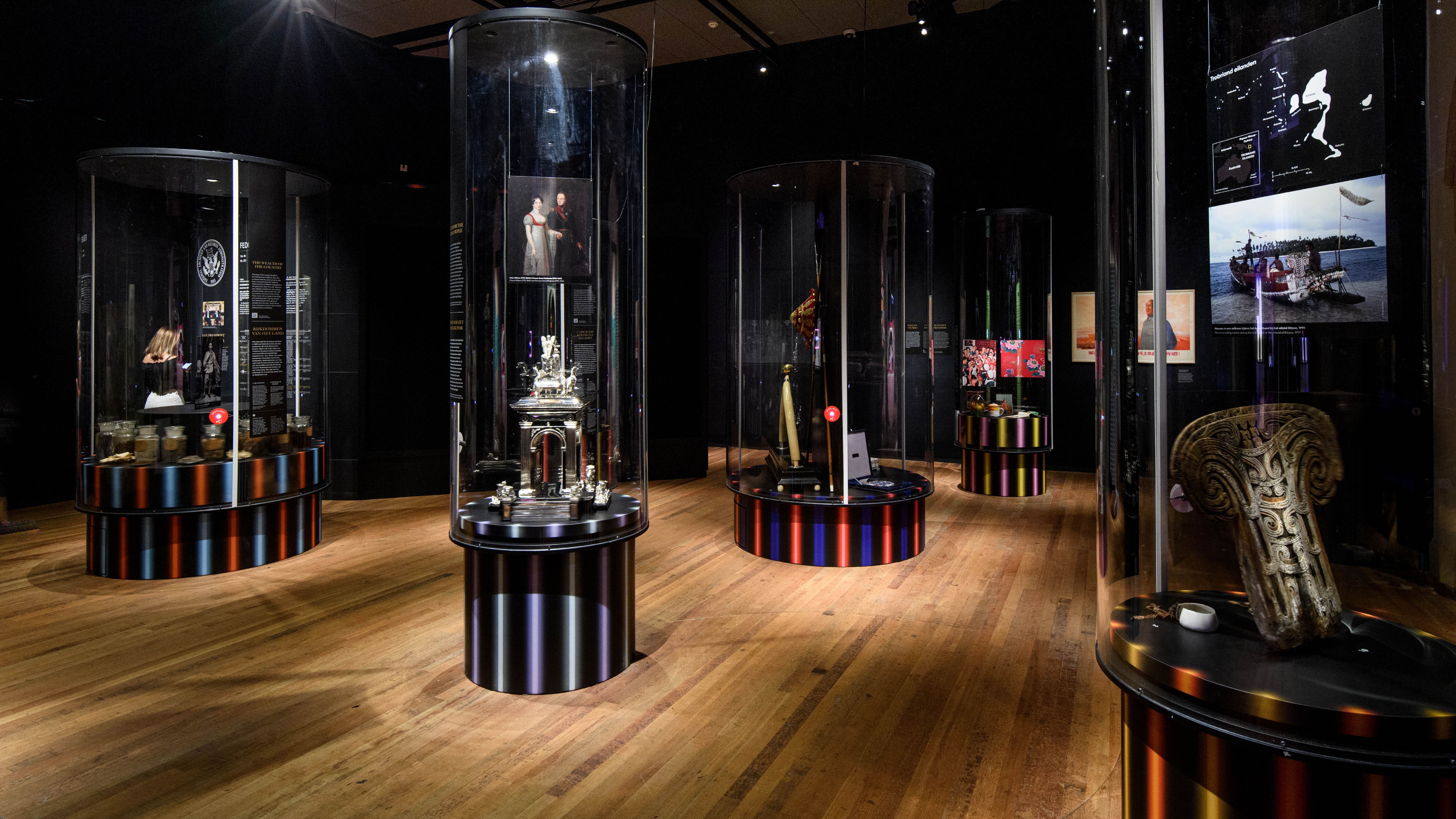
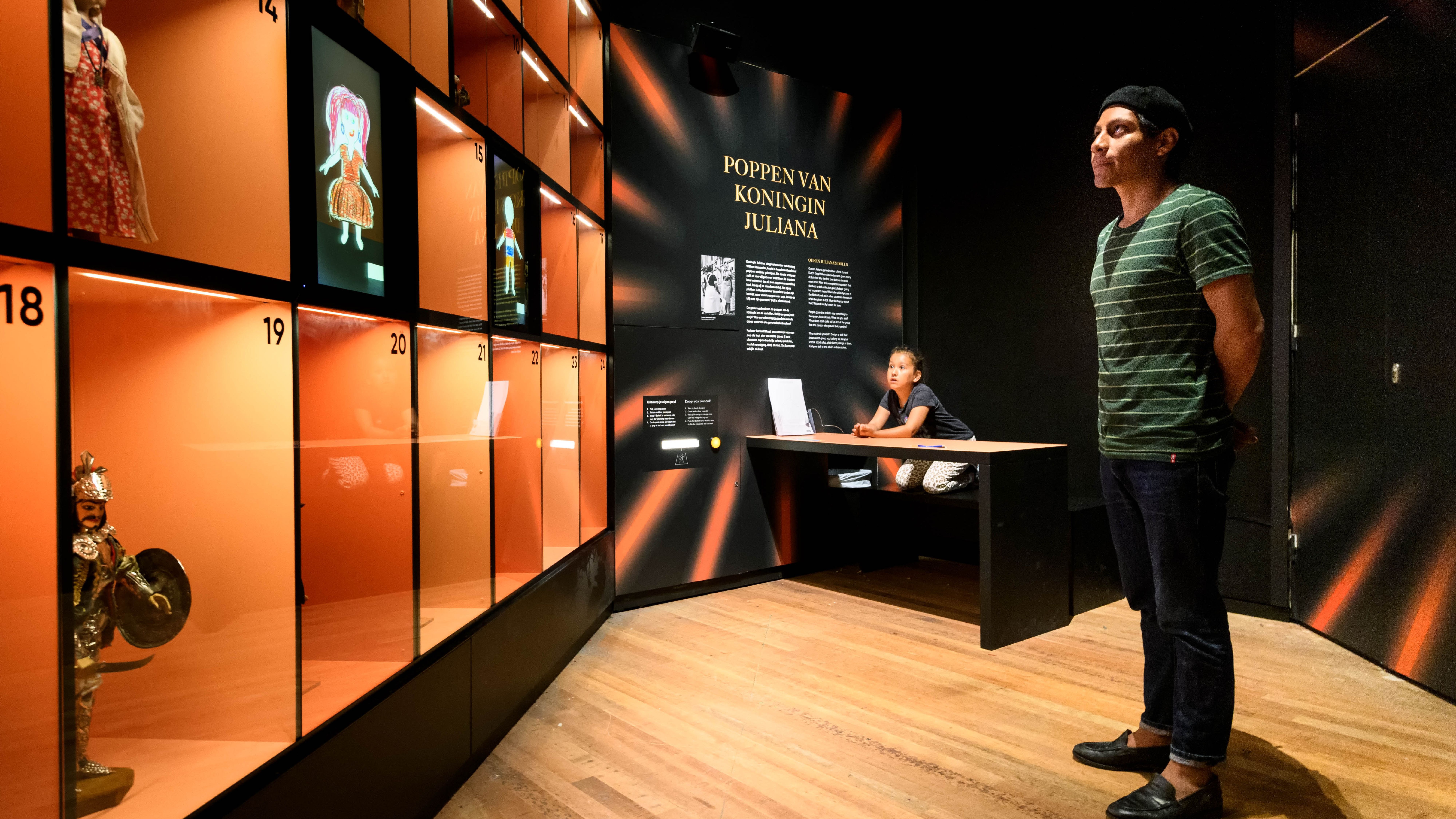
When you leave the spiritual realm, you will enter the diplomatic area. Designed as an impressive showroom, here you will find gifts that have a diplomatic or political background or story. For example, our former Dutch queen Juliana, had a collection of special dolls that she were given to her as presents and are now exposed in the exhibition. In this area you can find a special interactive installation, developed by Rnul. You can draw your own doll and have it scanned. It then magically appears in the huge puppet closet! How cool is that? The typography has a strong three-dimensional and golden design, and the showcases have a ‘showroom’ print. In the final space of the exhibition you will find three installations that all tell a final story about the art of giving.
The exhibition is made for families. Until now, the Tropenmuseum has had a lot of good responses from the visitors. The information is accessible, there is enough to read and there is enough to do – for children and their family members. The design of the different areas really contributes to the different types of content you will find within your visitor journey. You start quite close to yourself and your surroundings, and through the exhibition, it gets less personal. It is a route that helps the visitor understand the different stories about the art of giving, all over the world. On a personal and even on a political level.
Credits