UNICEF Changing Childhood Project
https://changingchildhood.unicef.org/
Project background
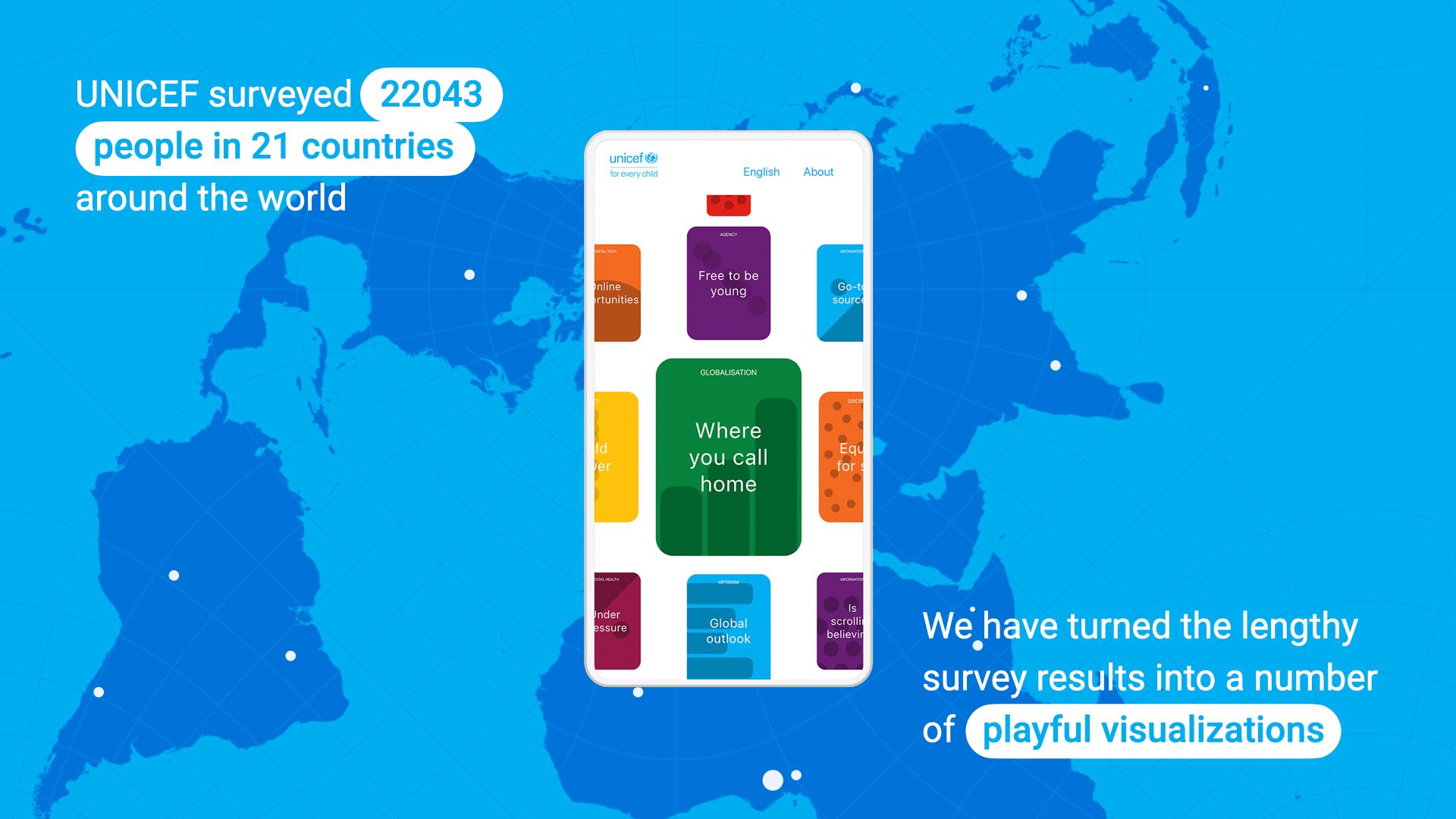
In today’s rapidly changing world, the way children experience their surroundings is also changing fast. As the world is increasingly becoming more digital, globalised, and diverse, childhood is transforming with it. To better understand shifts in today’s childhood, UNICEF and Gallup Inc. conducted a global survey that gives insights into how young people view our fast-changing world differently than their older counterparts. UNICEF surveyed 22.043 people in 21 countries around the world and asked us to turn lengthy survey results into meaningful and compelling stories.
Challenge: bringing survey data to life
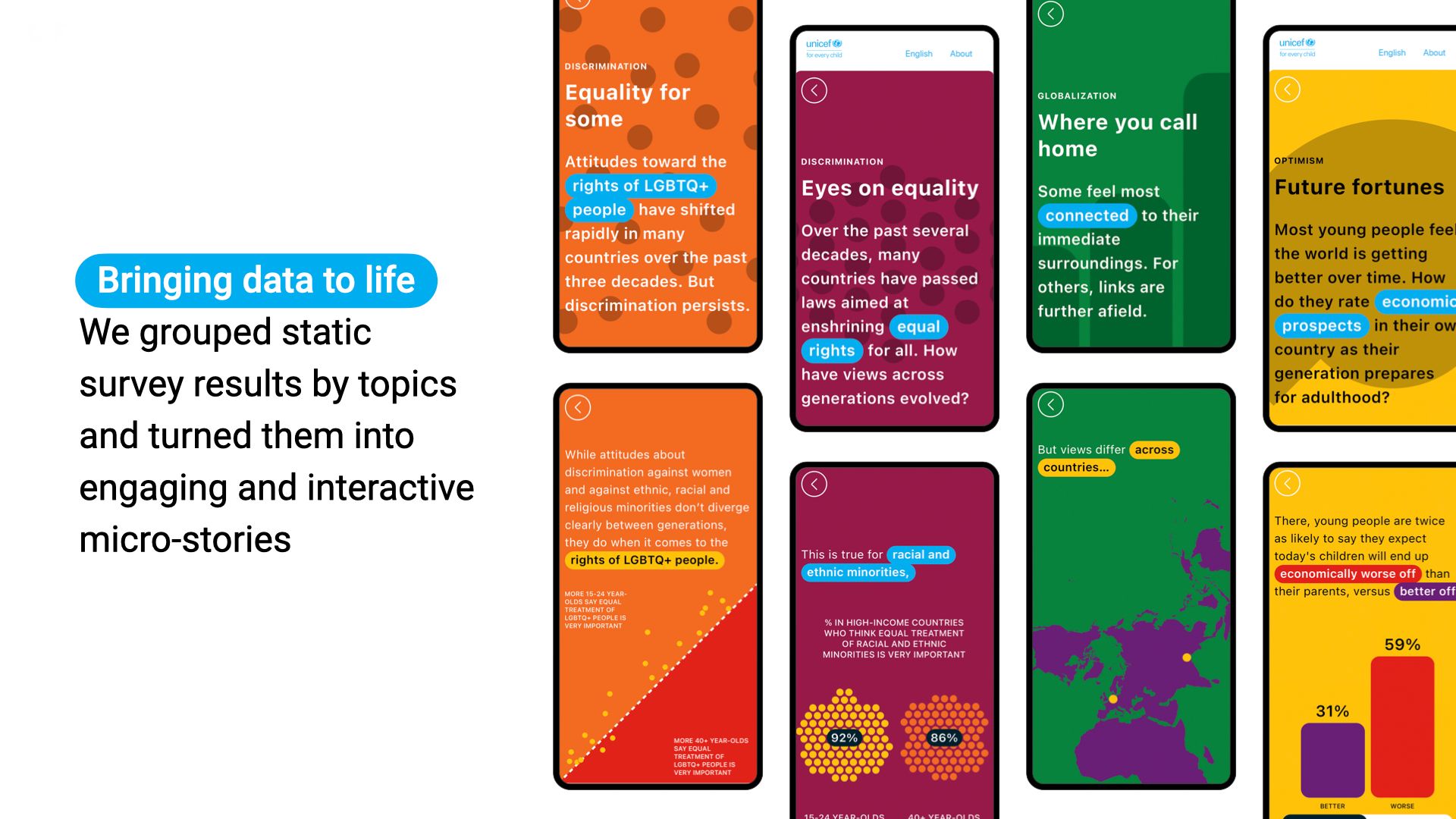
Being given large amounts of raw survey data, one of the main challenges was finding ways to turn it into meaningful narratives. Often, survey data is not well structured for visualisation and acquiring certain insights from it is a complex task. To tackle this, we used innovative thinking to transform static and lengthy non-visual data into uplifting visual narratives. As a first step, we grouped survey results by main topics to be able to create coherent stories. To further empower our creativity, we developed several interactive prototypes to test our envisioned playfulness of the microsite.
Solution
The overarching goal we wanted to achieve was to provide young people’s perspectives on today’s world and draw attention to challenges they face. We created a microsite, which explores each survey theme and presents results as short micro-stories. We designed and developed an immersive, engaging and intuitive experience, guiding the user through the key findings from the survey. Each story captivates the user’s attention and creates a moment of learning and empathy.
Creativity
The website targets young people, therefore it is playful and colourful. We set the design principles by looking into today’s internet usage trends. For many teenagers, the use of the internet often consists of browsing and scrolling through fun, engaging, easy-to-digest content. Our platform aims to mirror these trends as it narrates survey results in a light, appealing and inspiring way. We draw users in and keep them engaged with a playful design, quiz questions and interactive data visualisations.
Accessibility
As the project primarily targets young people, our aim is to ensure that the microsite is accessible to every child regardless of which part of the world they live in by taking three major steps:
- Mobile-first approach
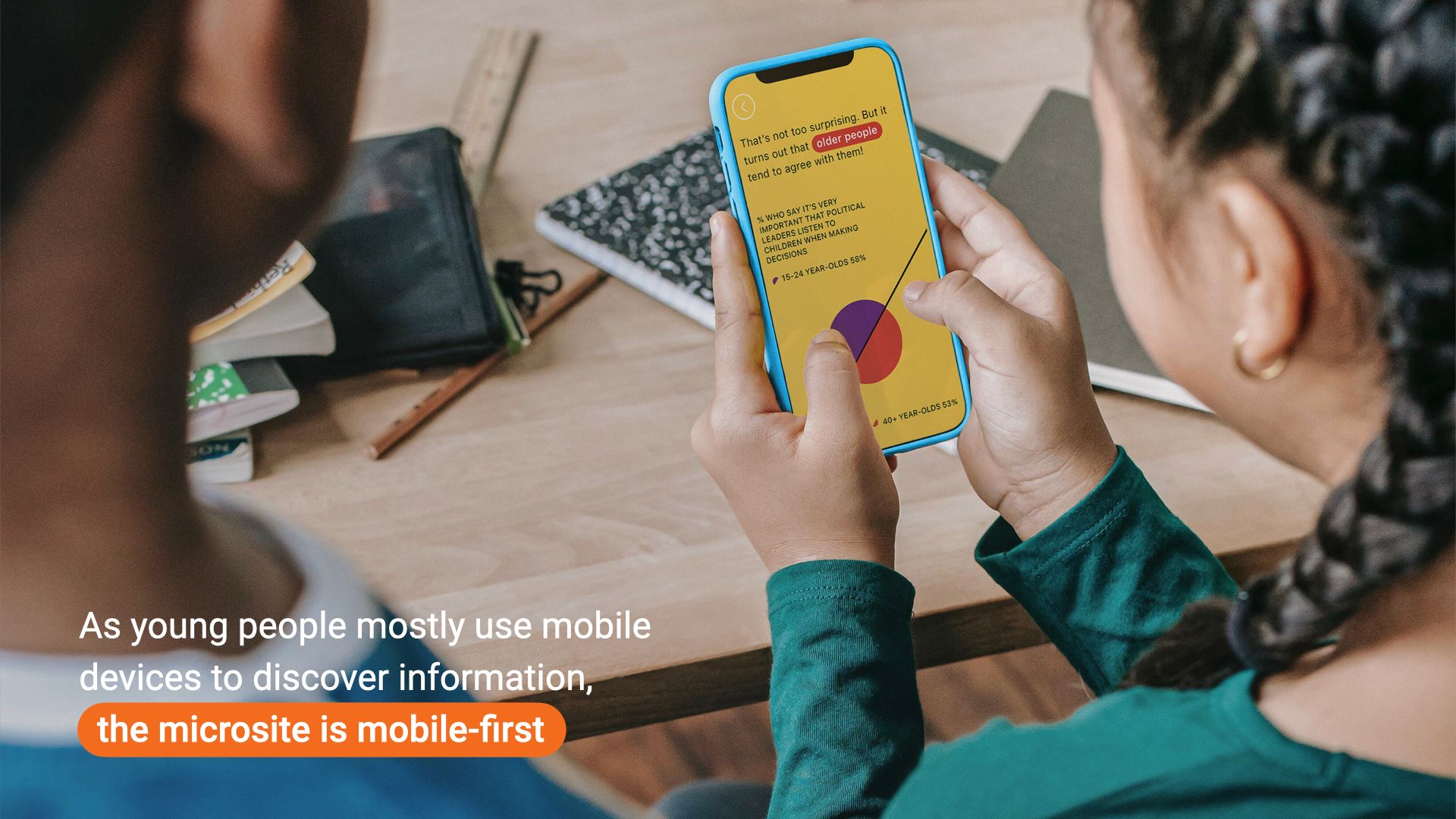
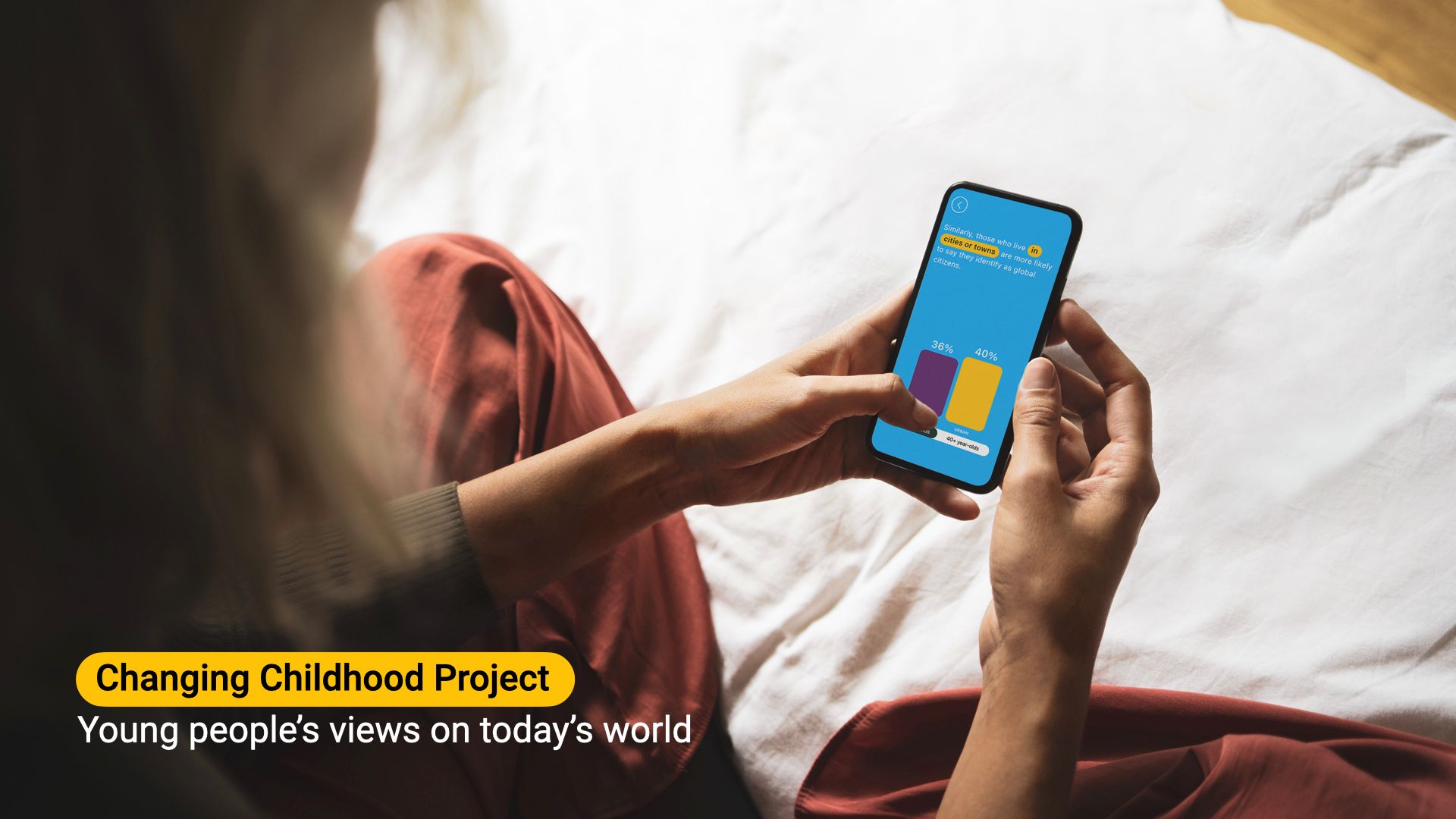
The majority of the young use phones to discover information. For this reason, we decided to take a mobile-first approach, which enables the younger generation to easily access and engage with the microsite.
- Multilingual platform
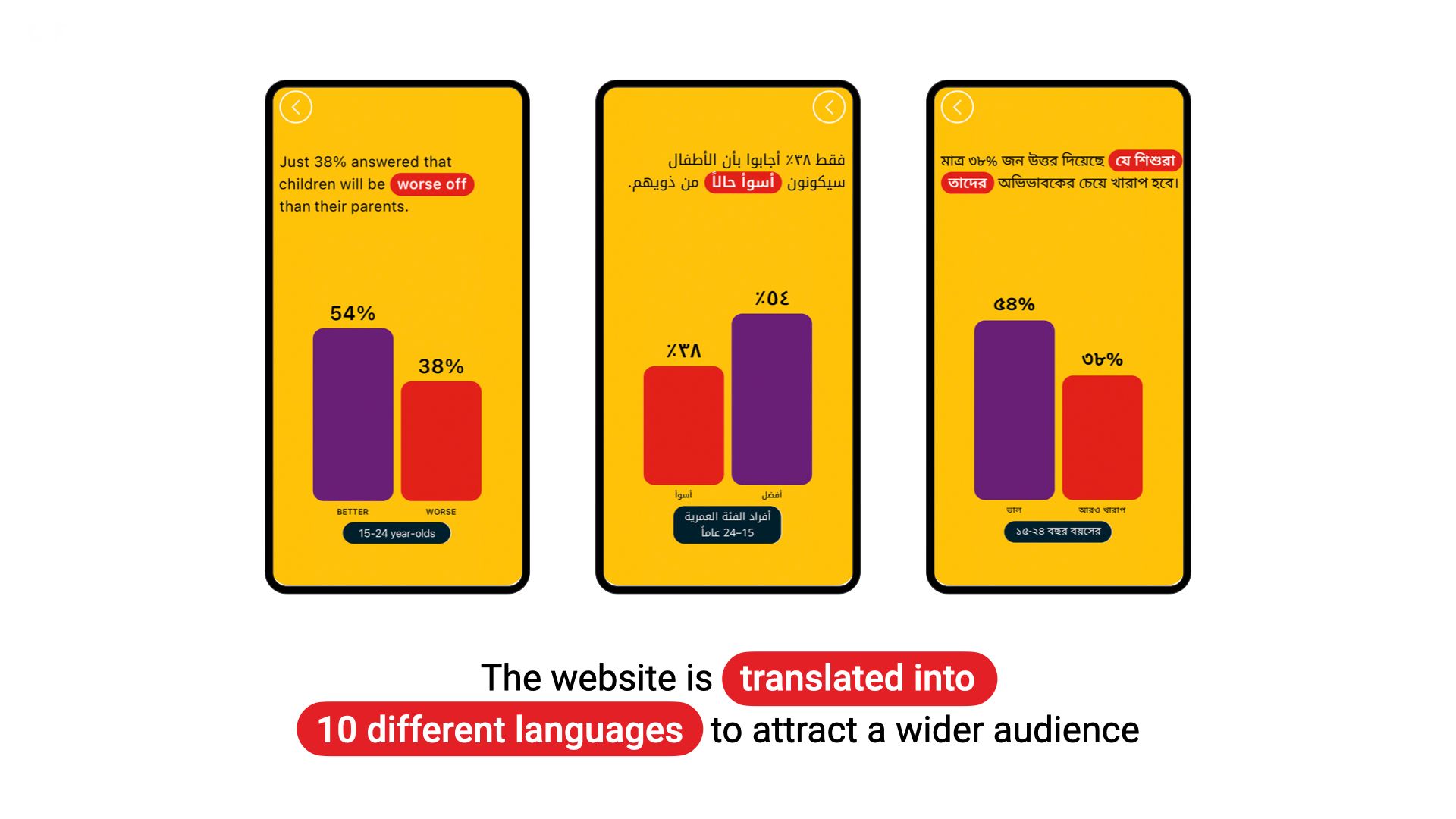
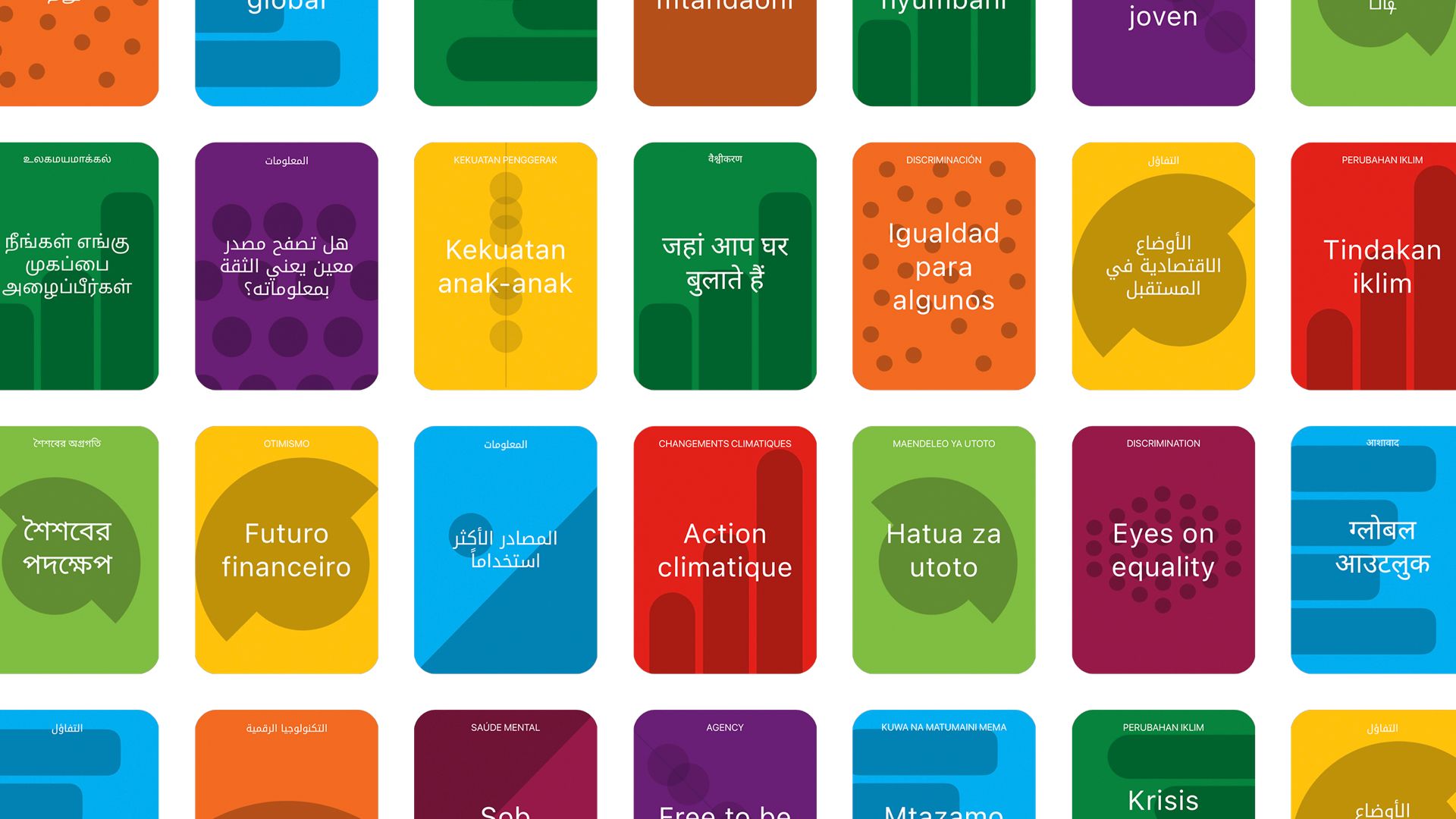
The platform supports 10 different languages to make it more accessible around the globe.
- Optimisation
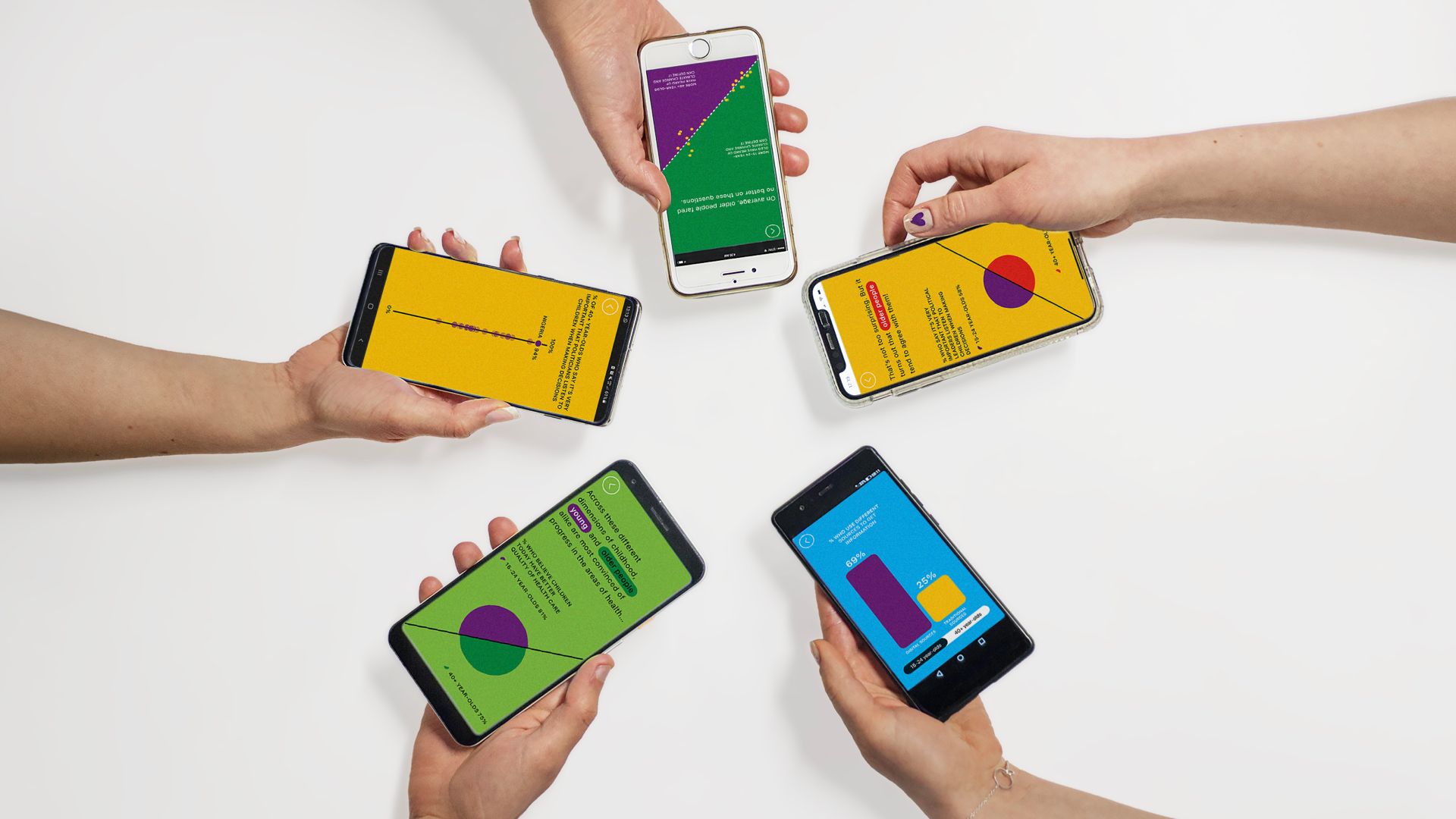
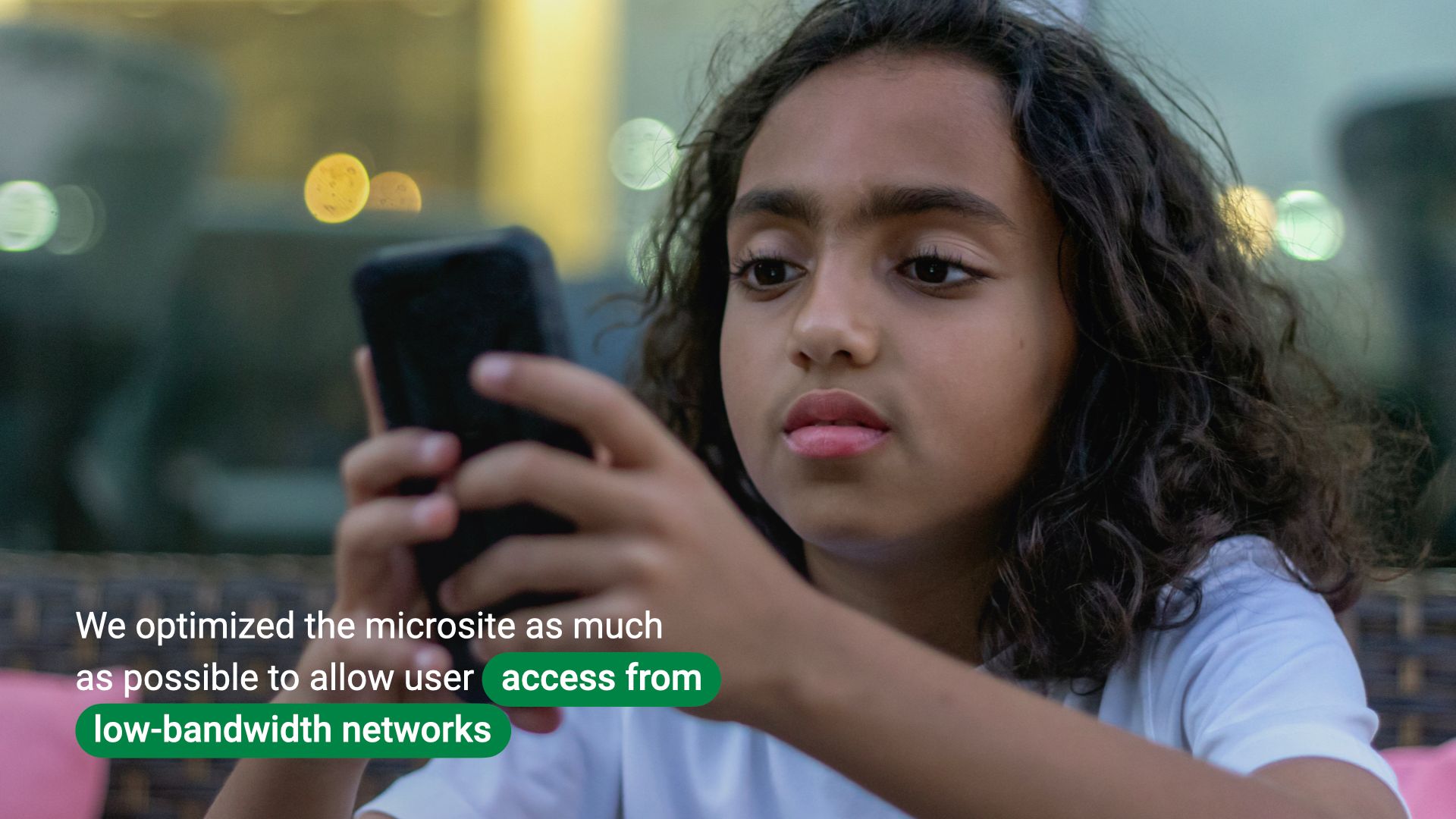
Through extensive checks, we optimised the microsite as much as possible to make it run on a wide scale of devices. As a result, the platform can be accessed even from slower and older phones.
Relevance
We turned static survey data into an interactive mobile-first microsite, which allows a broader public to learn about the challenges today’s young people experience, fuels public discourse and ultimately strengthens UNICEF’s thought leadership in improving life for all children.
Credits