Sponsland, Manifesto
Intro
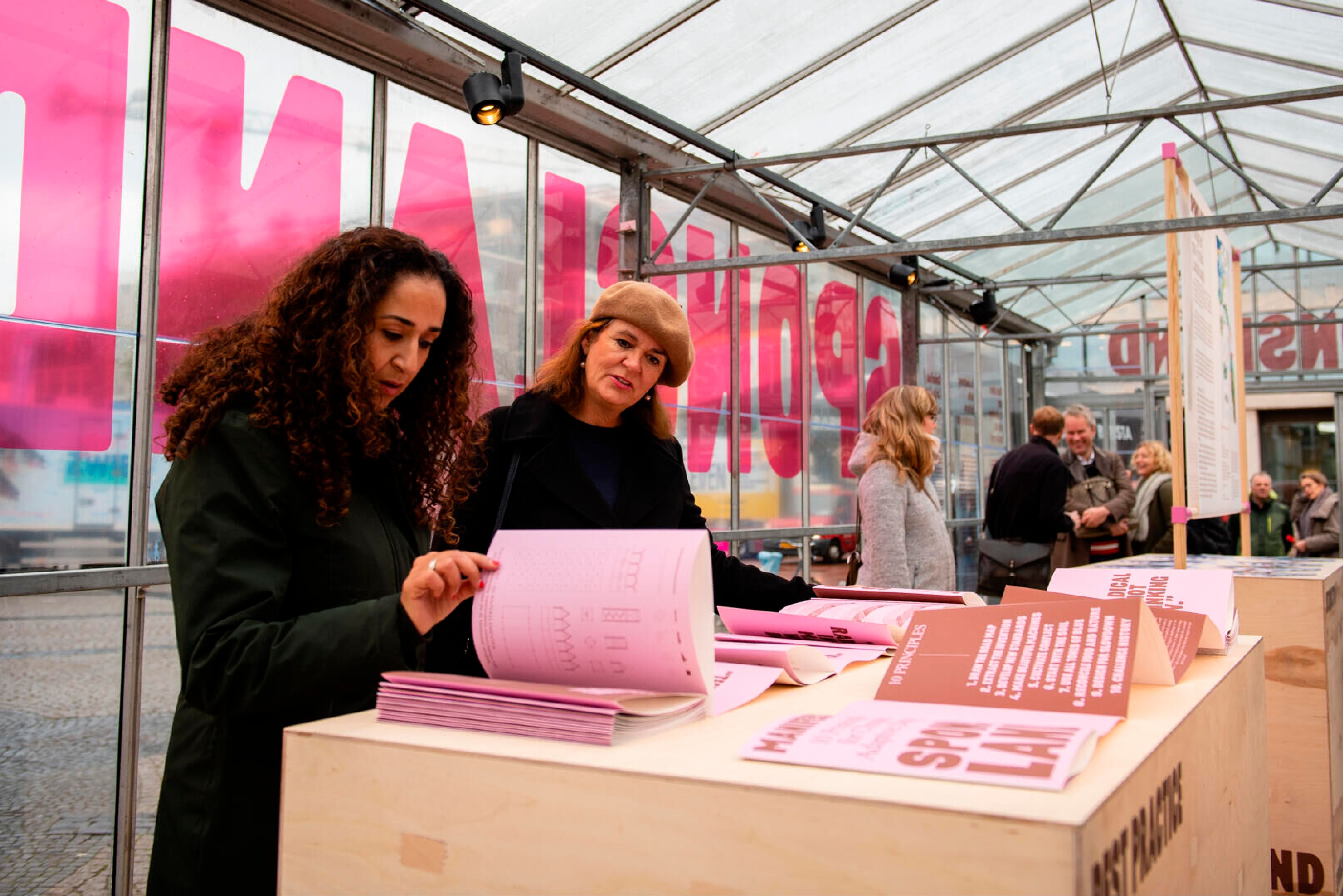
Practically nowhere in the Netherlands does the climate challenge come together in such a concentrated way as in Groningen. Within about fifty kilometers you find almost the entire Dutch relief and soil palette: from the high sandy soils of the Hondsrug and the peat soils of the Hunze Valley to the low sea clay areas along the Reitdiep and the high young sea clay of the Hogeland. This makes Groningen an ideal testing ground for climate adaptation and system change. ‘Sponsland’ is a manifestation (Groningen, January 2021), a traveling exhibition (September-December 2021), a website and a 188-page book that zooms in on a section of the Groningen landscape. In Sponsland, four Dutch and four international design agencies sketch a future picture of Groningen in 2120. These agencies have provided their plans with concrete steps, the first of which can already be taken tomorrow. It's a perspective that not only solves the technical climate problems but also enhances the beauty of the city and its surroundings. The virtual exhibition could be visited through the website. The physical exhibition at the Grote Markt in Groningen and several other places in the North part of Holland, from September until the end of December 2021. The traveling exhibition is still on view. Sponsland is part of the Act & Adapt Design Manifestation Climate Adaptation Groningen, initiated by the municipality of Groningen, the province of Groningen and Platform GRAS.
Brief + concept
In Sponsland, you ‘walk’ through future possibilities on how to adapt to the changing climate designed by (inter)national landscape architects. We came up with the concept ‘A Journey into future landscapes’ and translated that into a website with virtual exhibition, a manifesto, a book and physical exhibition in which you could discover the possibilities of climate adaptation and system change, face unexpected encounters, gain new insights on our (future) landscape.
Design
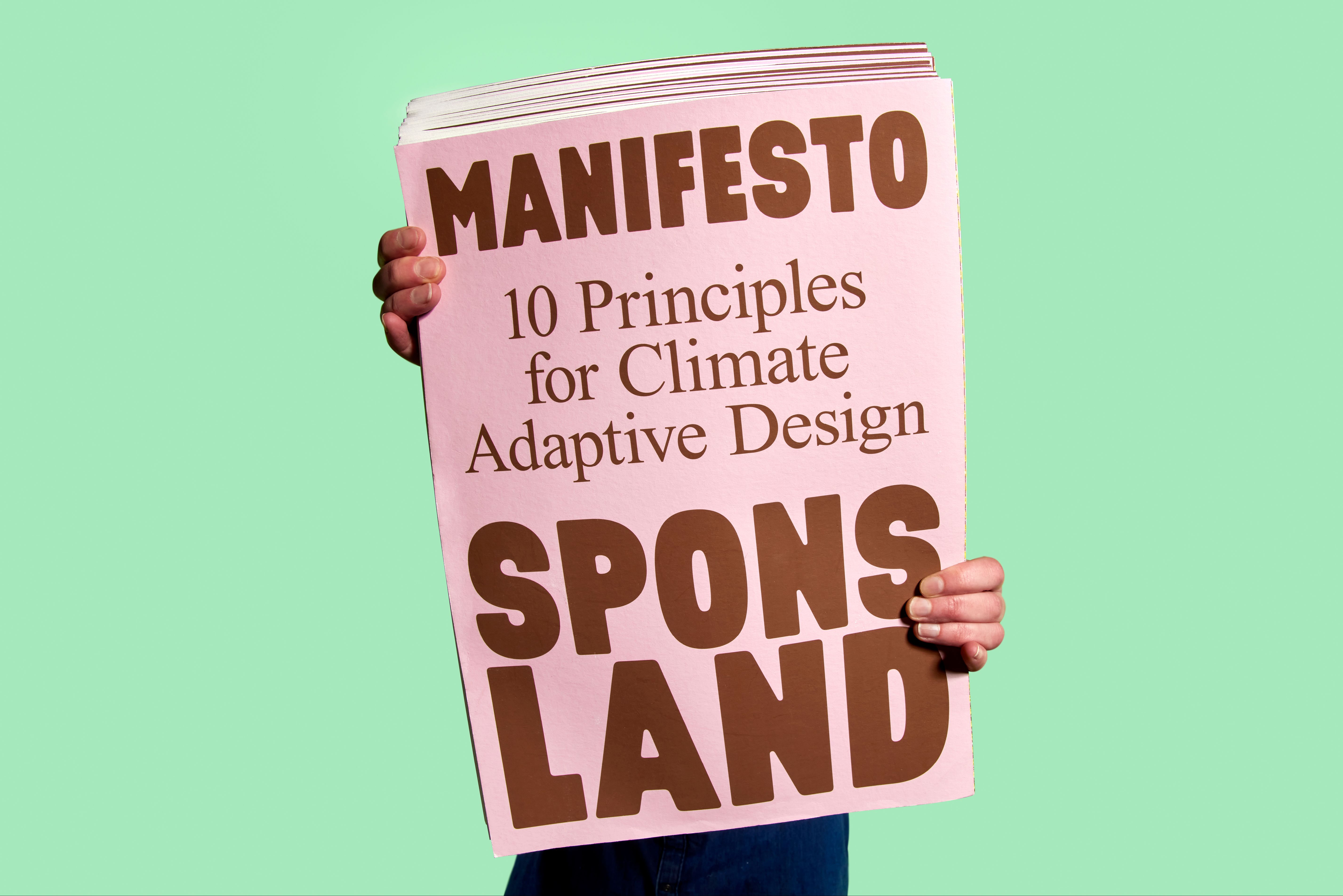
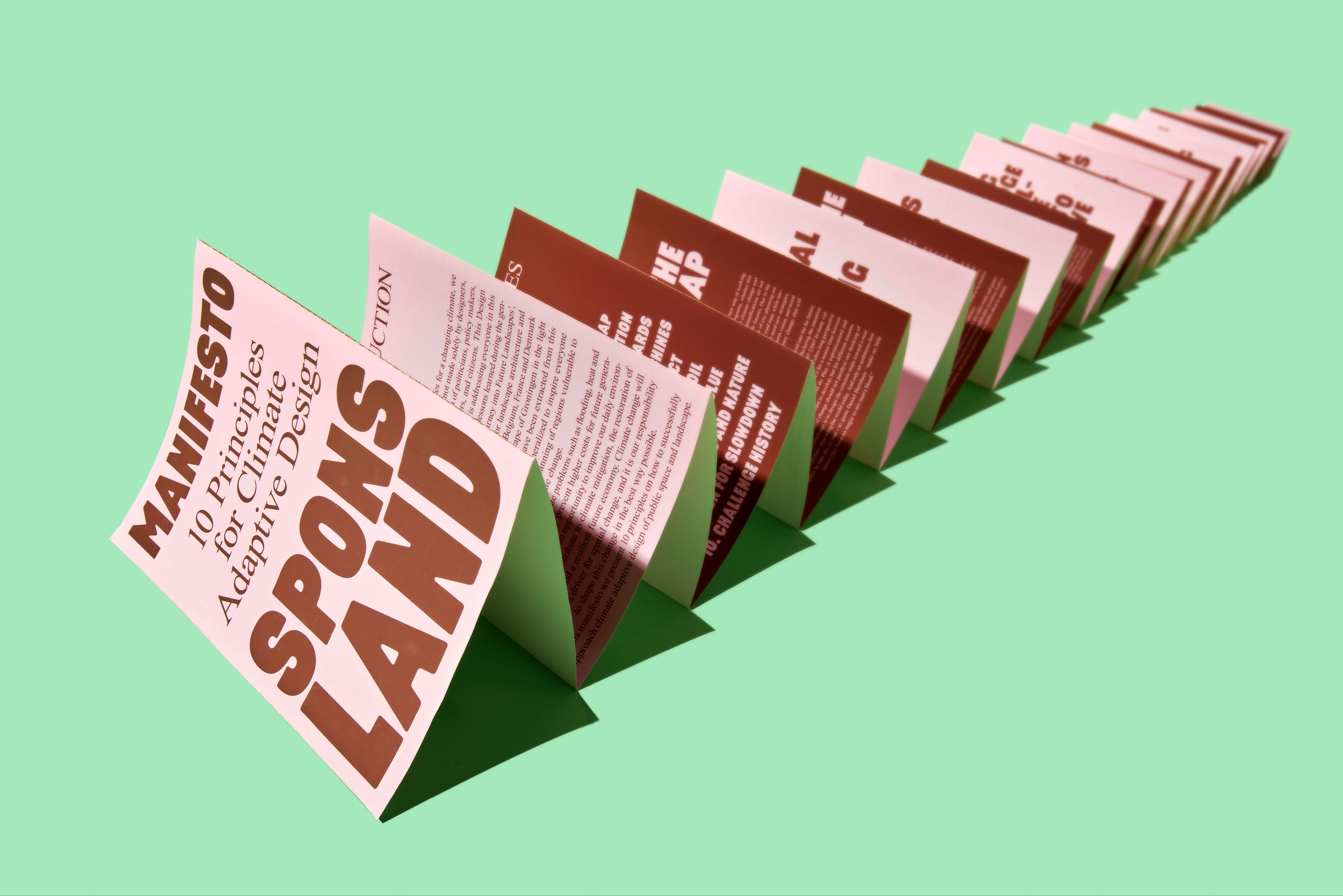
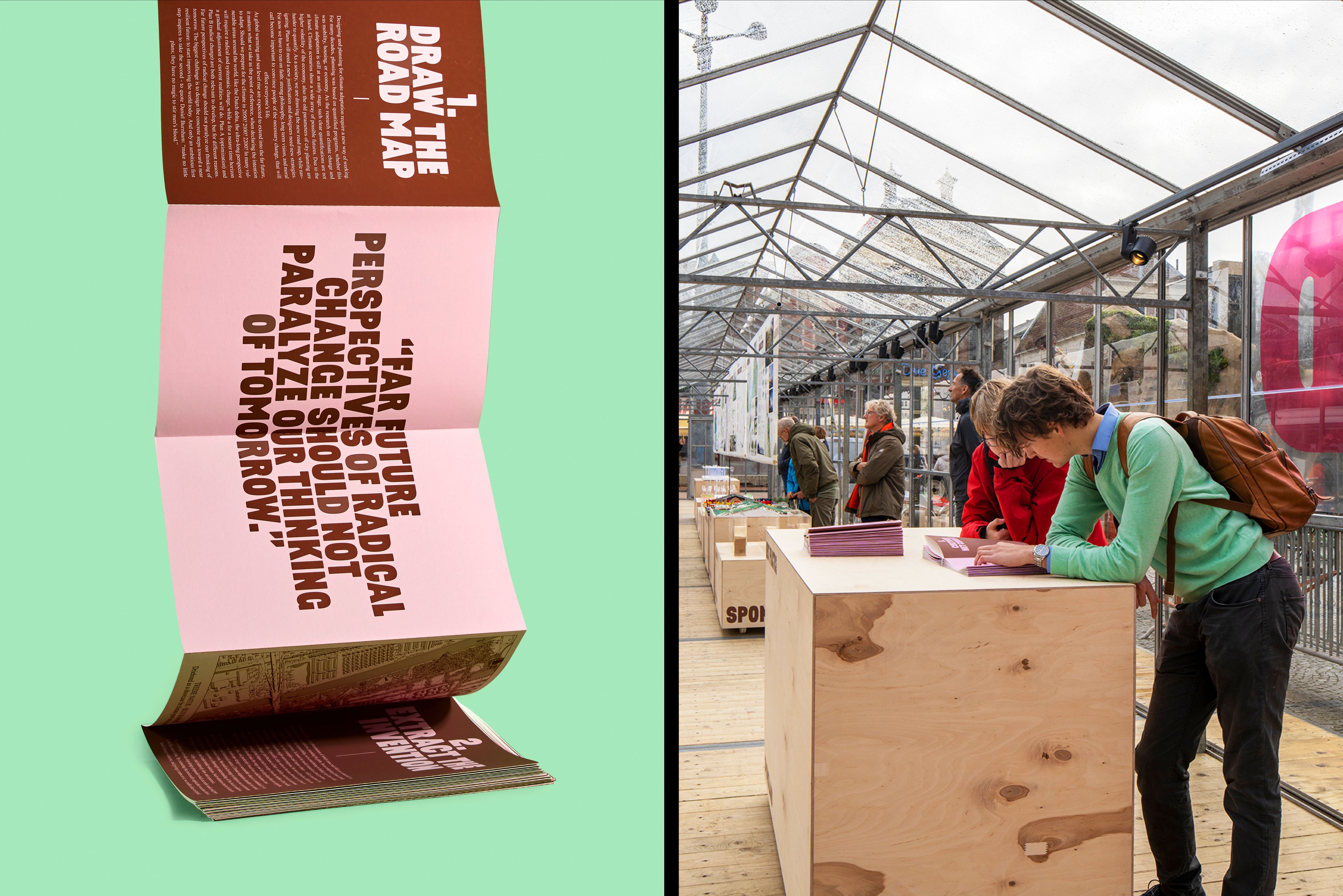
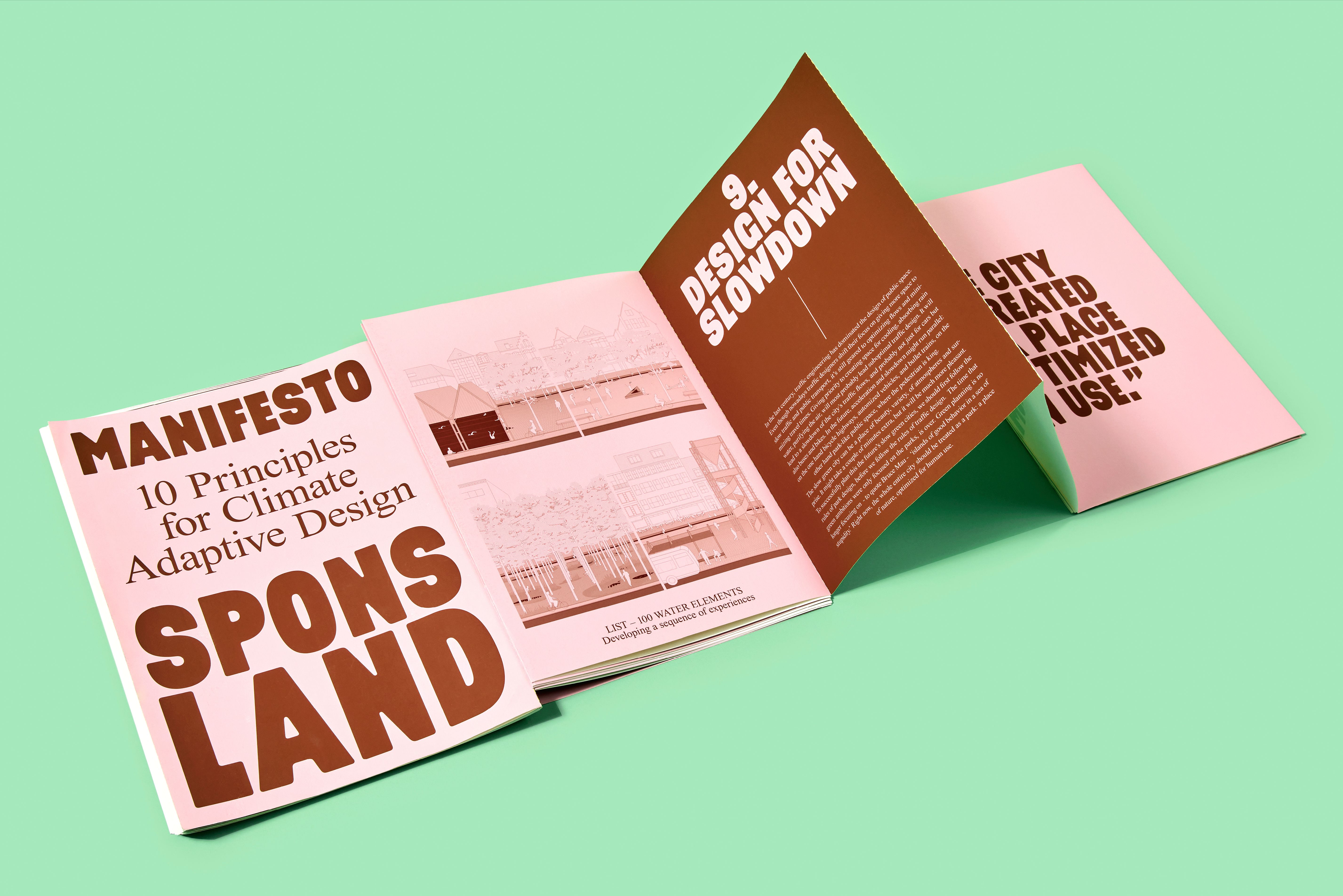
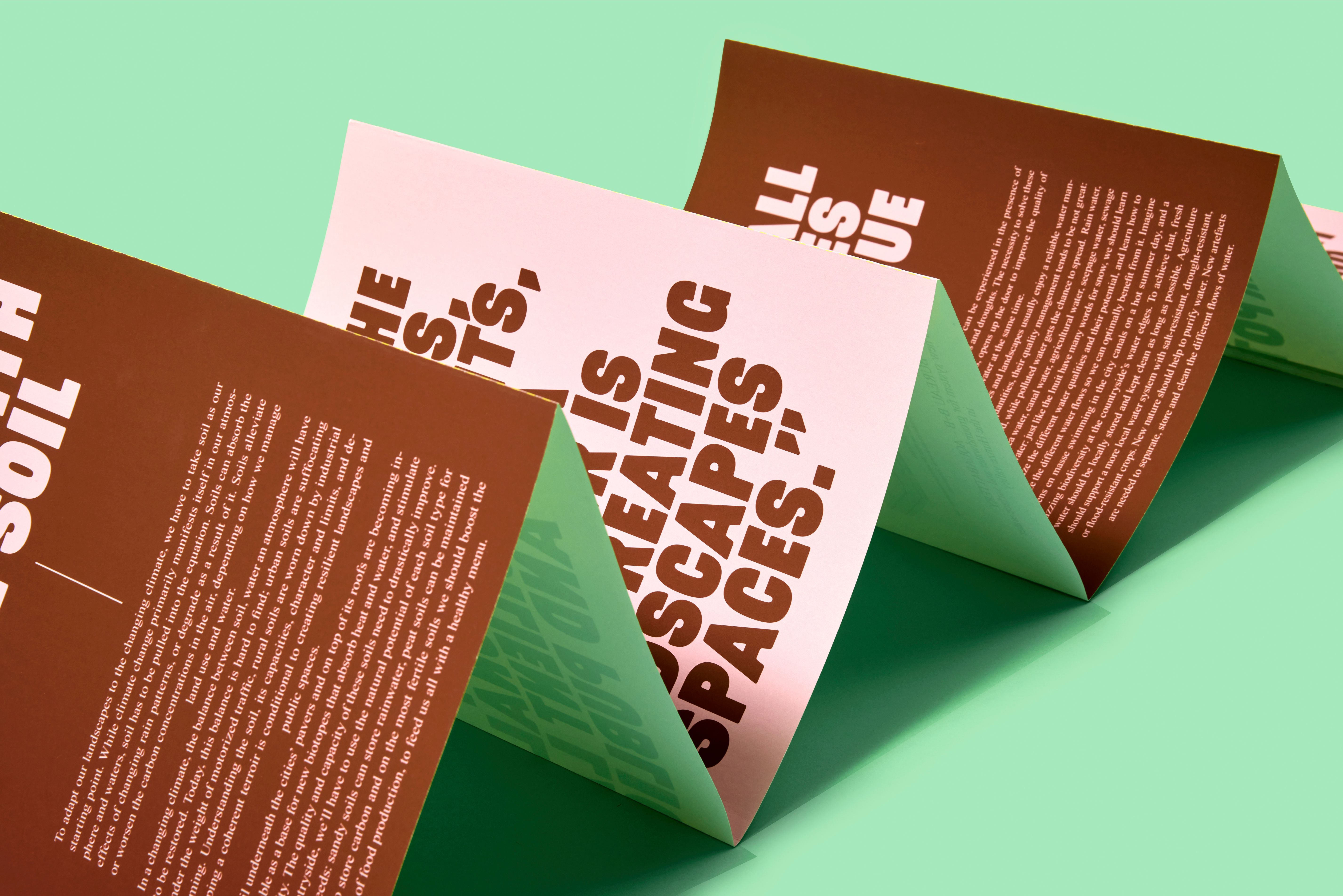
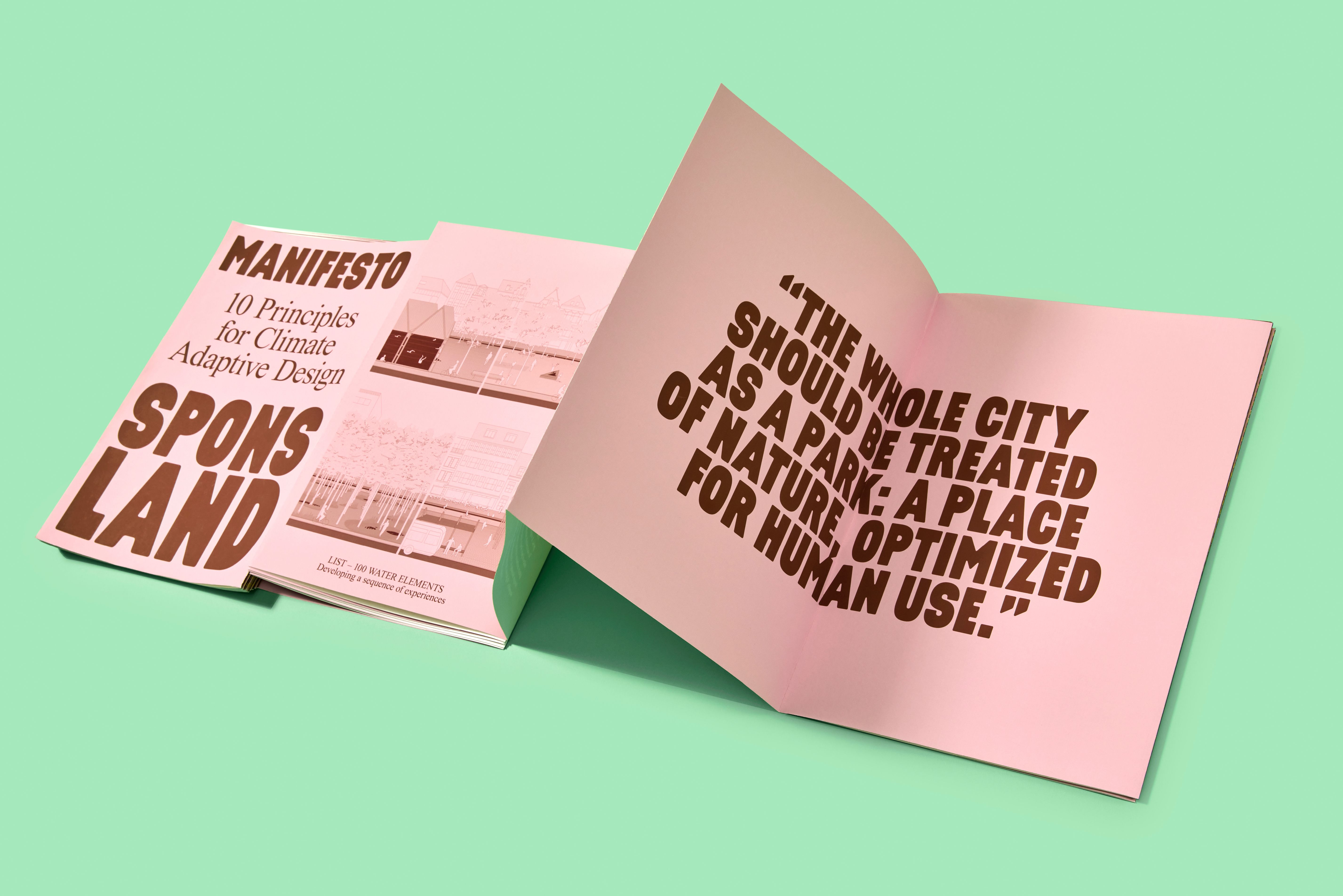
To inspire everyone involved with climate adaption, all the acquired knowledge was translated into a manifesto with 10 generally applicable principles for climate-adaptive design. We captured these principles in a 13-meter-long leporello. In design, we chose for this shape, size, and length to emphasize its activistic character and make it stand out. With this size, length, and shape, it’s possible to individually browse through the pages and once unfolded, it’s also possible to gather around it with a group. In the design, we used a bold typeface to emphasize the activistic character, in combination with classic typography, to emphasize research. The pink refers to the human part in the climate challenge, to the fact that we must act and adapt. The manifesto was offered to Ban Ki-moon, Secretary-General of the United Nations, and Cora van Nieuwenhuizen, former Ministry of Infrastructure and Water Management. Furthermore, the manifesto could be found on the website and in the exhibition catalogue.
Impact
Several plans by the design agencies led to other assignments for the designers and development of the plans. Furthermore, over 5.000 visitors attended the exhibition at the Grote Markt, in one week. The travelling exhibition is still on view. The curators of the exhibition, Yttje Veddes and Peter Veenstra, were asked to host several lectures about Sponsland in the Netherlands and abroad. The book was sold over 1000 times, both in the Netherlands and Belgium in several design bookshops.
Credits