Project
Elector with vision - The life and work of Father August of Saxony
Agency
Büro wien
Year
2023
Award
Bronze
Elector with vision - The life and work of Father August of Saxony
https://www.buerowien.com/en/stage/171-special-exhibition-augustusburg
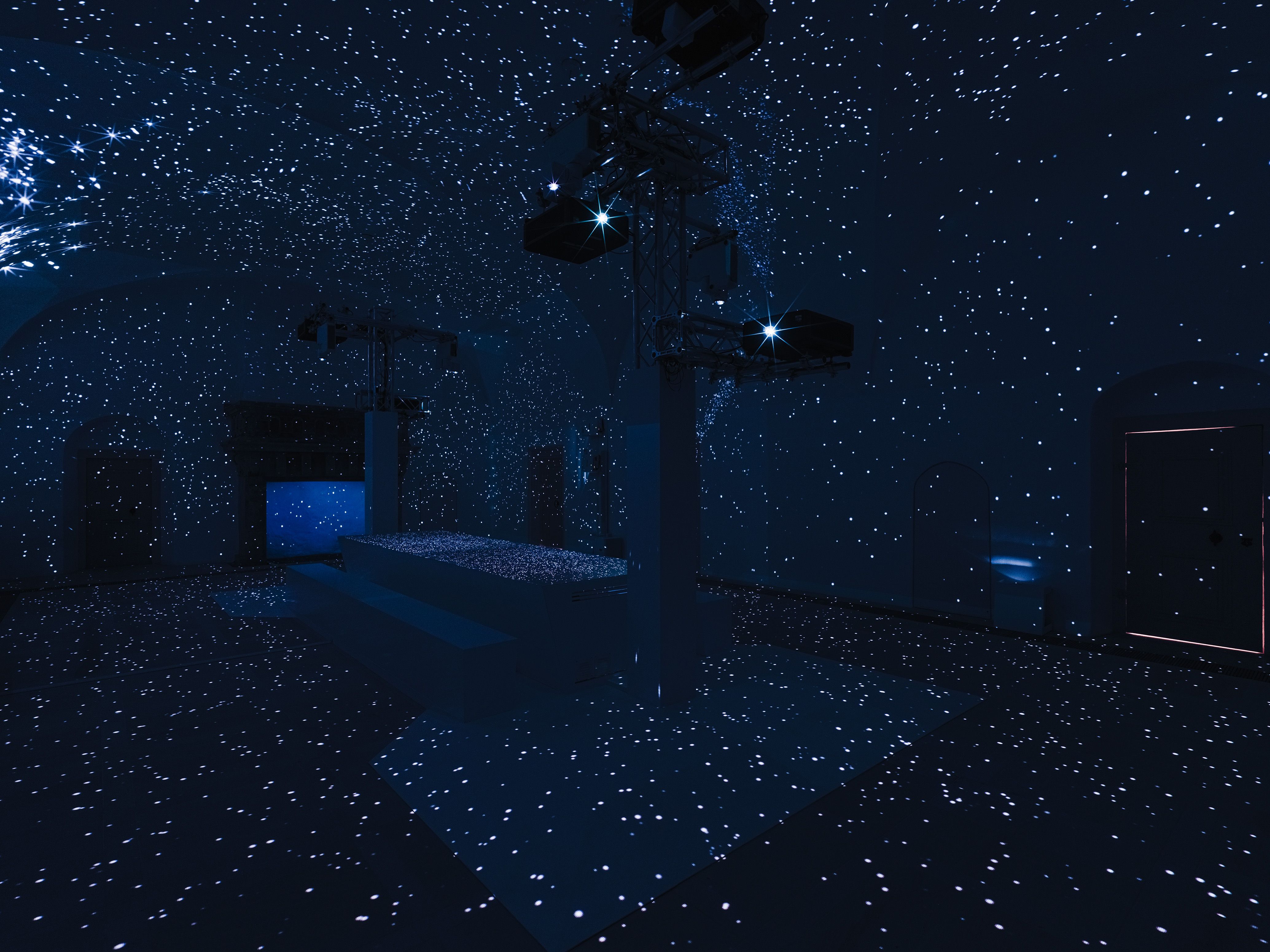
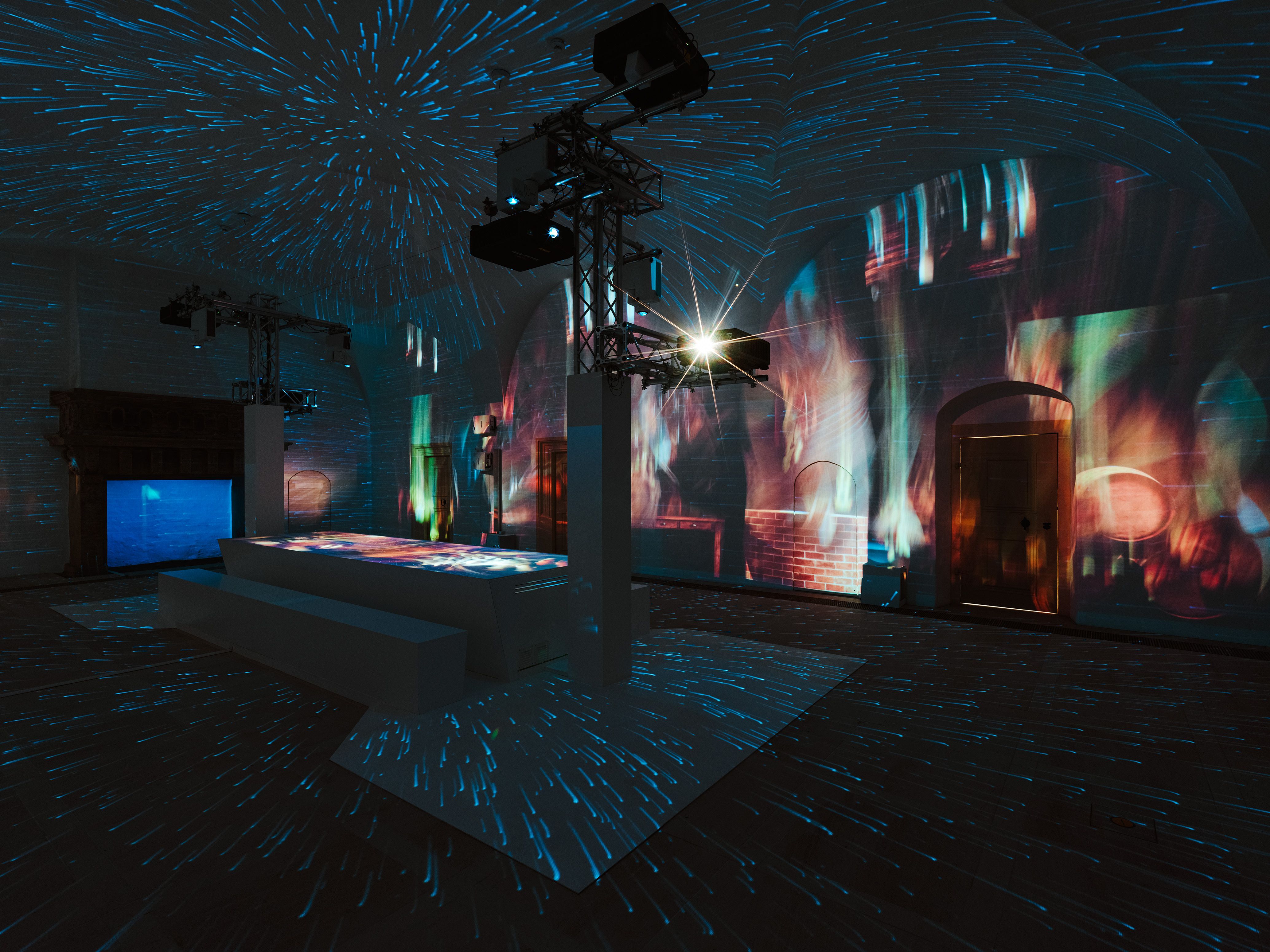
Known as the “Crown of the Ore Mountains”, the monumental hunting and pleasure palace Augustusburg near Chemnitz was completed exactly 450 years ago (in 1572). On this notable anniversary, the large-scale special exhibition looks back at the life of Elector August of Saxony, who commissioned the construction of the impressive Renaissance palace. On a total exhibition space of 700 square metres, over 300 artifacts are on display, completed by illustrations of important personalities of the time and a 360° projection show.
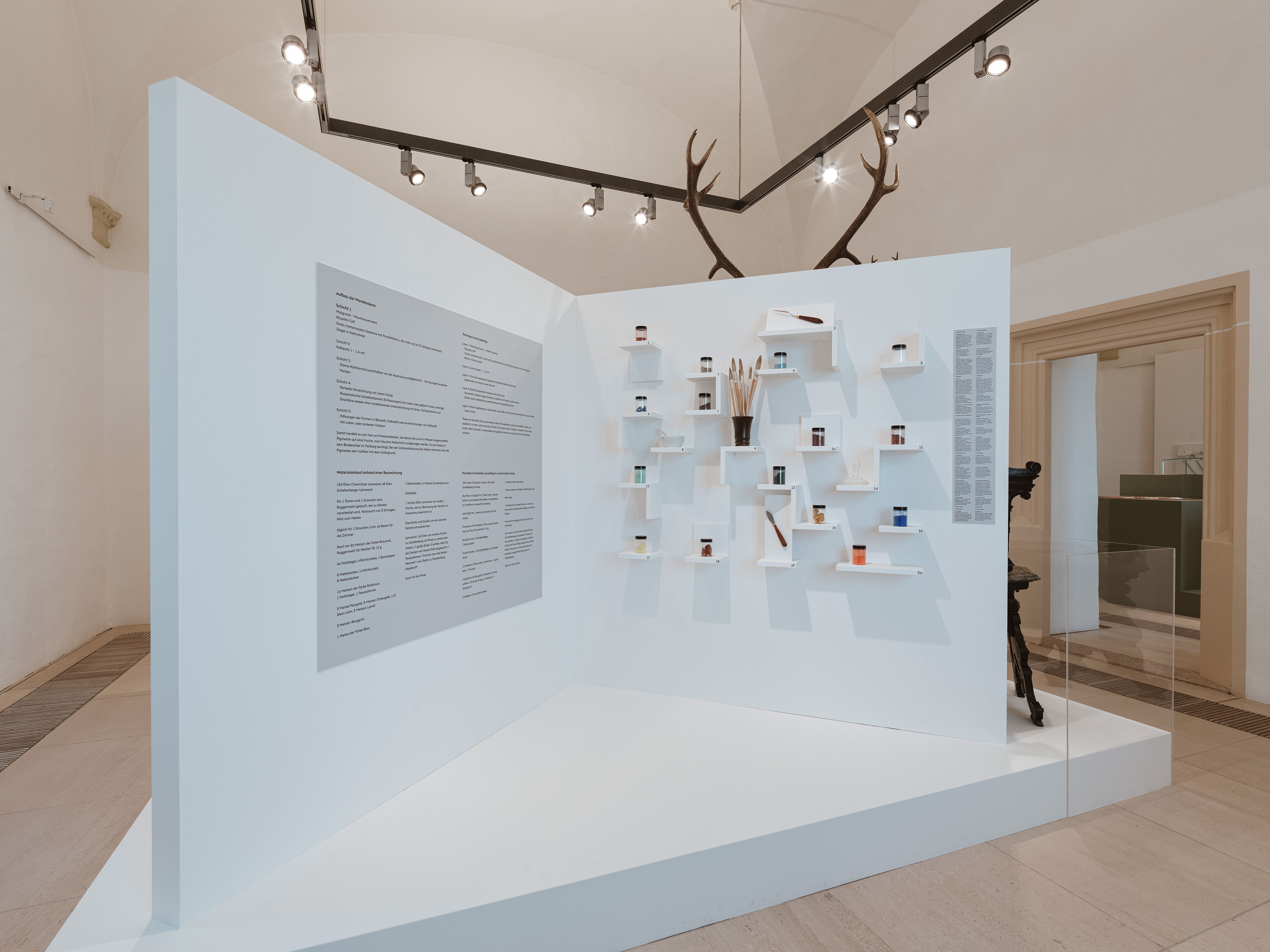
We planned and implemented the exhibition architecture of 13 rooms, each of them dedicated to a different topic. While developing the architectural concept, we took into consideration the subsequent use and reuse of the various built-in components and installations in future special exhibitions. The layout and set-up of the individual components may be modified and rearranged to allow a variety of stagings of the space.
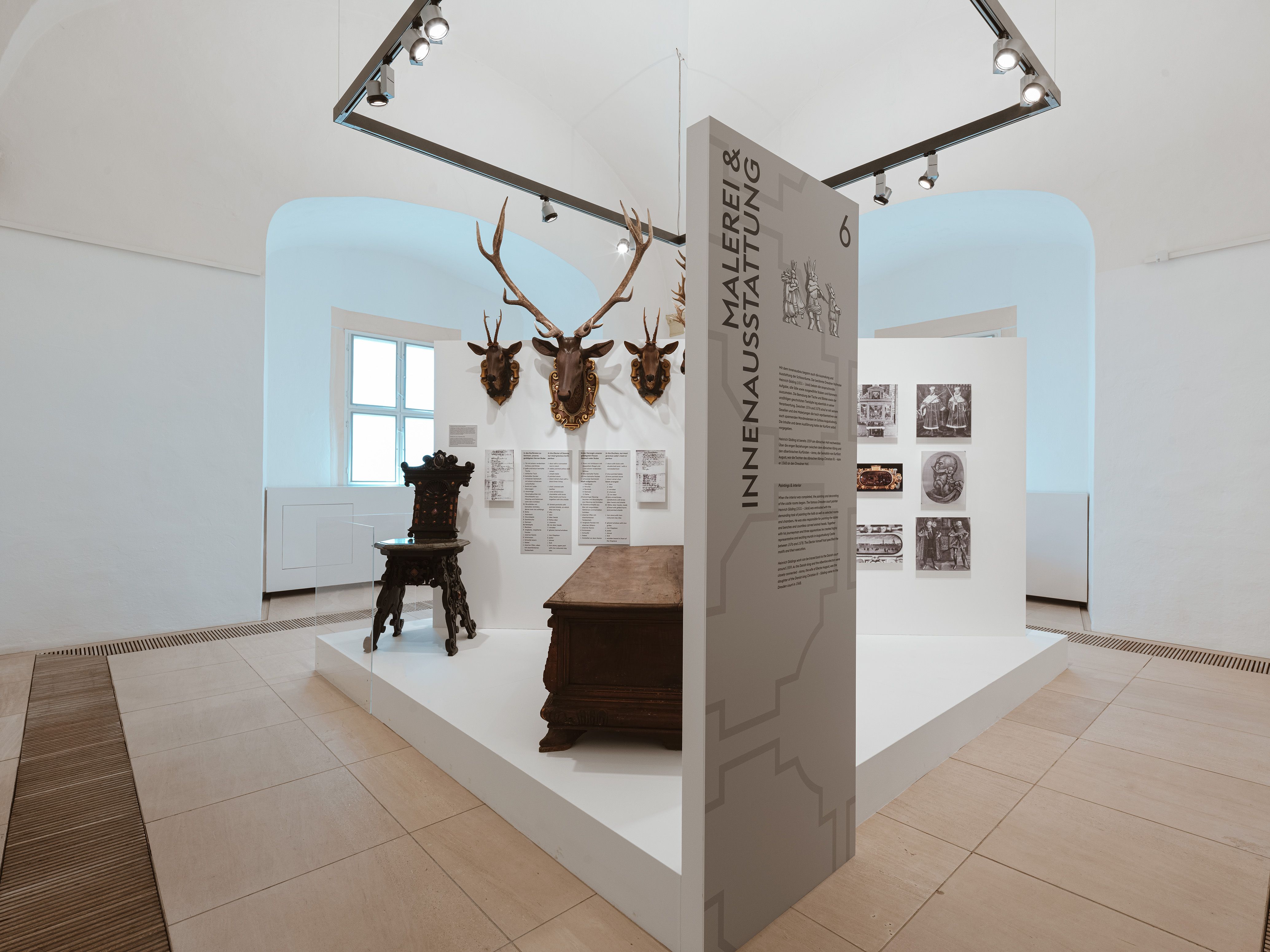
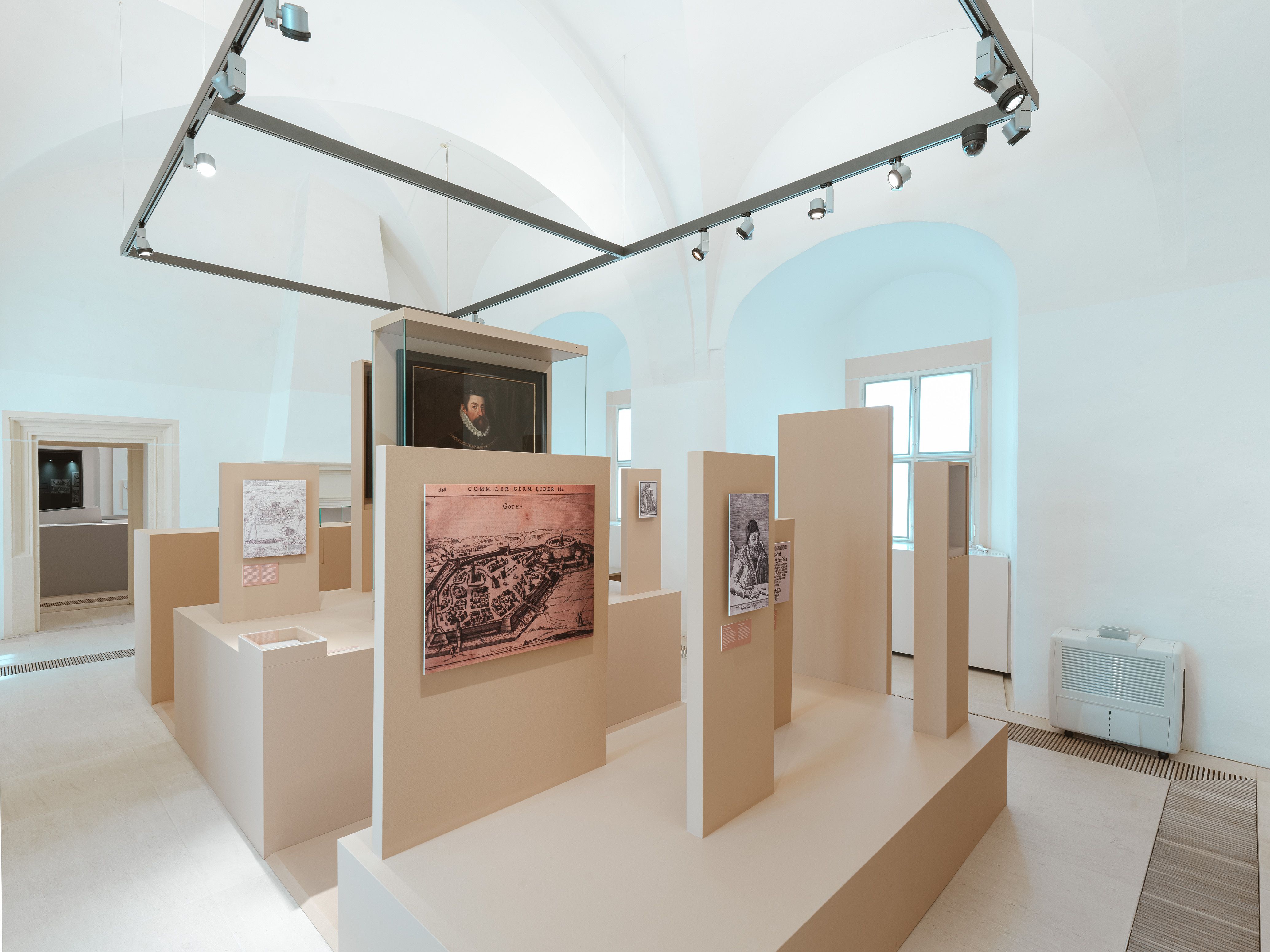
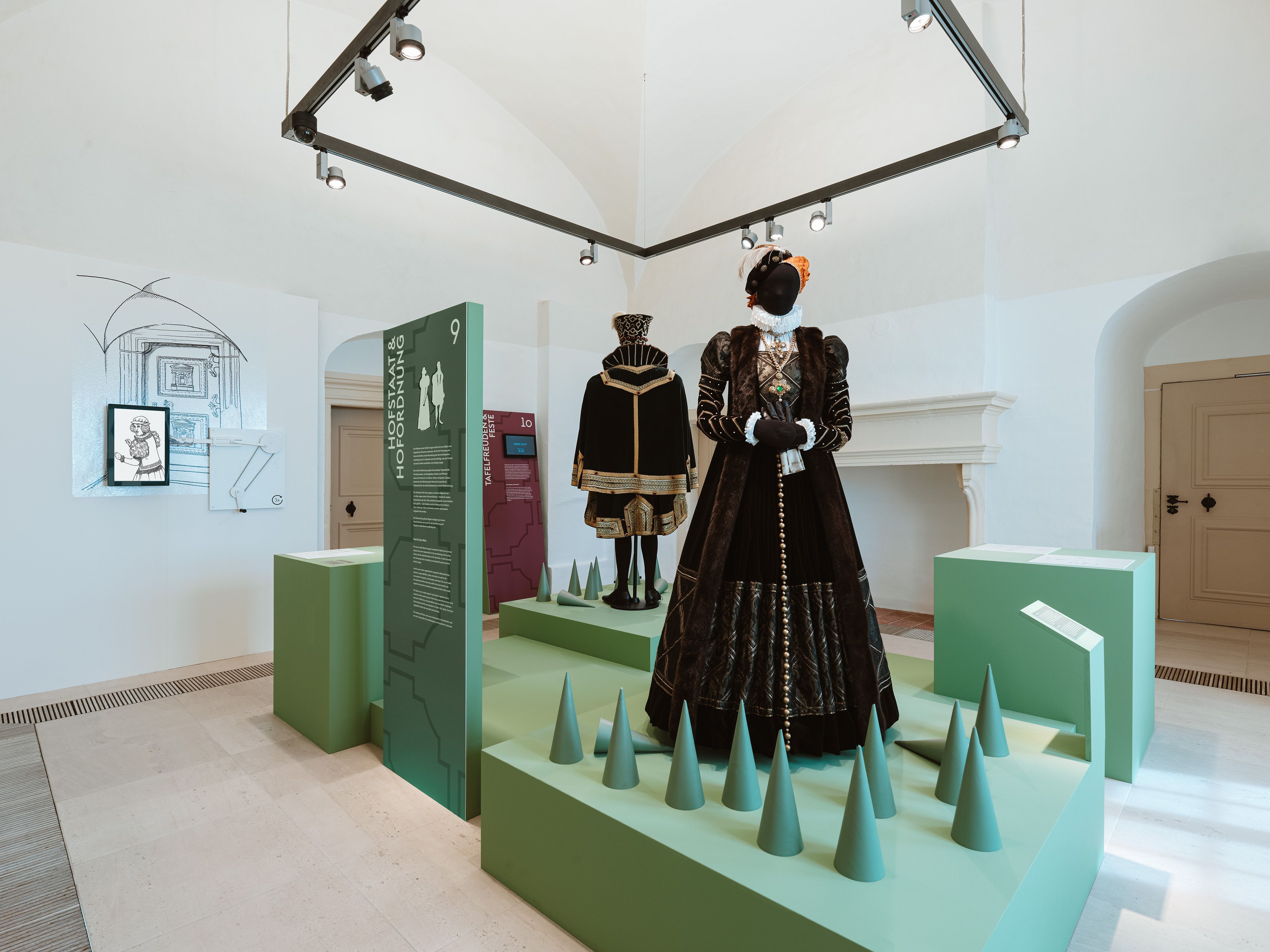
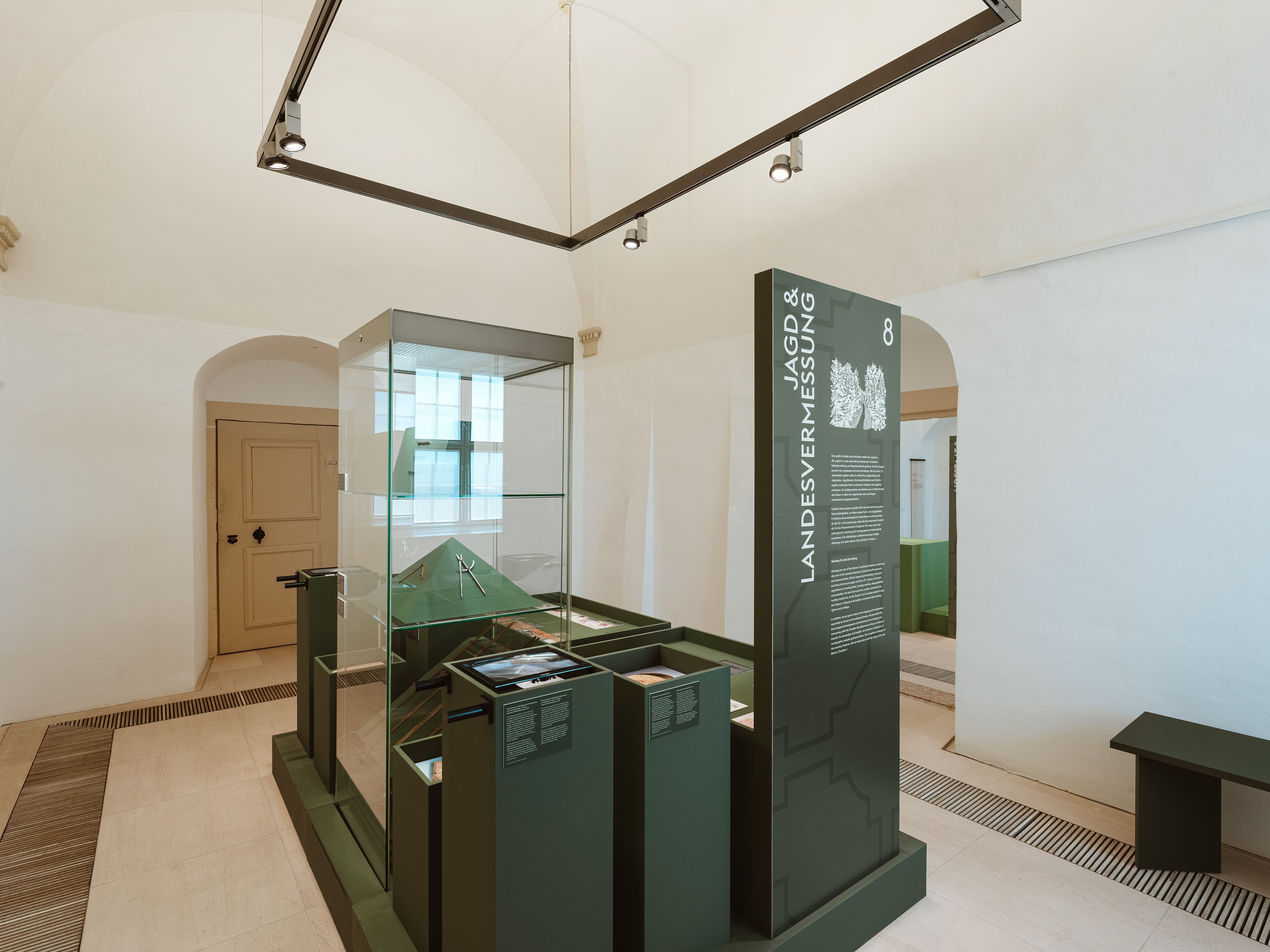
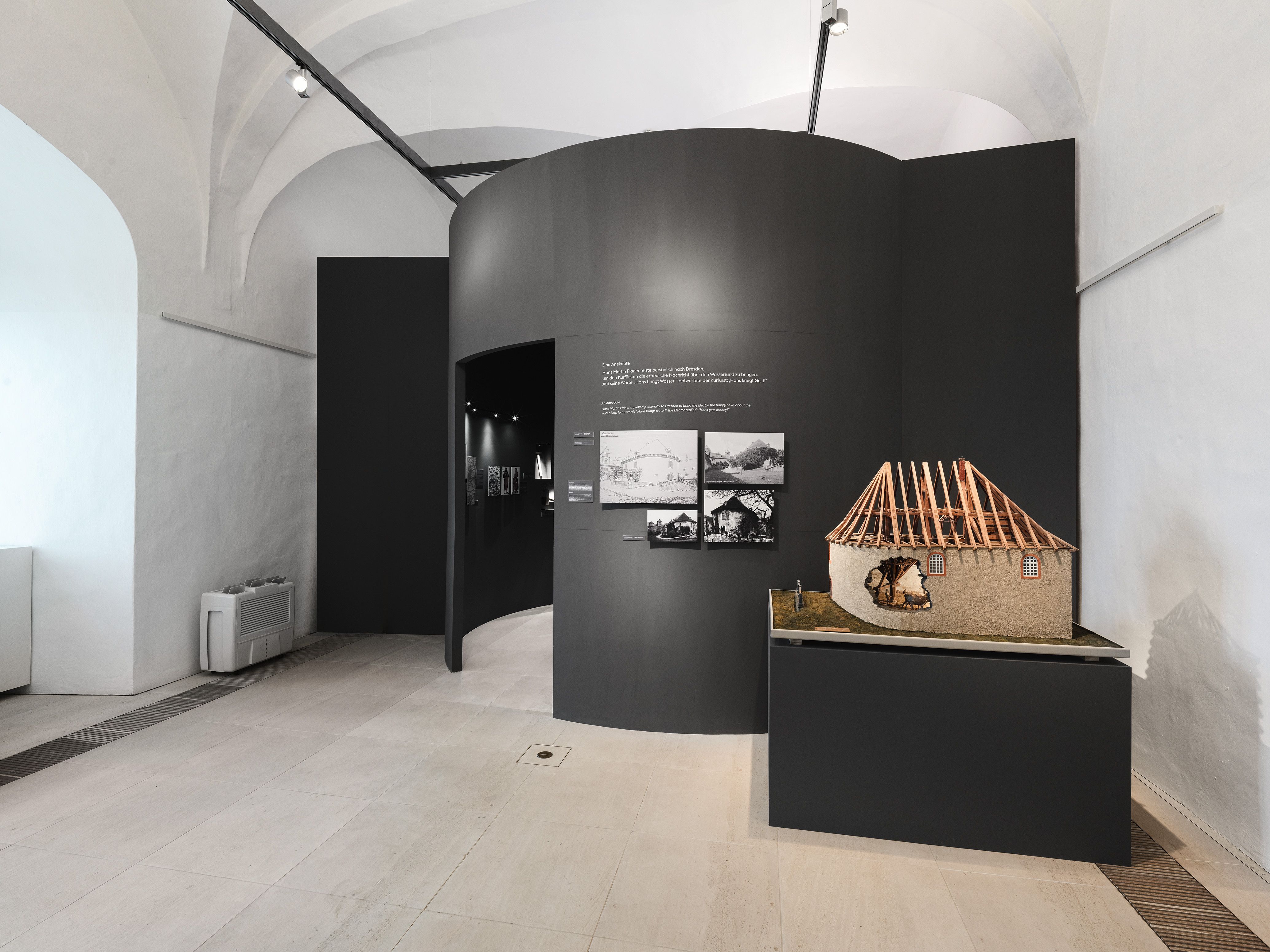
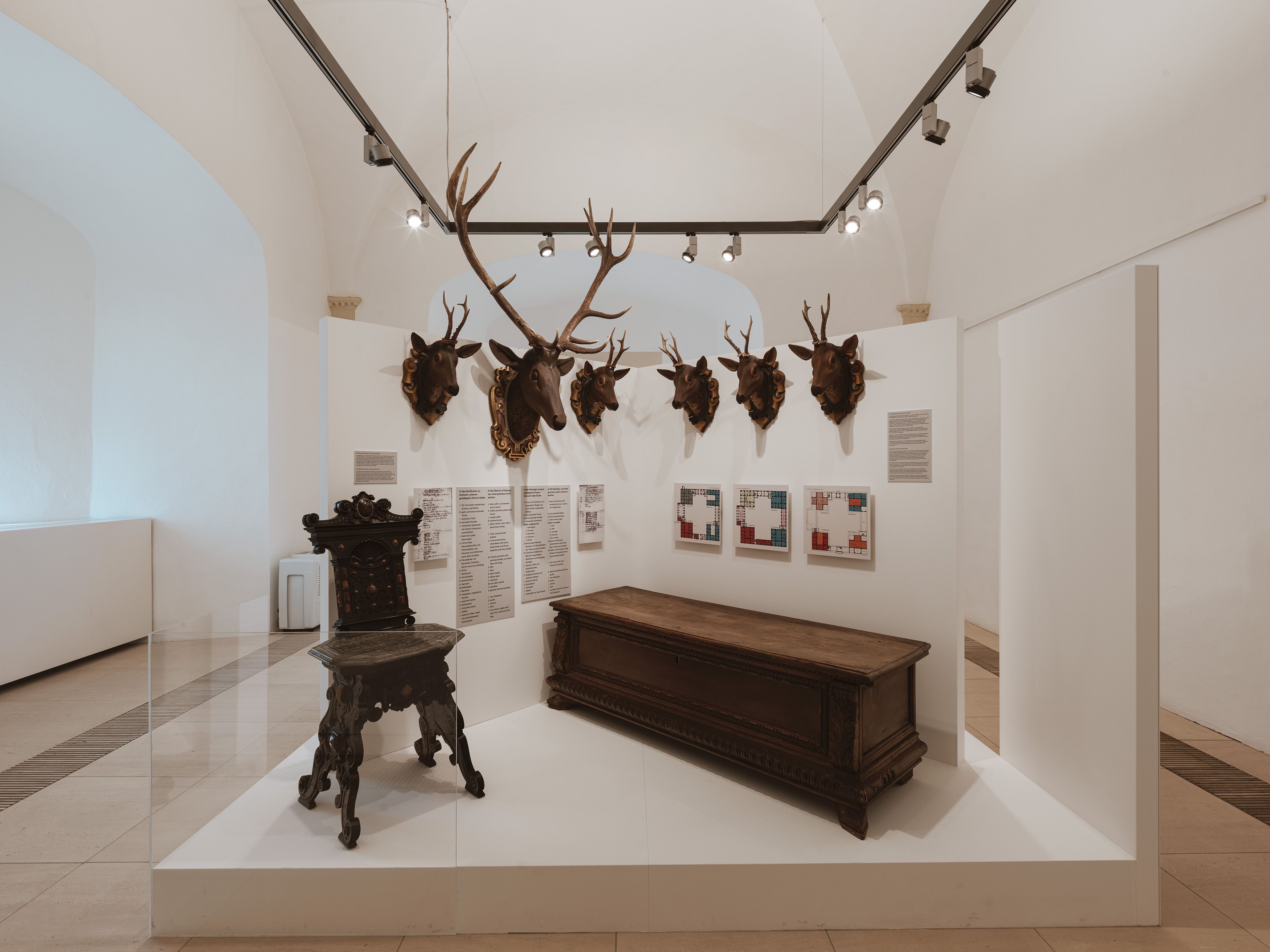
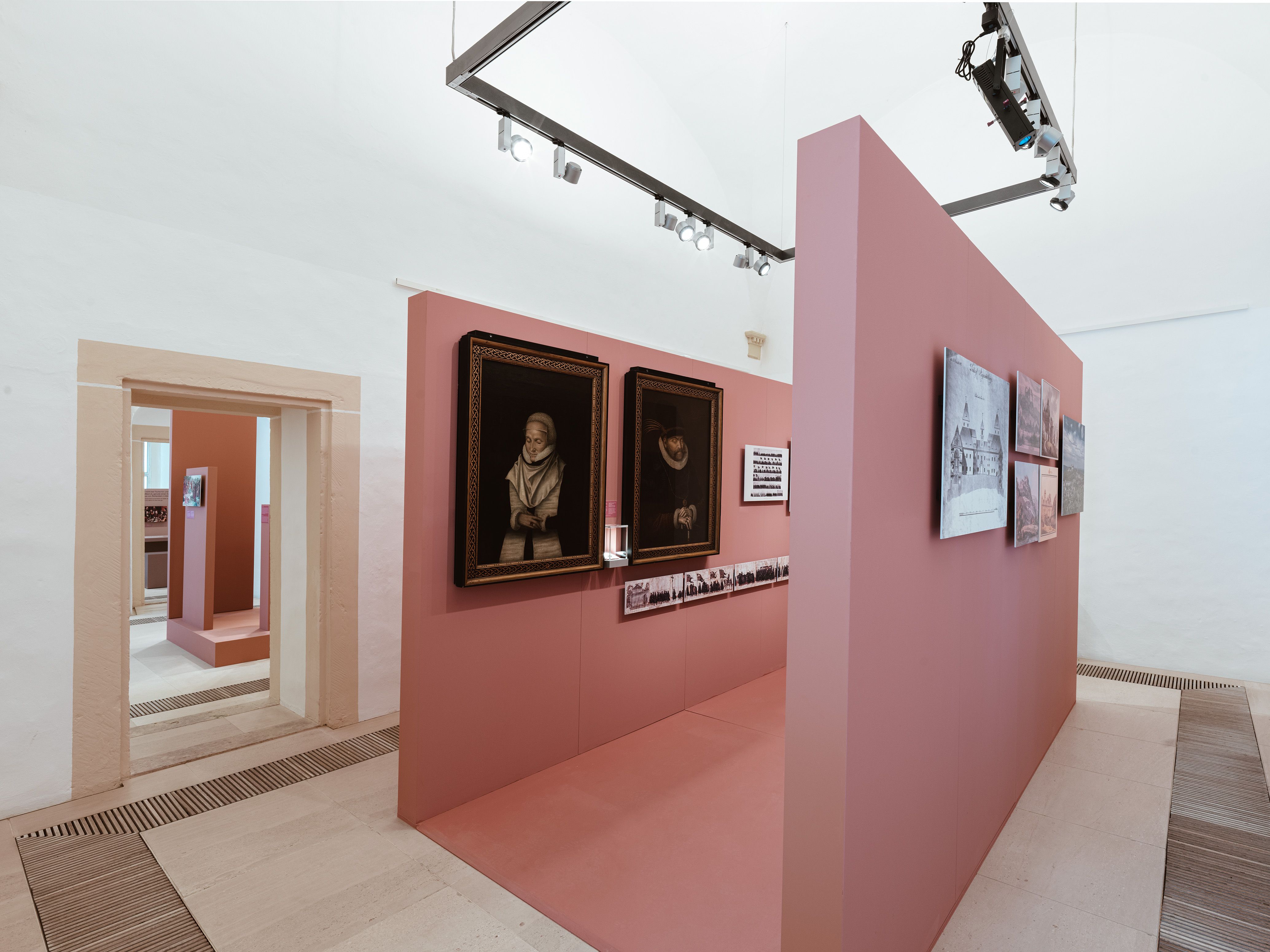
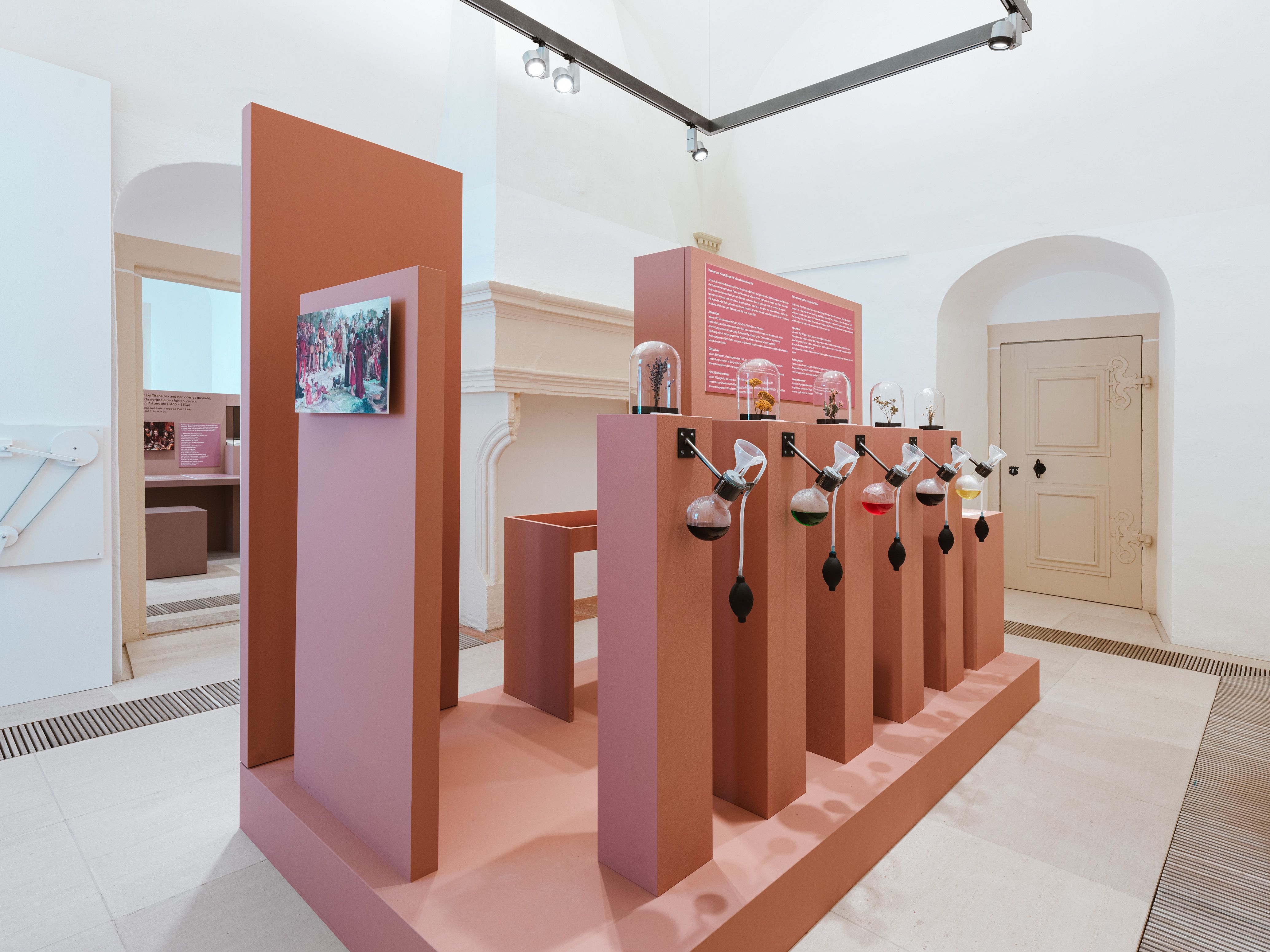
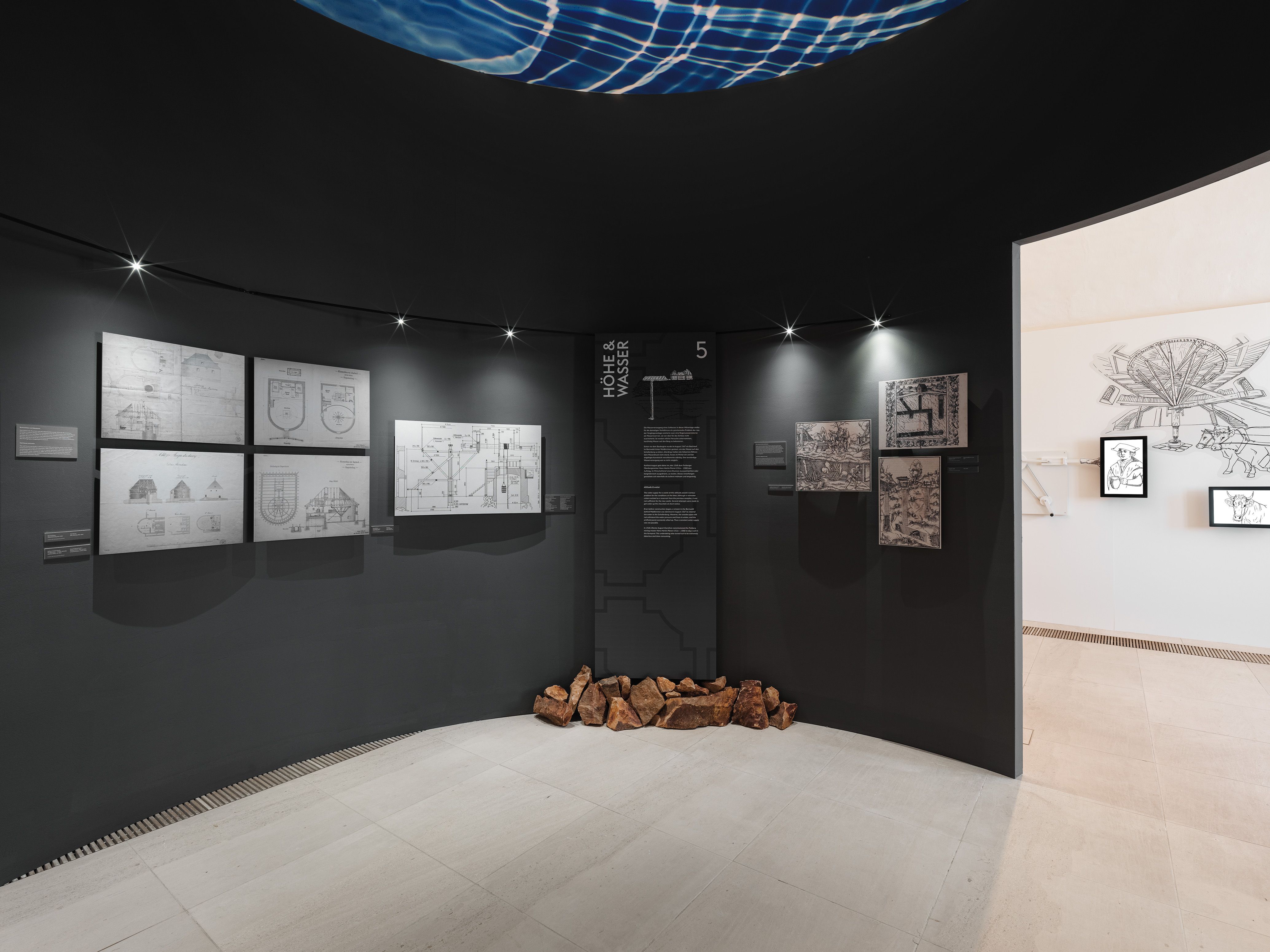
The rooms, some of which are very small, and the fact that Augustusburg Castle is a listed building presented a major challenge while planning. We needed to take into consideration the existing building fabric, while at the same time make the most of the available space. We came up with an architectural concept that places individual “exhibition islands”, tailored to the different rooms and contents, in the centre of each room. We picked this staging because it allows the visitors to walk around the exhibits and look at them from different angles, leaving the view of the castle’s historic and historically relevant architecture unobstructed, and honouring the rooms’ charm and aura.
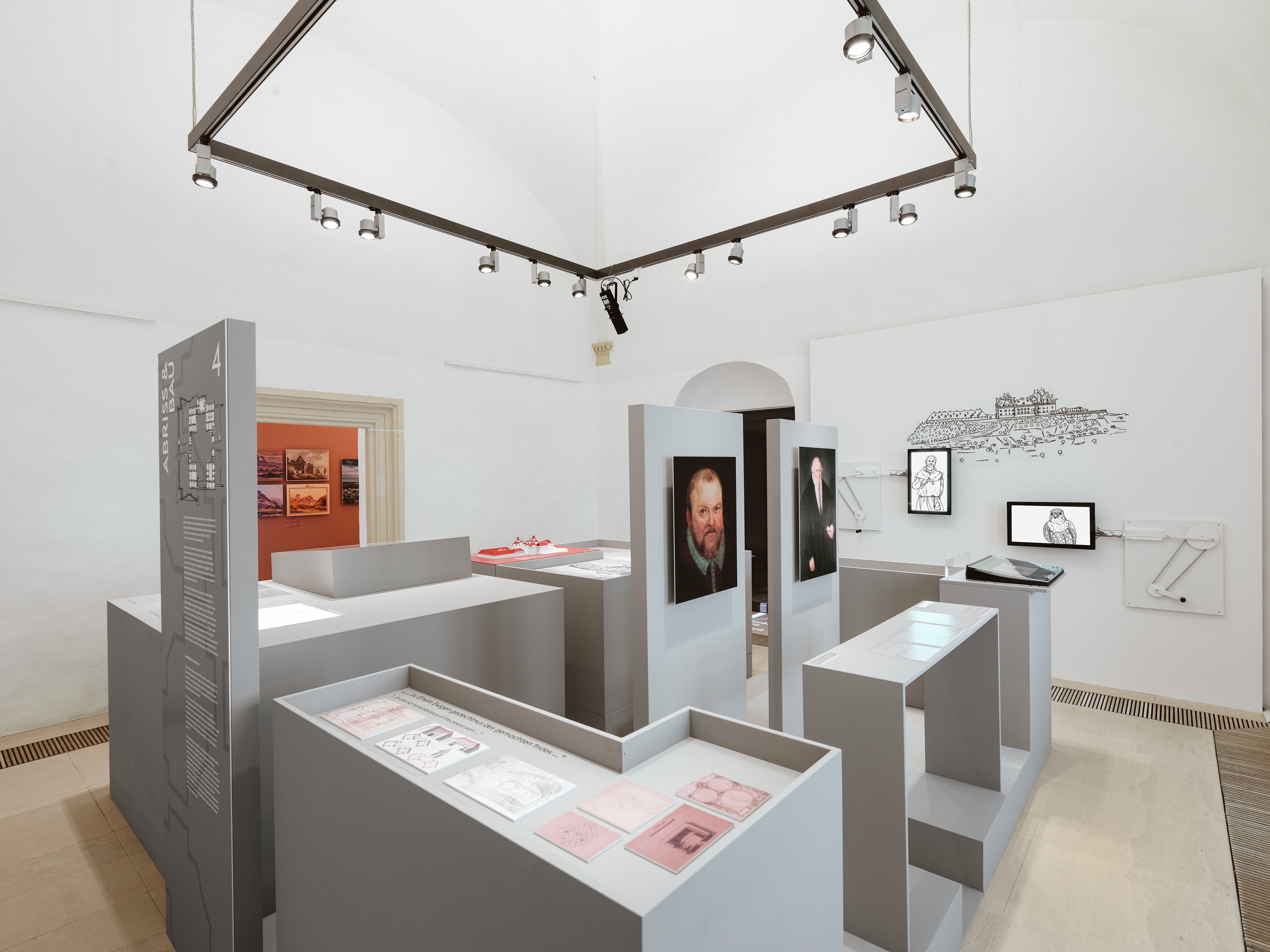
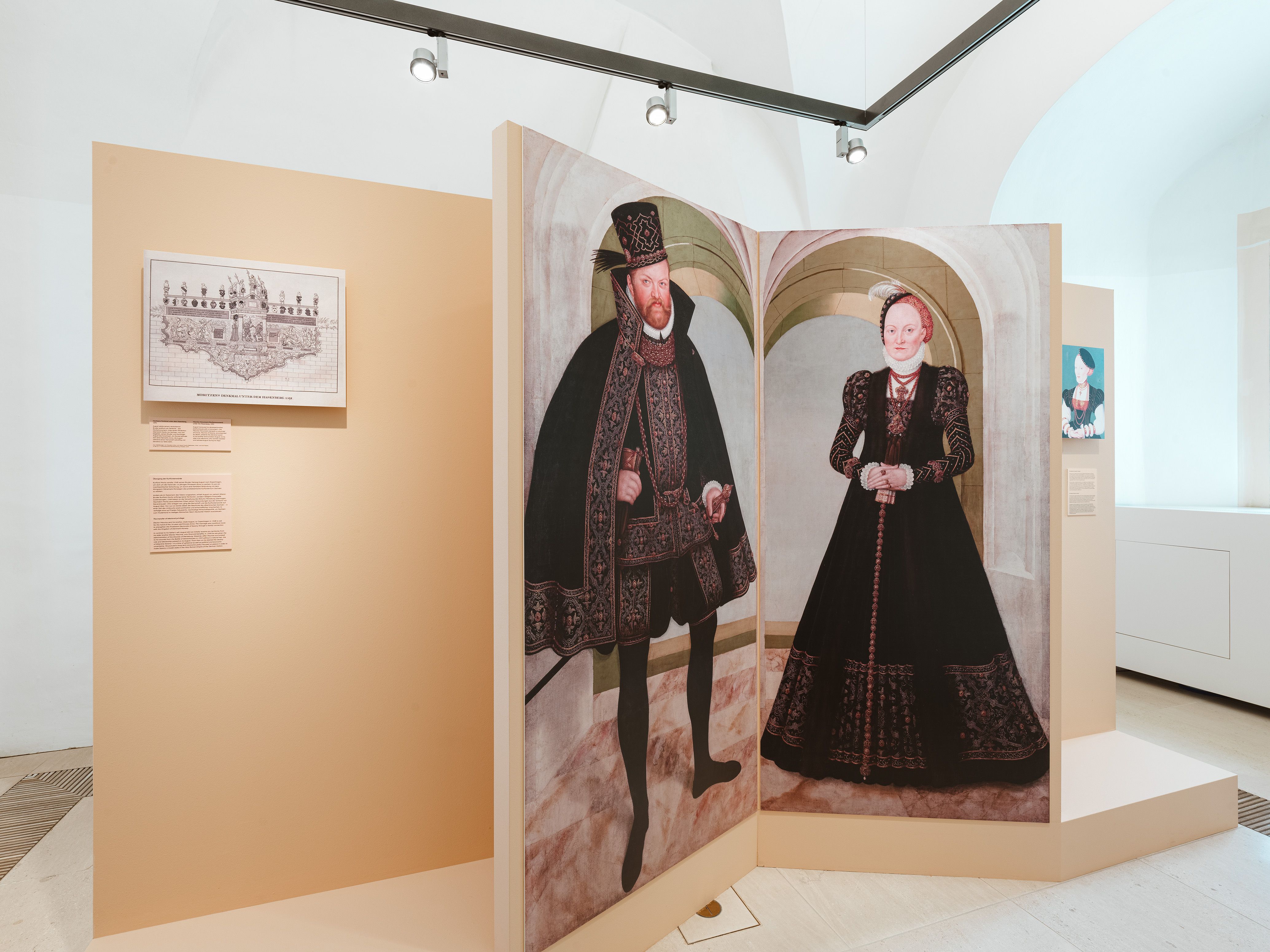
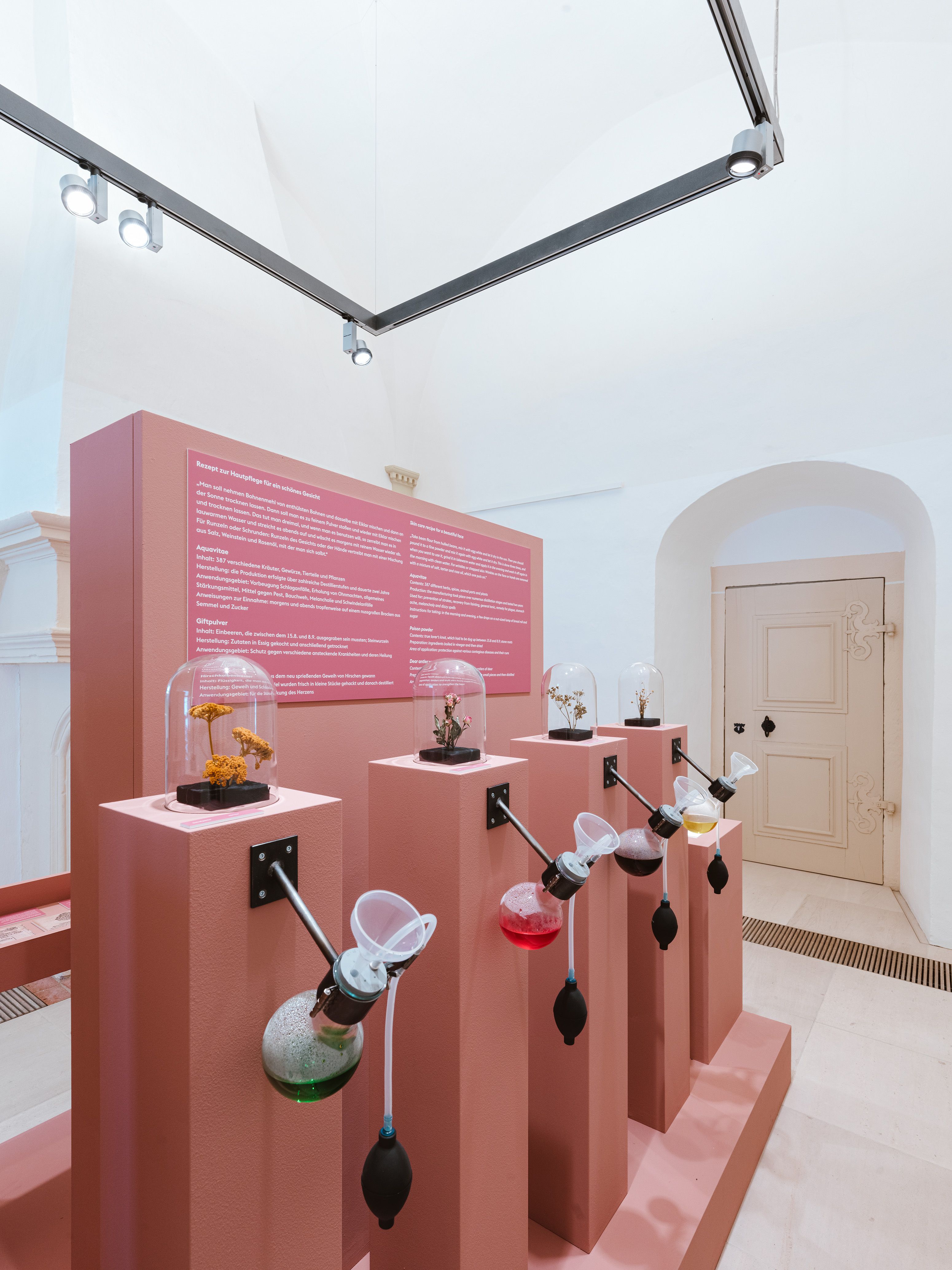
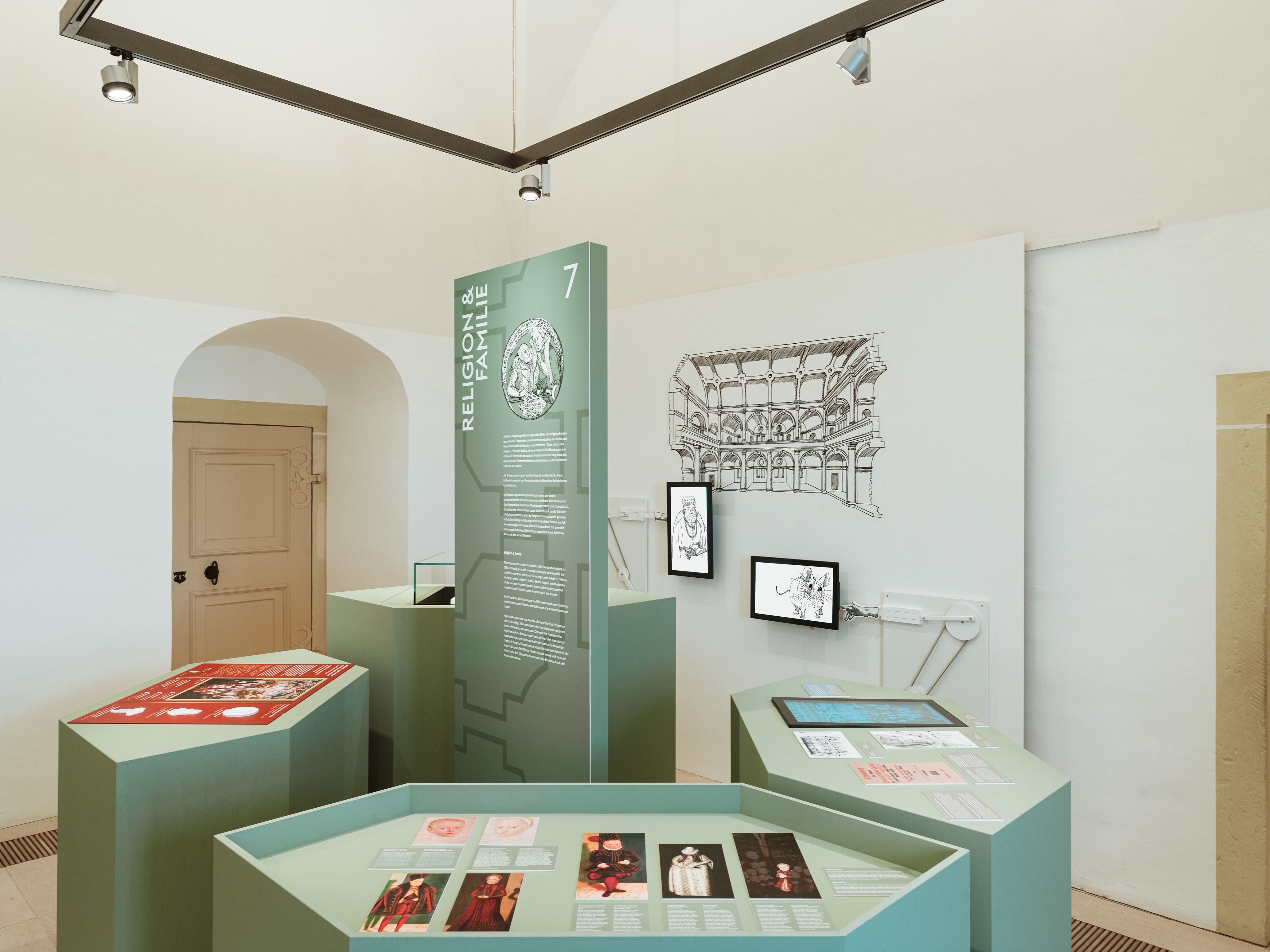
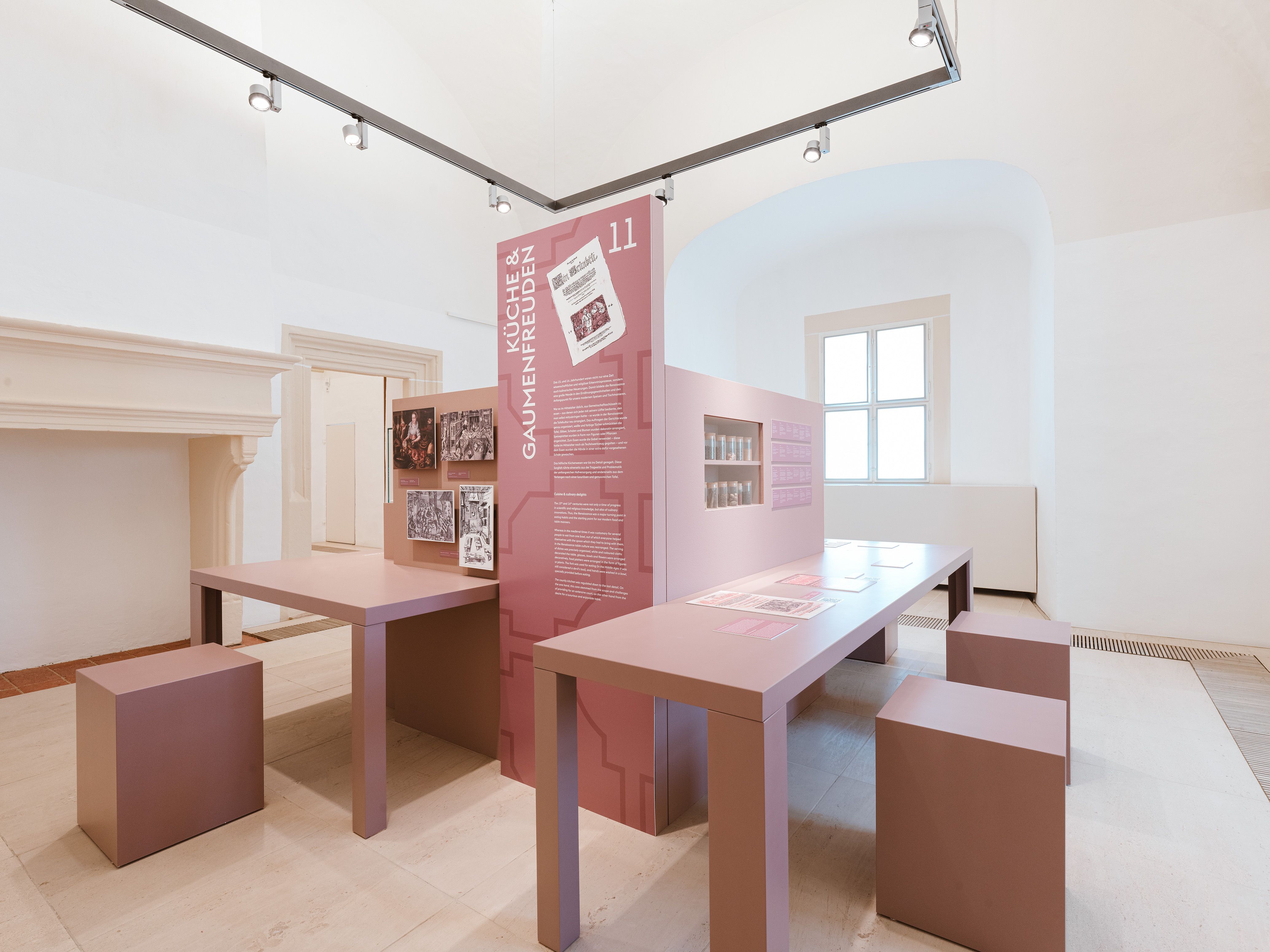
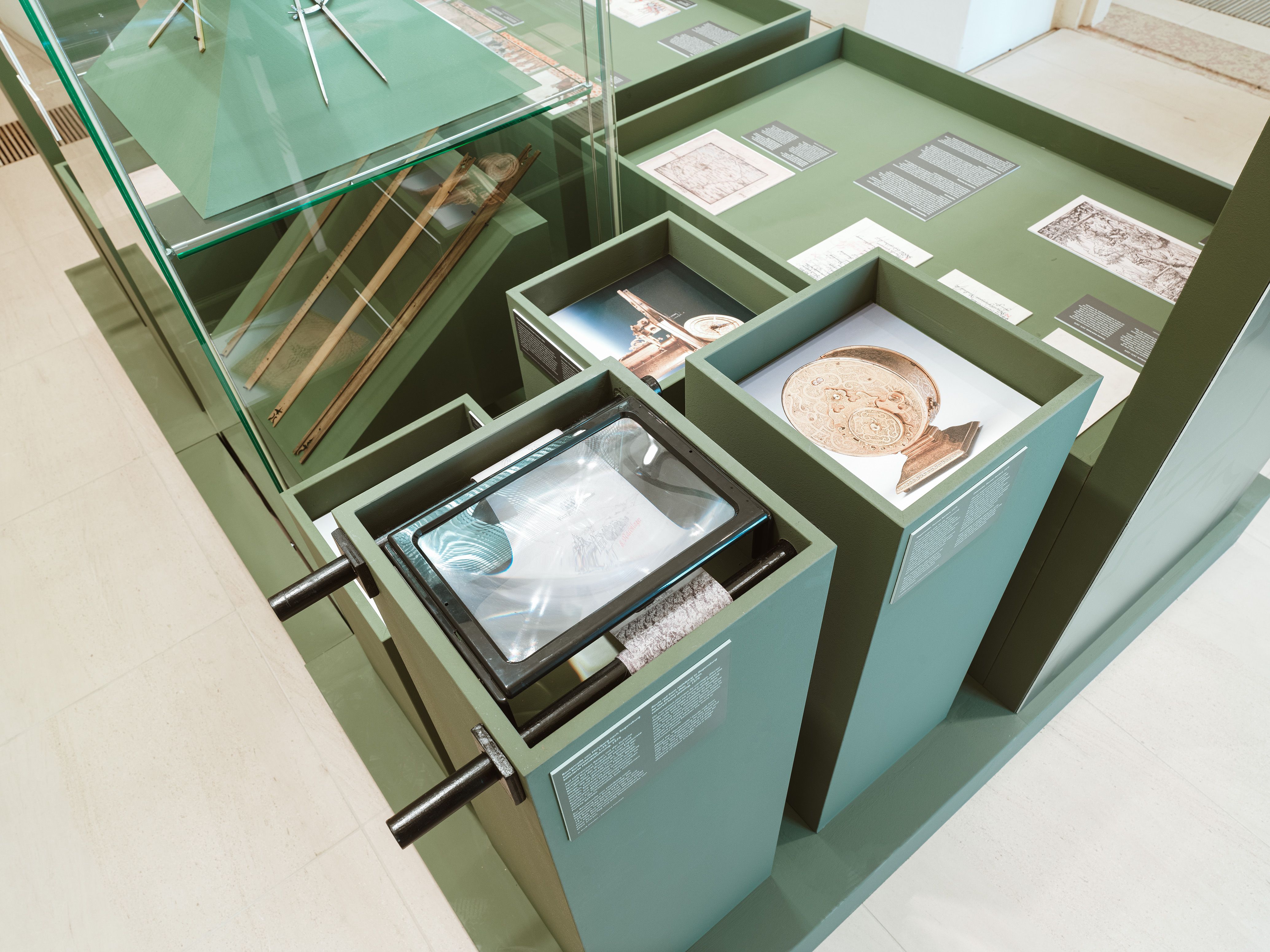
The “exhibition islands” also serve as stages for the protagonists such as Elector August and Electress Anna and their stories. Our concept elevates the “stage“– the exhibit furniture – to an autonomous object, which, in turn, relates to the exhibits and is individually adapted to the room. The shapes and colour schemes are derived from the content on hand and responds to the needs of the exhibits on display. Varying levels, depths, perspectives and surfaces highlight and set apart the exhibits. This staging allows the artefacts to relate to each other differently and to be presented in a new context. The central position of the “stages“ and the exhibits allow for new viewpoints, visual axes and perspectives. The architecture becomes the platform on which history is staged. Another central point in our considerations was the extension of the available presentation area. Contrary to showcases typically placed alongside walls, our built-in exhibition installations are accessible for all visitors from all sides. In addition to the exhibition fixtures – the stages – we made a point of providing sufficient seating in the exhibition space. We designed and positioned benches in a matching design and colour. Championing a sustainable use of resources, the benches were designed and built to remain in the space beyond the end of the current exhibition. A recurring element found in all rooms is the exhibition board of identical size and shape. It displays an overview of the content of the room and helps visitors navigate through the exhibition.
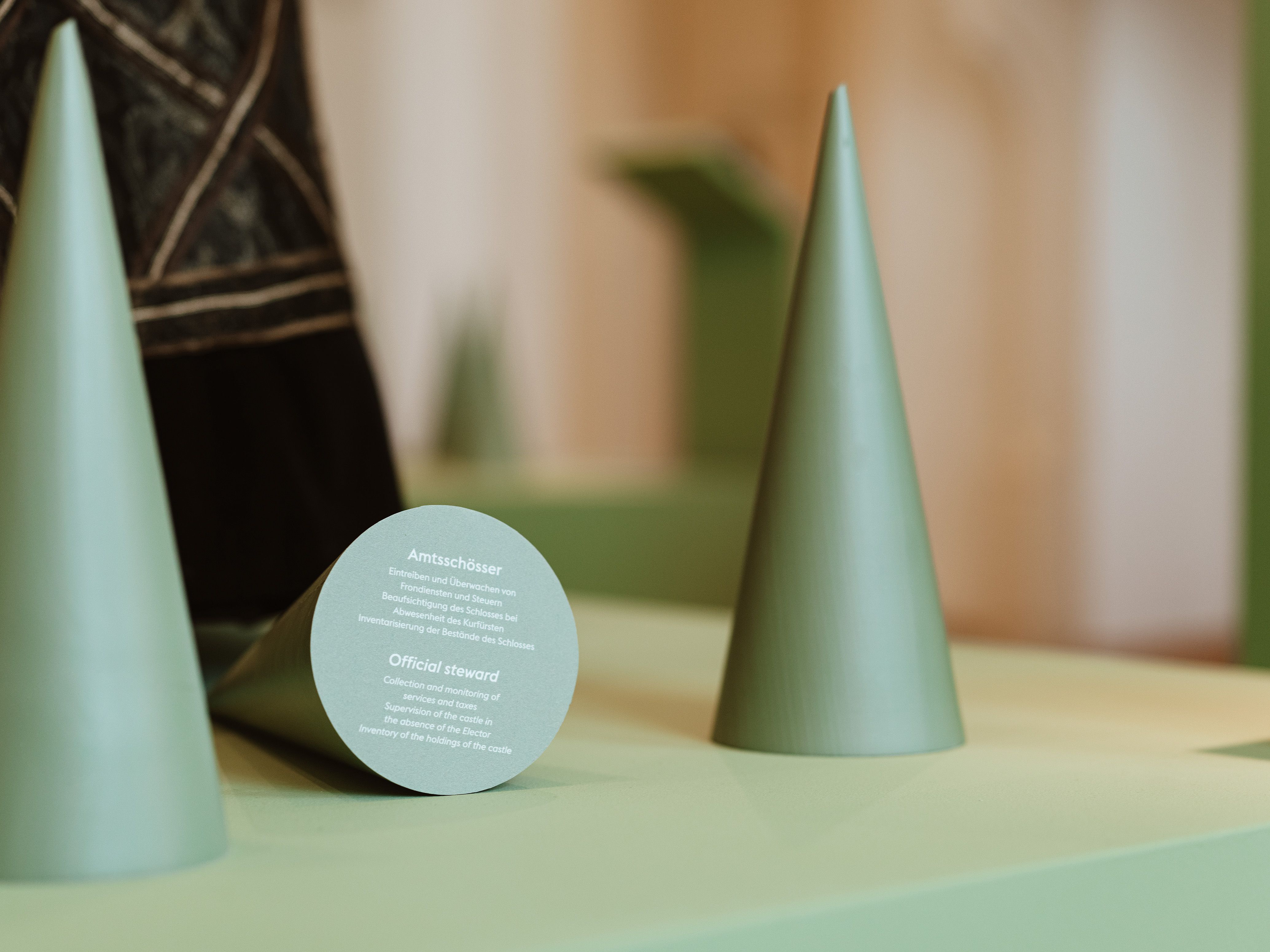
Three rooms each form a thematic cluster and reflect their thematic affiliation also in the colour scheme. The grouping by colour families helps visitors find their way around and was also adopted for the app we created for the exhibition and in the accompanying booklet. The colour schemes of the individual rooms are inspired by the exhibits on display. Some colours are derived from paintings or other exhibits; some colours were chosen to visually support the displayed artifacts. The colours create a backdrop, without ever outshining or interfering with the artefacts’ message. For the texts that introduce the rooms, the exhibition section and the objects, we deliberately chose a colour shade that was one shade darker than the dominant colour of the particular room, to make them stand out against the exhibit furniture. We designed and produced 3 mm thick labels, thus creating not only a visual, but also a haptic contrast to the exhibit furniture. Complementing the existing CI, we added illustrations to the exhibition. In addition to the main protagonists of the exhibition, various sceneries from that time are depicted on the walls of the rooms. The illustrations are also featured in the exhibition app, the 360° projection show, the accompanying booklet and the merchandising products.
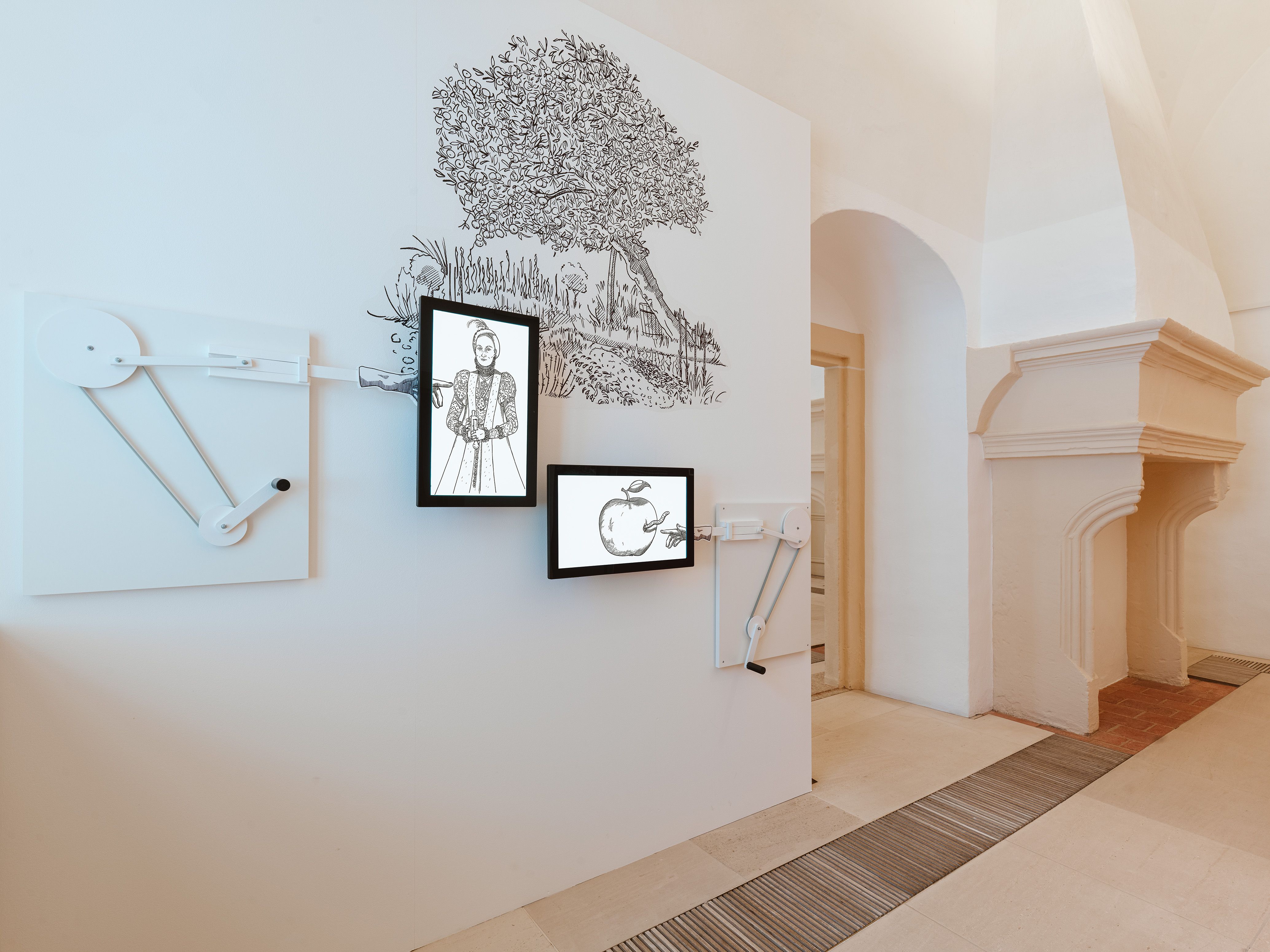
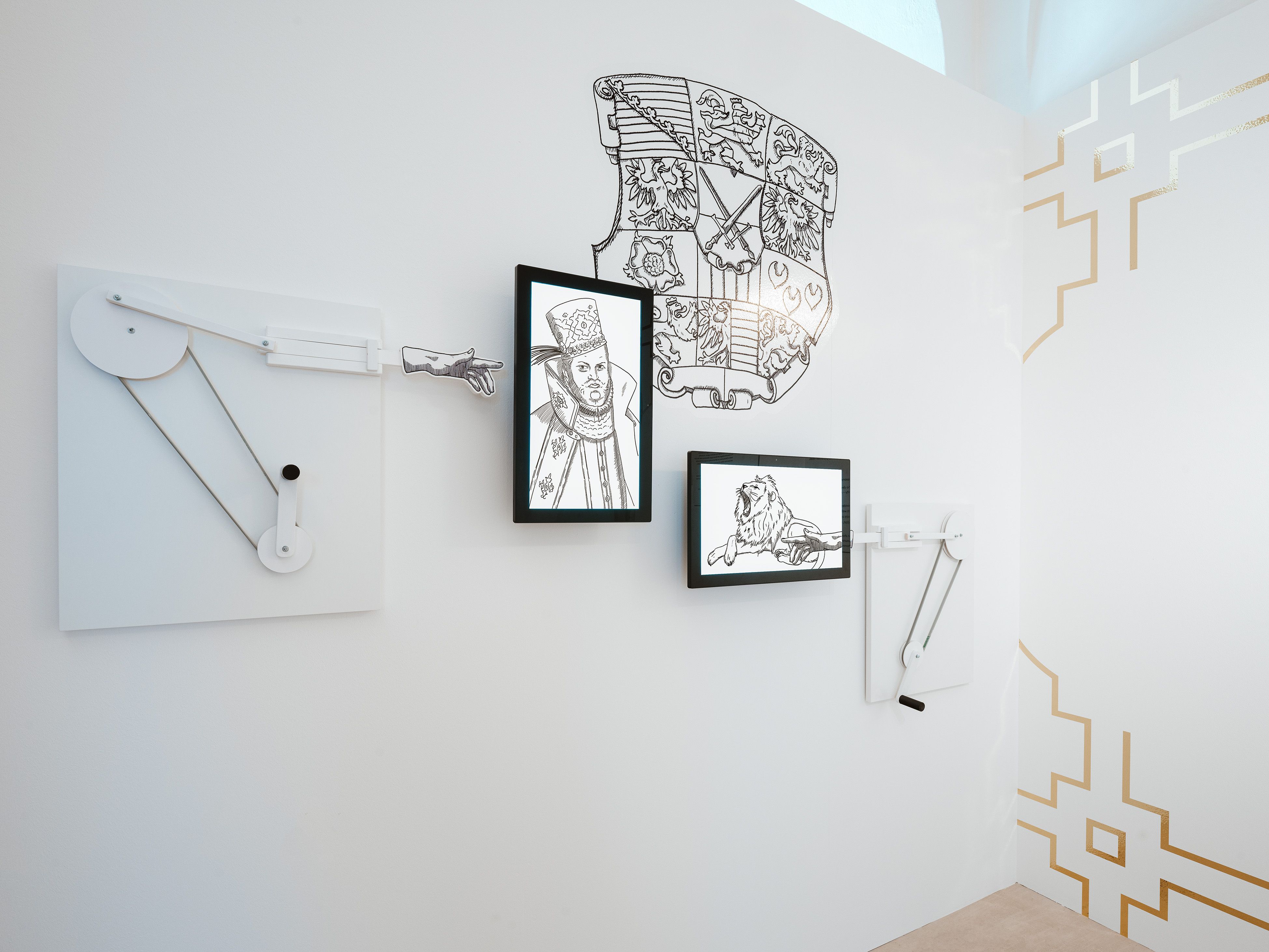
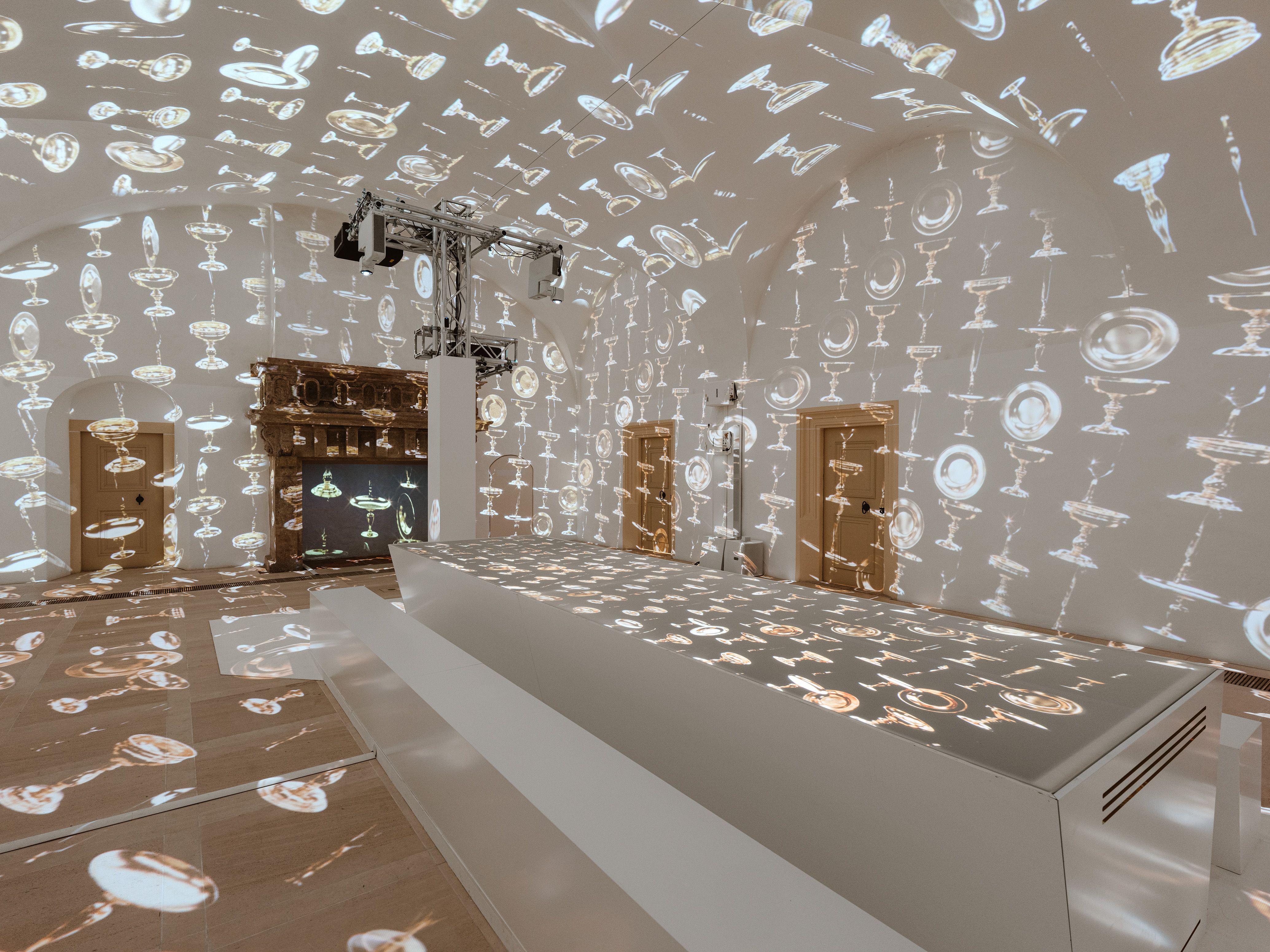
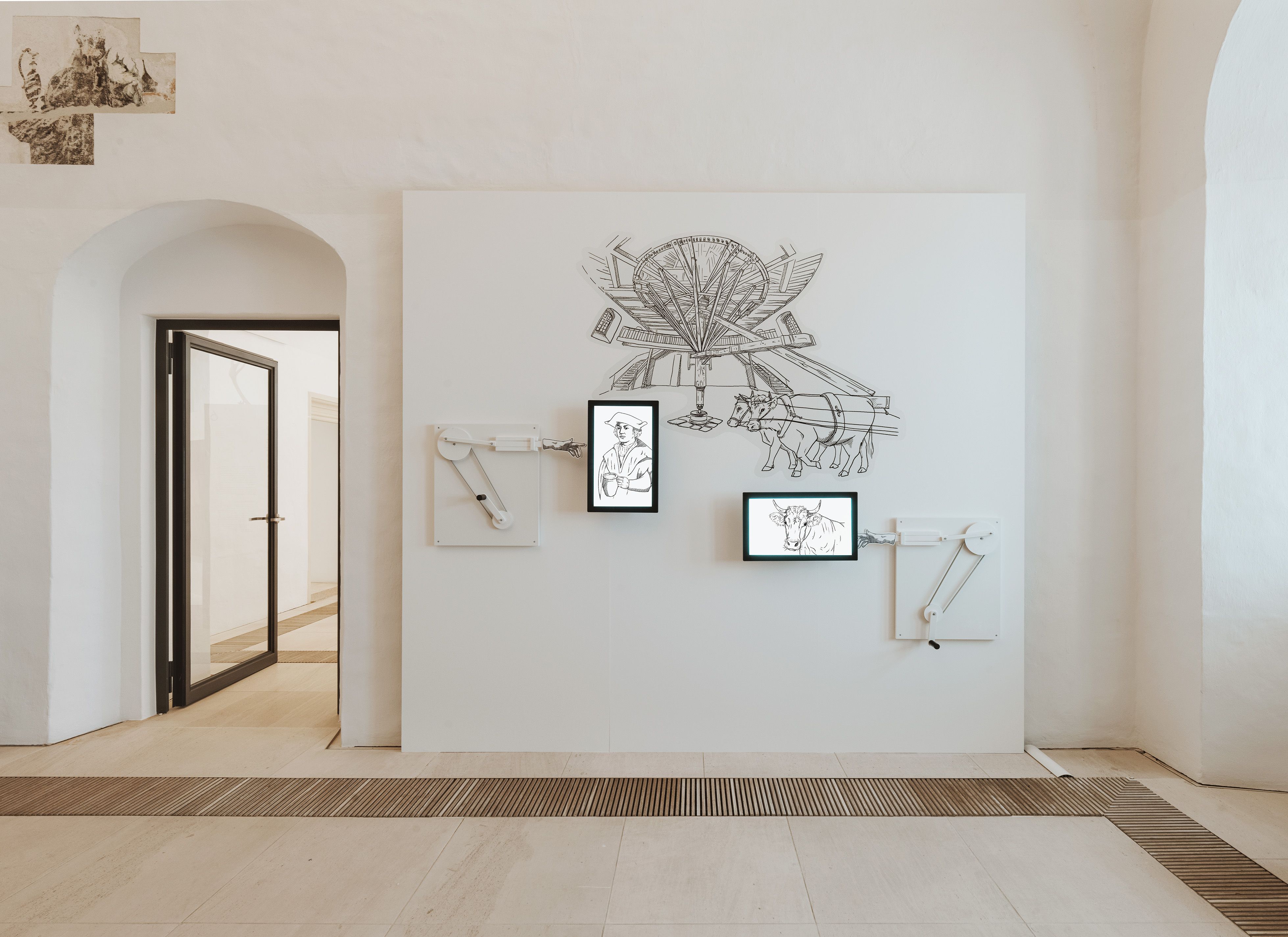
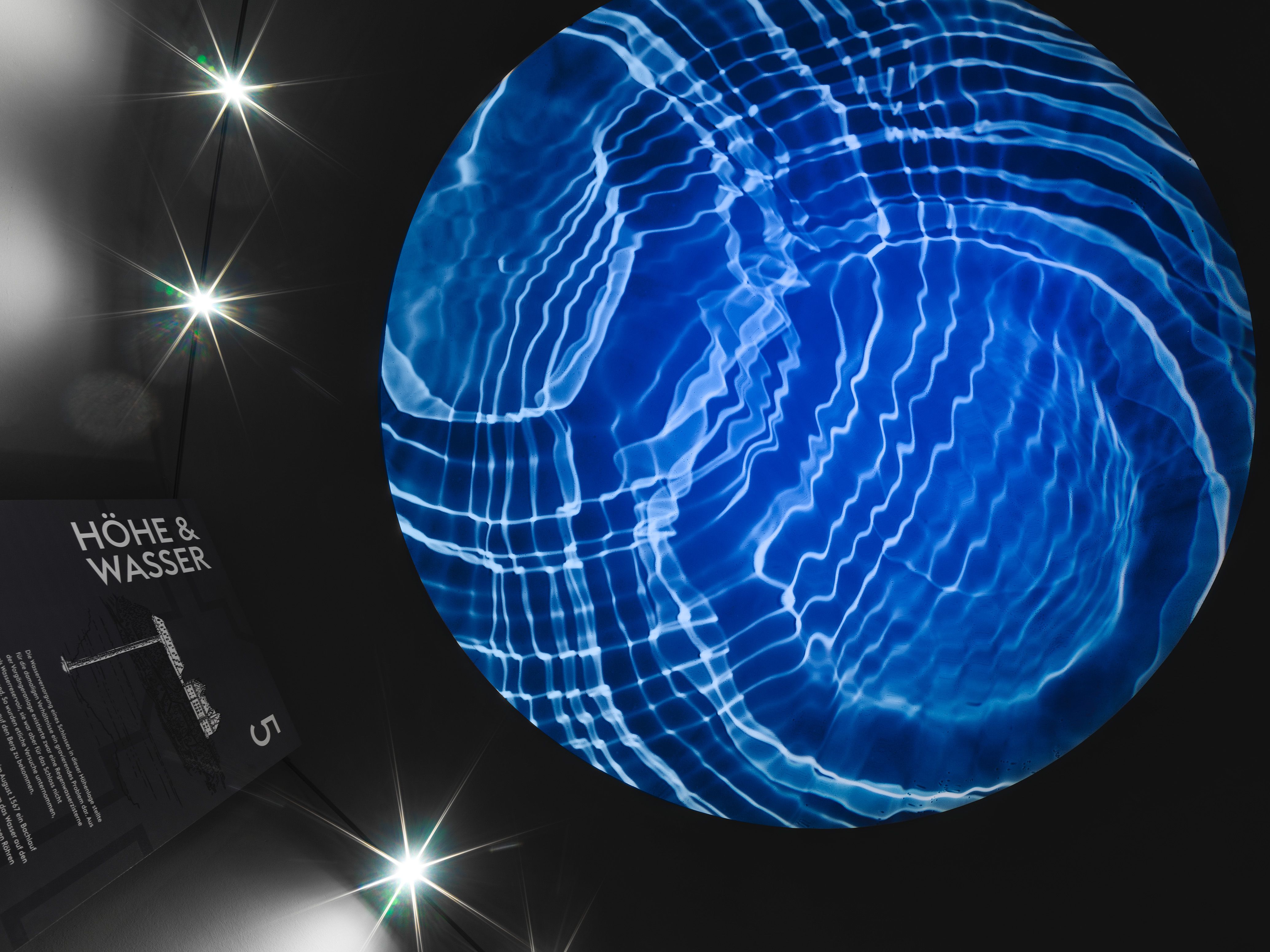
Along with the exhibition architecture, we created an interactive media concept. The media concept consists essentially of three components: a 360° projection show, an exhibition app, and screens that are activated by moving a mechanical crank, adding an additional layer of content to the carefully curated exhibition rooms. As the entire architecture was built around the centre of the rooms, the walls of the rooms remain unconcealed and allow for an additional canvas to present content. For this purpose, movable walls were built (complying with the requirements for listed buildings) that portray relevant personalities. These personalities, along with less prominent voices in historic narratives, share their personal view and insights, including Elector August and his spouse Anna, a poacher digging a well or a court lady. Members of the court and kitchen staff alike spill the beans and share a few secrets of life at court. Twelve protagonists are brought to life by means of illustrations on a screen, using a manually operated crank. When visitors “poke“ one of the protagonists, he or she comes to life and starts to chat with the visitors. Mirroring the exhibition app, these protagonists react differently depending on who pokes them – children or adults. Young visitors are guided by animals, such as the lion from the coat of arms of the Electorate of Saxony, a falcon flying above the castle, or a sneaky cat looking for treats in the castle’s kitchen. The immersive projection show lets visitors experience what it was like to live as an Elector at a time when the world was being reordered.
Ensuring that the high-quality exhibit furniture (MDF, mitered) may be used beyond the duration of the special exhibition, all the exhibition architecture was largely assembled from individual components, making it easy to use and reuse the elements. The single components may be disassembled and reassembled and connected differently. The colours may also be easily modified. The benches we designed can remain permanently in the exhibition space. Committed to saving resources while implementing this exhibition, existing showcases found in the Castle were incorporated into our exhibition design. We are already busy working on the next exhibition. All elements manufactured for the current exhibition will be reused.
Credits
Creative Director
Alexandra Hörtler
Art Director
Stephanie Gindlstrasser
Designer
Lore Stangl
Illustrator
Vanessa Eder-Messutat
Photographer
in the headroom
Category
902 Exhibition & Spatial Design
Client
Augustusburg/Scharfenstein/Lichtenwalde Schlossbetriebe gGmbH
Country
Austria