The Pollinators of Slovenia
https://emergencemagazine.org/feature/pollinators-of-slovenia/
Introduction
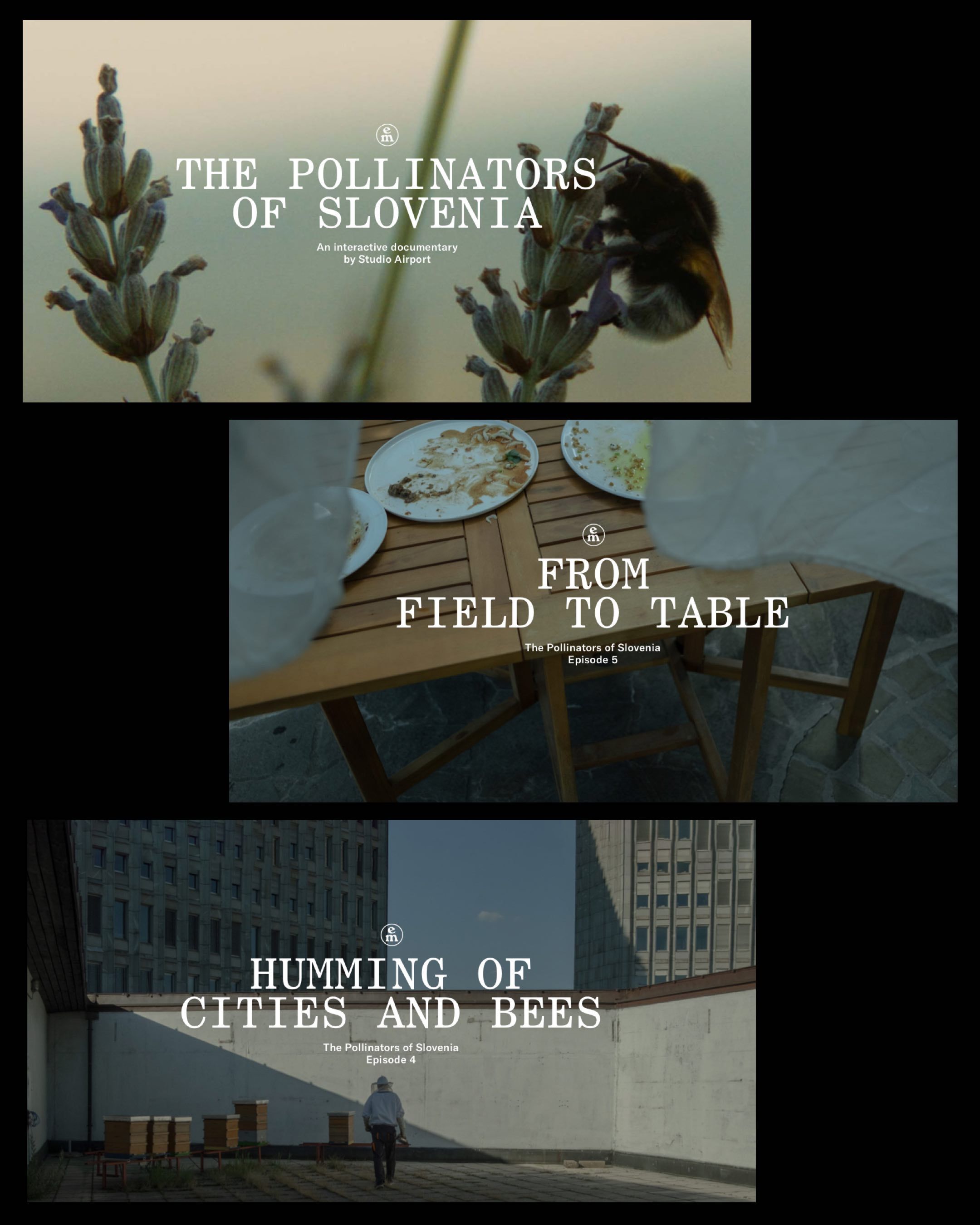
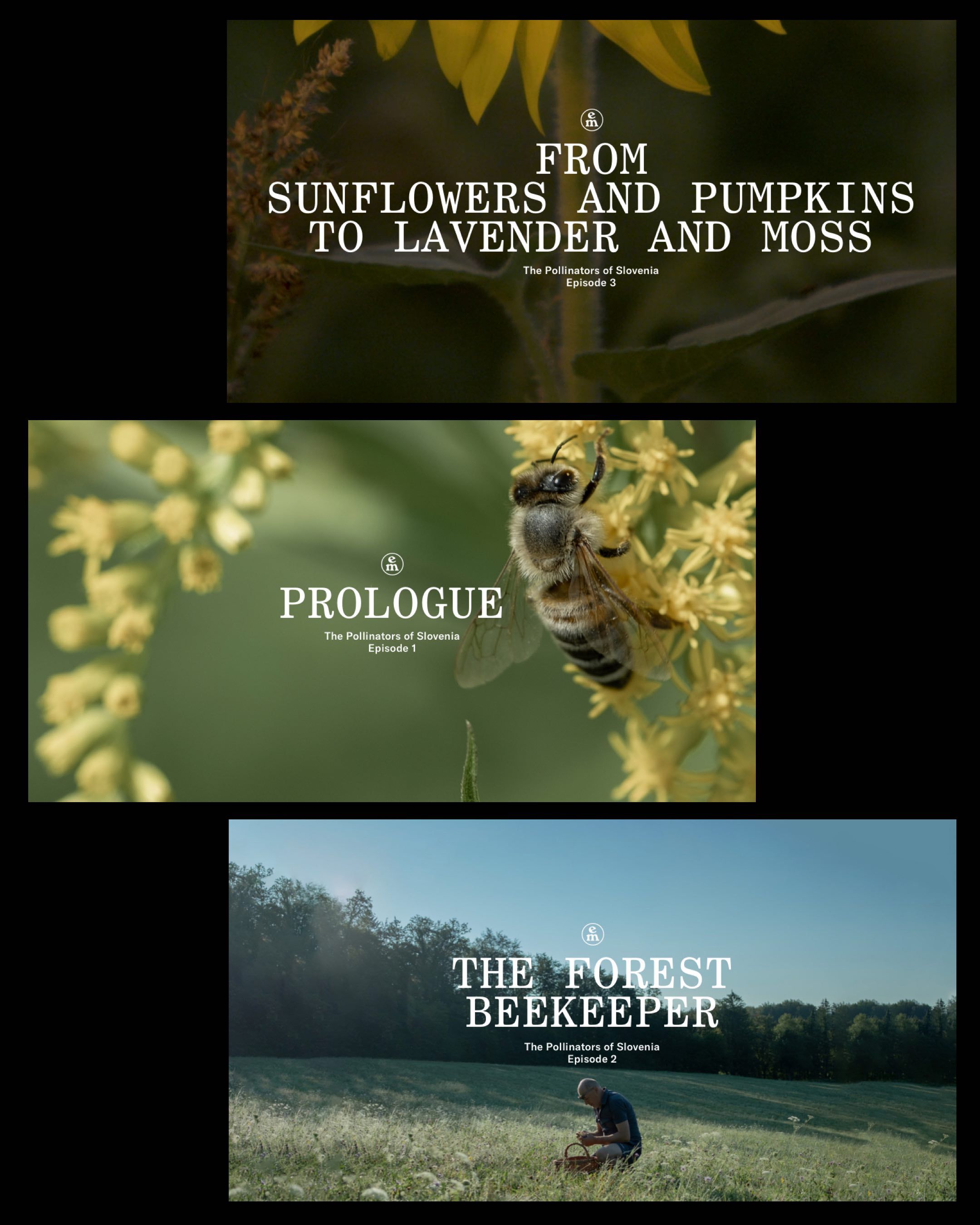
In this five-part interactive documentary, we travel through Slovenia’s thick forests of beech, fir, and maple, across rolling agricultural land and city rooftops, to discover how Slovenians are finding new ways to nurture pollinators in the age of ecological breakdown. We visit family farms that are implementing sustainable practices, meet a forager who shares his bed with bees, learn about urban beekeeping from a rooftop beekeeper, and discover how bees breathe life into farm-to-table cuisine. Through a rich sequence of photography, moving images, and spoken word, we invite you on a journey into a land where pollinators are still held at the heart of our shared life on Earth.
Design & UX
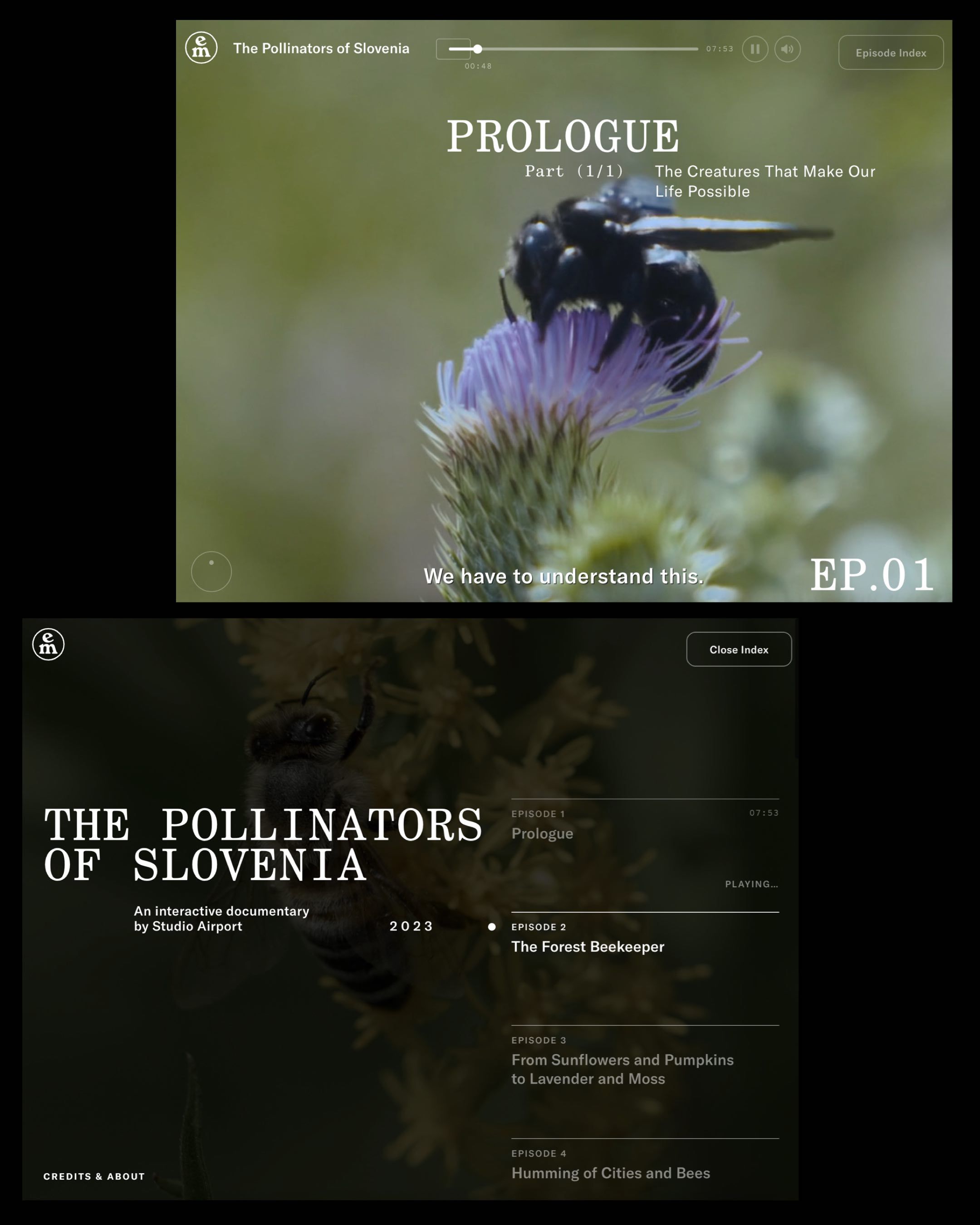
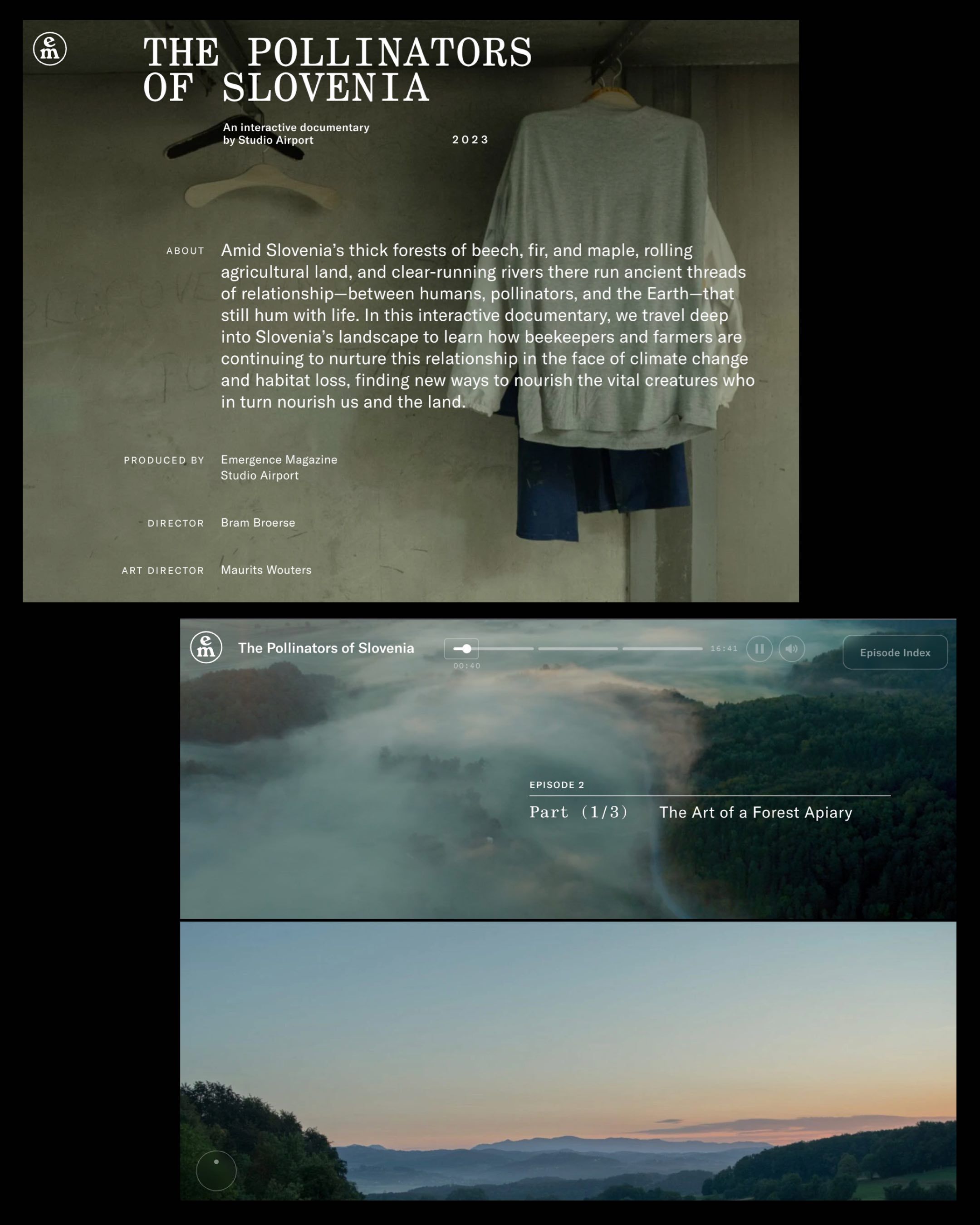
The project was created of the course of 2 years and merges editorial research, graphic design, user experience, filmmaking, photography and audio-design into an innovative storytelling format. The user is in control of how to navigate through the story and explore the visual while listening at the audio experience at the same time. On the top of the screen there is an icon that indicates the viewport of the visual part and the line with dot that shows the audio process. If these to match the experience is at it's best.
Relevance
If an ecosystem is a tapestry, constantly being woven, then pollinators are the ones threading the needle: keeping us together, moving pollen from one plant to another, enabling them to flower and give fruit to the world. It is estimated that nearly 90 percent of flowering plants and 35 percent of human-grown crops rely on pollinators to reproduce. But these vital creatures—bees, butterflies, wasps, and beetles, among others—are in decline, and humans are largely responsible.
As we seek to navigate the effects of climate change and habitat loss on these populations, we need to remember and nurture the deep kinship that has evolved between pollinators and humans. To rekindle this relationship, we might look to Slovenia, whose ancient tradition of beekeeping was granted UNESCO World Heritage status this winter. Slovenians’ enduring, attentive relationship with bees means that they are keenly attuned to changes in the natural environment. It was beekeepers who first noticed that neonicotinoid pesticides were killing pollinators, and this led to Slovenia becoming one of the first European Union countries to ban them.
Credits