26th Flying Broom Women's Film Festival
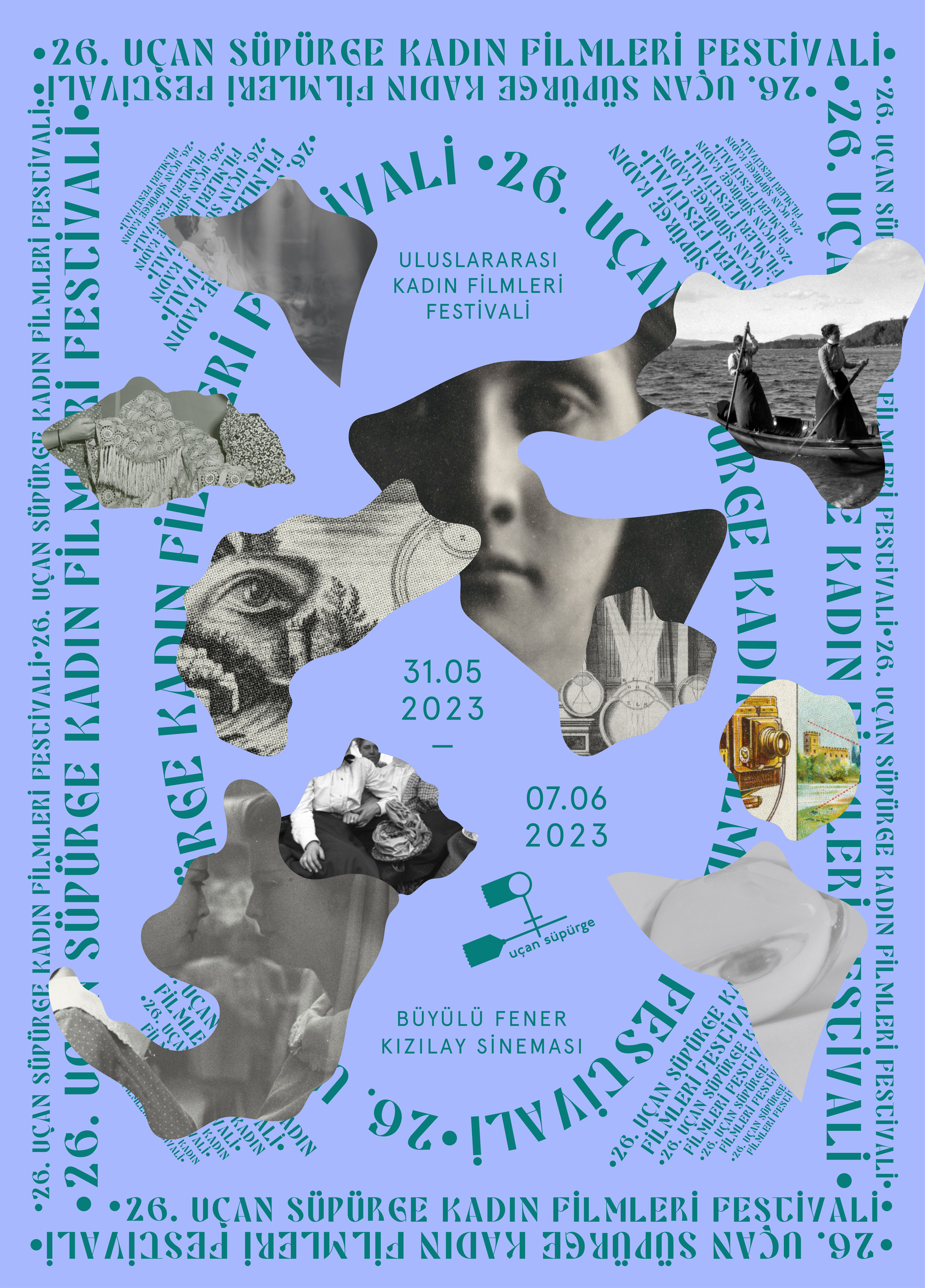
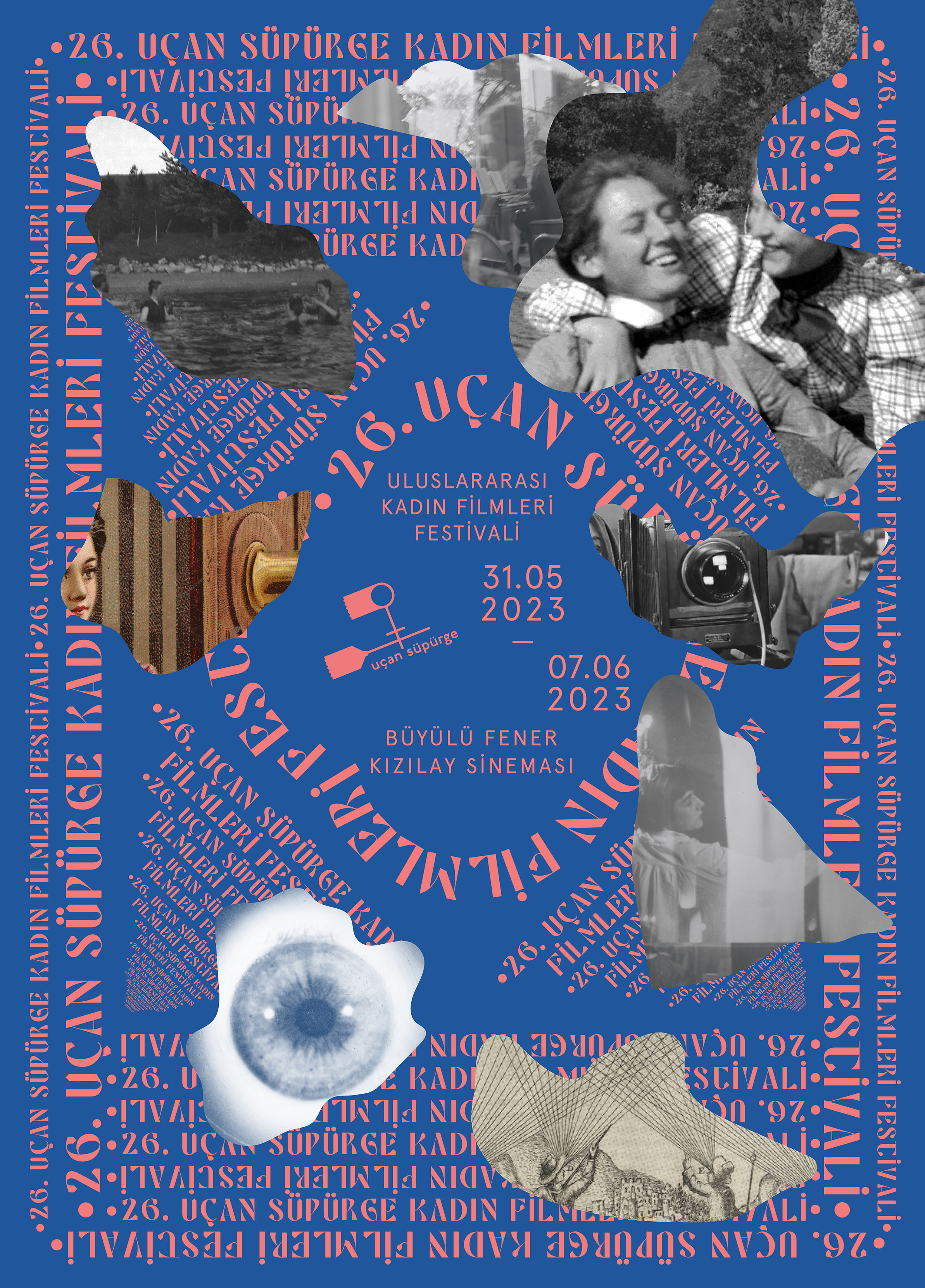
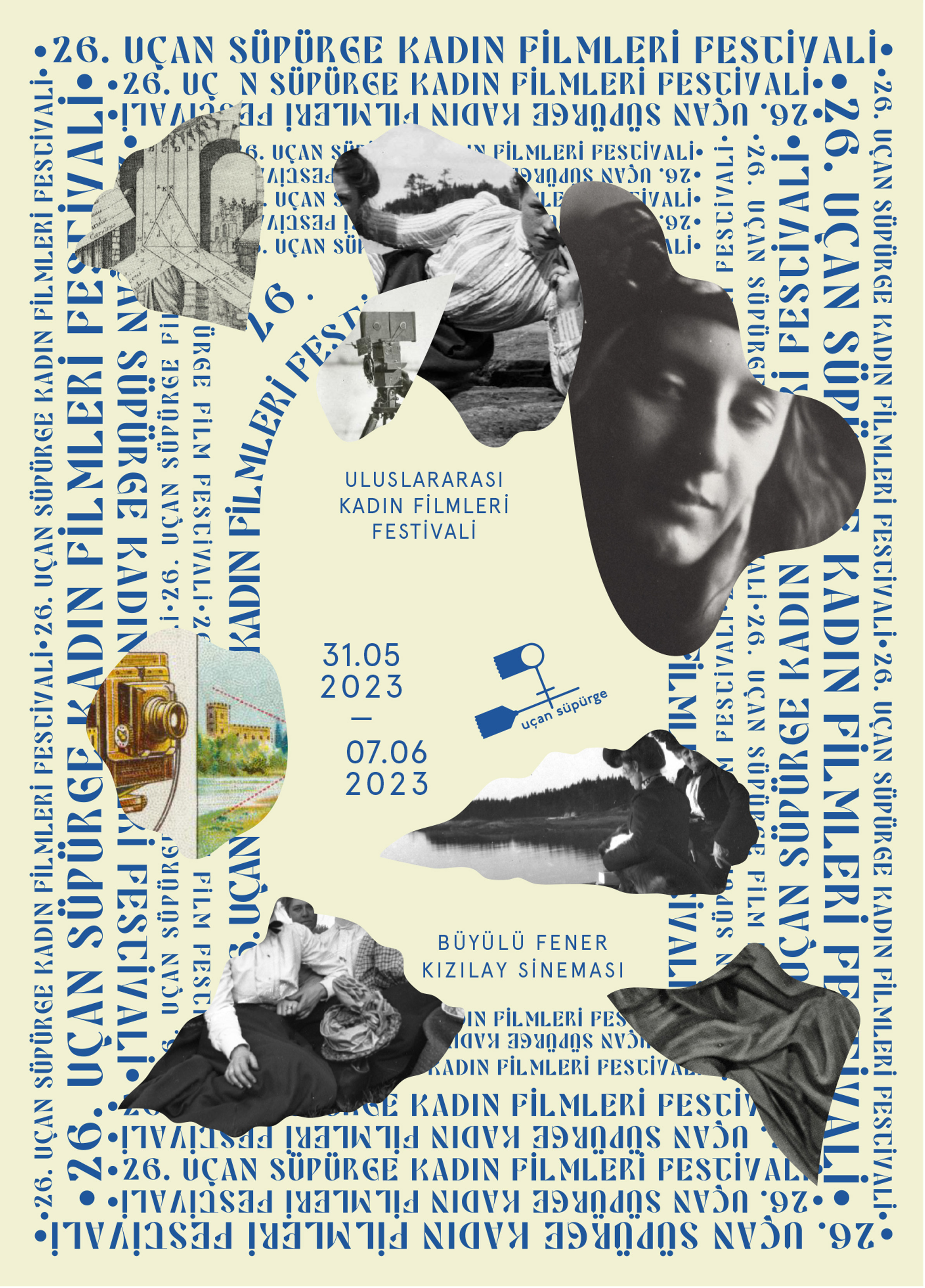
While designing the visual identity system for this year's theme "More is More" for the quarter-century old film festival, I thought that the moment of existence of women from all geographies and points of view, which has been pushed at the back for centuries, not only in the field of cinema but in all fields of art, should be put into perspective. The color palette includes many different colors, the typeface refers to both the present and the past and has a rather distinct stance, and the variety of forms in which the images are placed underscores my effort to highlight these differences. In addition to all this, the text “26th Flying Broom International Women's Film Festival”, which is countlessly repeated in the festival graphics and envelops the areas where it is applied, aims to underline the consistent and strong stance of this festival. In addition to this typographic approach that includes 3 different colors and types of styles, there also are some illustrations consisting of women's portraits and eye images that accompany the text —such as the photographs of a group of women floating down a river in a canoe or posing shoulder to shoulder by the sea, laughing and smiling— are a selection of Theresa Babb's works from her “Photographs of Friendship” series, which she began in 1898 by photographing only women. The multiple portraits of women in the “Photographs of Friendship” series are accompanied by close-up portraits of a woman named Julia Jackson, taken by Julia Margaret Cameron in 1867. Finally, by referencing the illustrations in Johann Zahn's 1685 series “The Long Distance Artificial Eye”, my goal was to create a multi-layered and multi-dimensional visual communication system, just like the film selection of this festival. Johann Zahn created the illustrations on the posters from drawings of his experiments with camera obscura, various lenses, light sources, and reflectors. These images work in a one-to-one relationship with the themes of the festival's film selection, such as the relationship between "turning inward and looking outward", the focus on "reflections and objects", and "looking at objects again". For example, there is a film in the festival called “Mirror Mirror”, and some of the images in the film have a direct axis-scene relationship to Zahn's illustrations.
Credits