Aalto University Design System
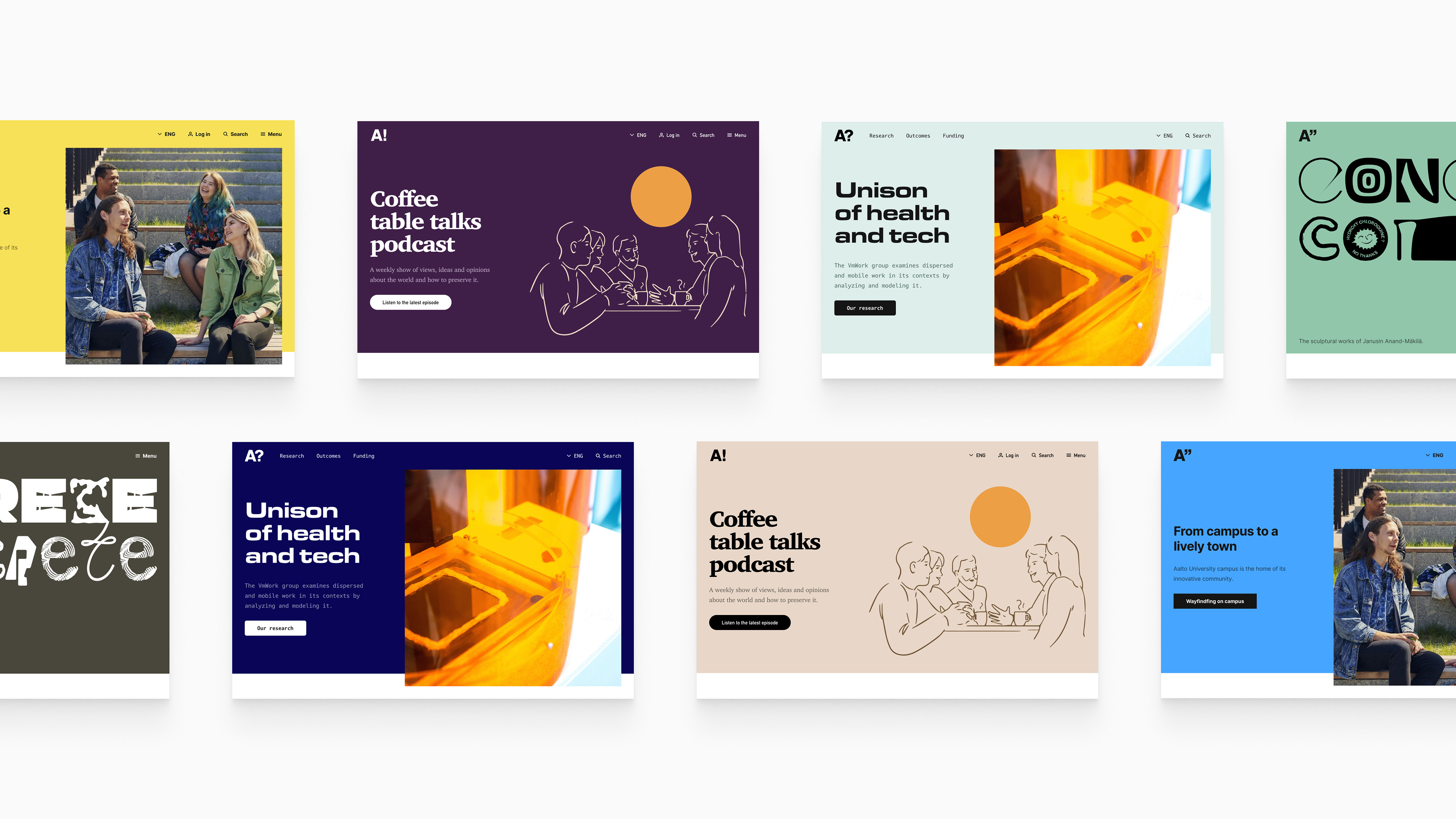
Aalto University is a community of doers solving grand societal problems, so there are a lot of
great stories to tell and awesome achievements to show off. The people at Aalto want to create
exciting digital touchpoints to showcase their work but have been lacking the tools to do so.
Taiste joined forces with Aalto University Communications to deliver a toolbox – a design system –
to ensure that these touchpoints can be easily created, are of the highest quality, and feel
inherently like Aalto.
Aalto has hundreds, if not thousands, of creators and editors with a wide range of needs, ideas,
and messages. In the academic environment, freedom is very important and the new system
should allow that while keeping the core and the customer experience unified. The goal is that the
creators could focus on what’s important, their interesting content.
The core principles driving the Aalto design system implementation are modularity and
adaptability. Different contexts and environments in the design system may be integrated at
varying levels. The users could choose to use complete modules or templates or opt-in only for
individual elements like design tokens or single UI components. This approach allows creative
freedom while ensuring that Aalto’s visual identity, accessibility standards, and user-friendliness
are upheld.
Aalto’s values: natural, inclusive, confident, and progressive were key principles for the design
system. They guide the system to emphasize accessibility, green coding, and flexibility.
The project began with a pre-study to define the requirements. This was based on qualitative
research conducted through interviews.
It was determined that the core principles driving the Aalto design system are modularity and
adaptability. Various contexts and environments may be integrated into the design system at
different levels. Users have the flexibility to choose complete modules or templates or opt for
individual elements such as design tokens or single UI components, allowing them to craft their
user interfaces. This approach ensures creative freedom while upholding Aalto’s visual identity,
accessibility standards, and user-friendliness."
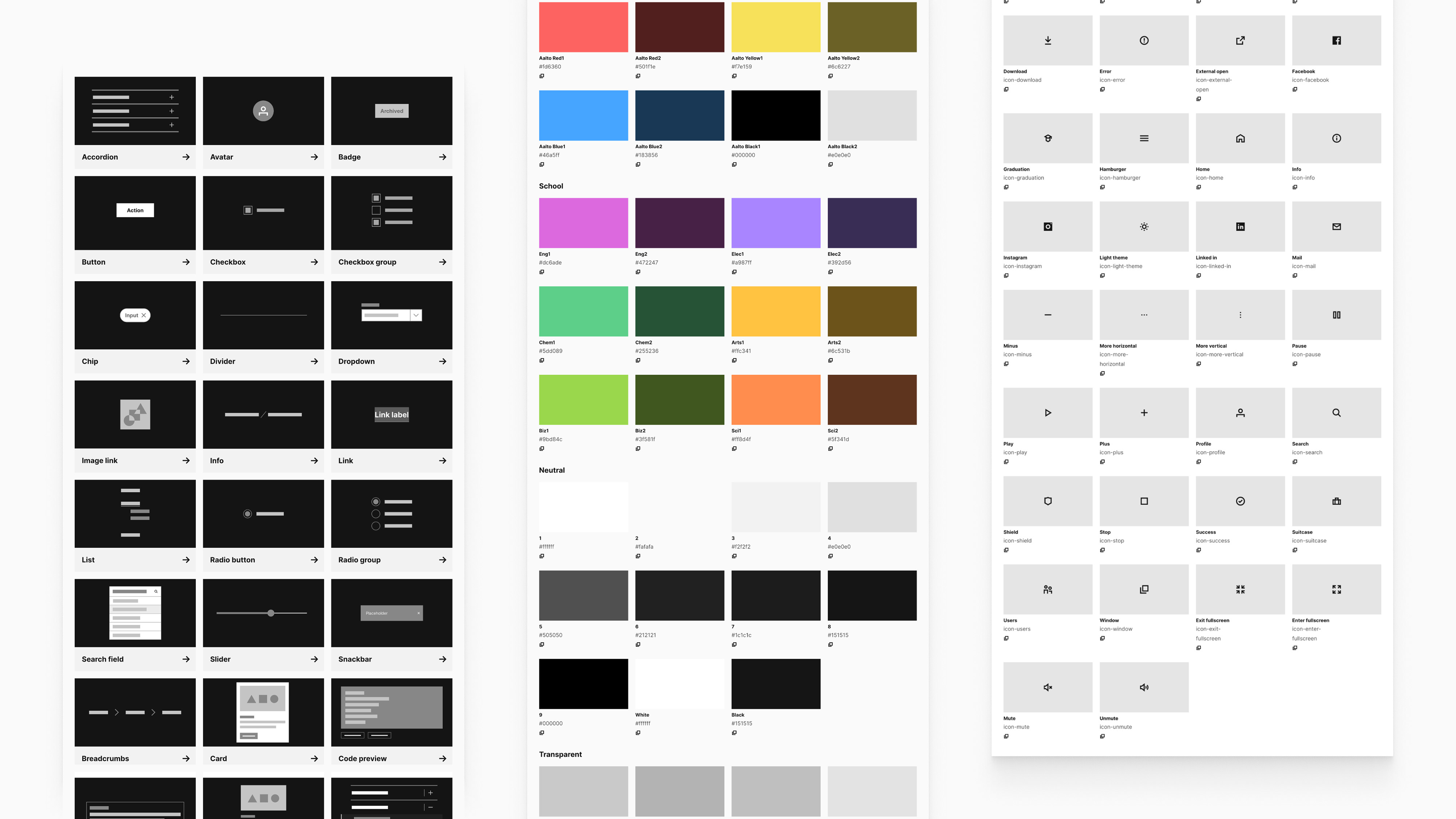
We opted for a technology-agnostic approach to make the system accessible to all parties. Figma
library, Storybook, and website guidelines were included for different users: those building the
system and those using it. To ensure effective guarding, guidance, and updates, we implemented
a governance model. The Aalto design system not only aligns with all WCAG 2.1 AA accessibility
standards but also supports environmental sustainability goals through the use of green coding
practices.
Credits