Memory palace / geheugenpaleis
Memory Palace is a cross-media graphic design project that transforms historical research into a tactile music artefact. Rooted in the life of 19th-century European outsider Nicolas Reubsaet, the project explores how identity, memory, and ambition are constructed through sound, image, and material culture. Research, music, and design are inseparable, forming a single object rather than parallel outputs.
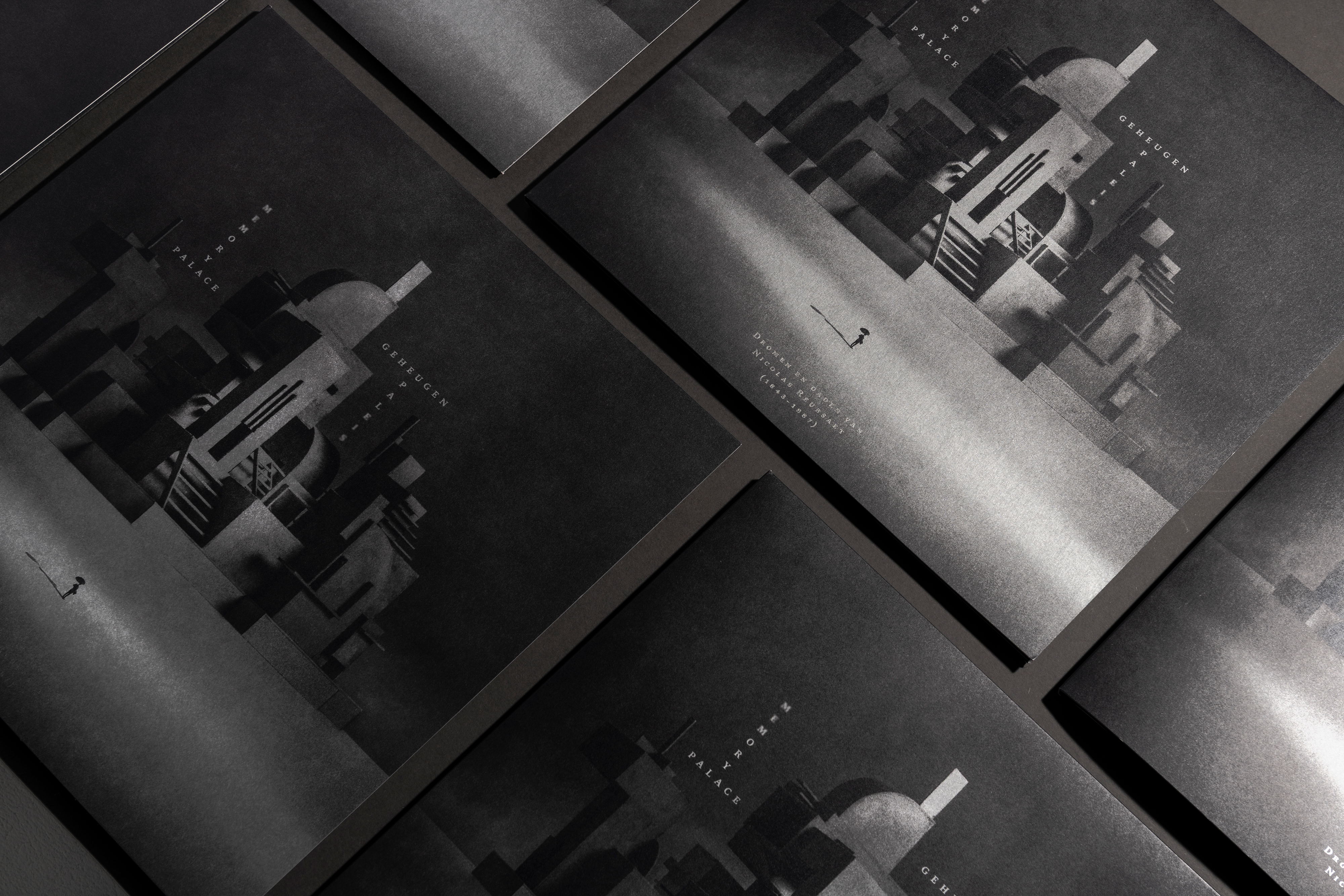
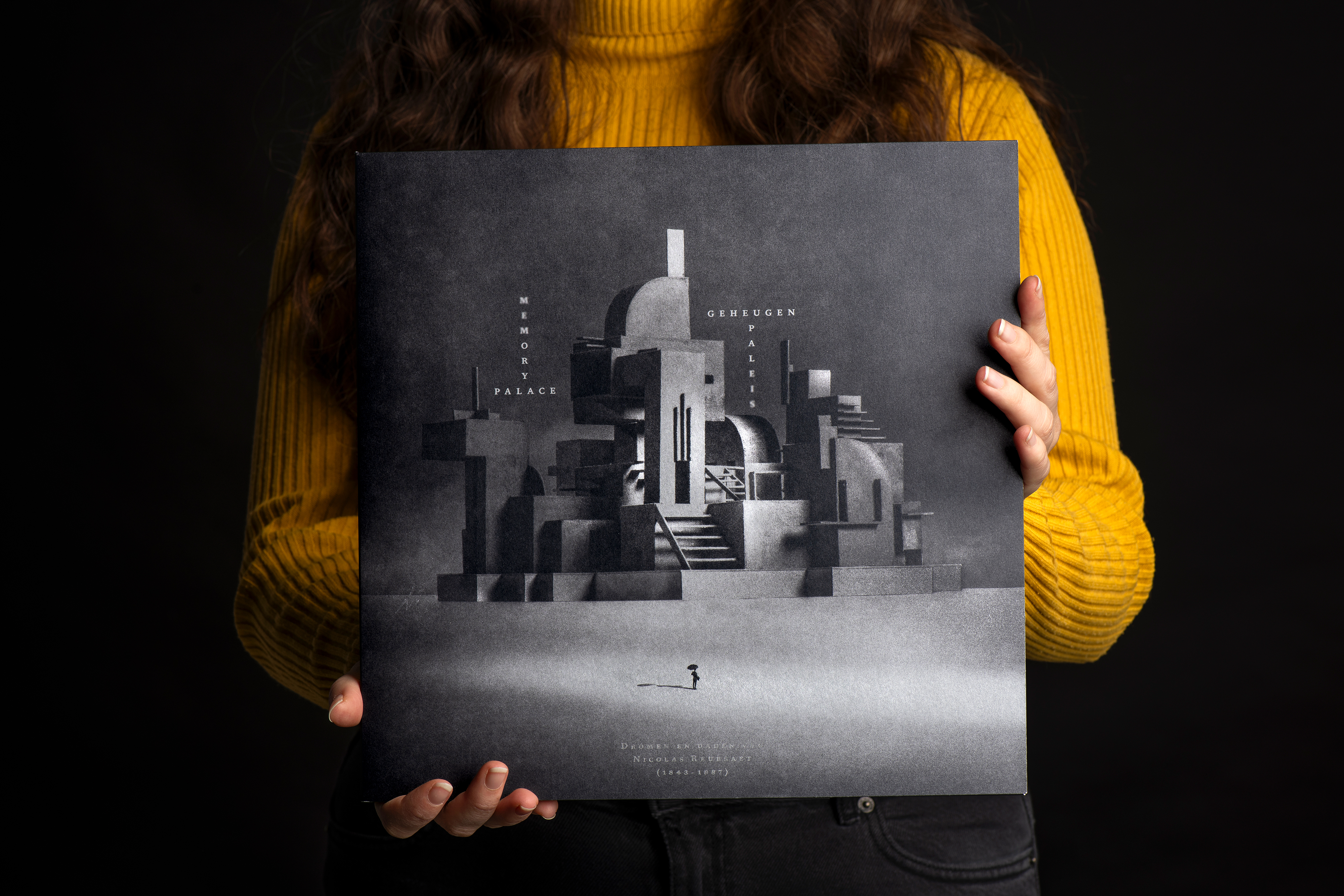
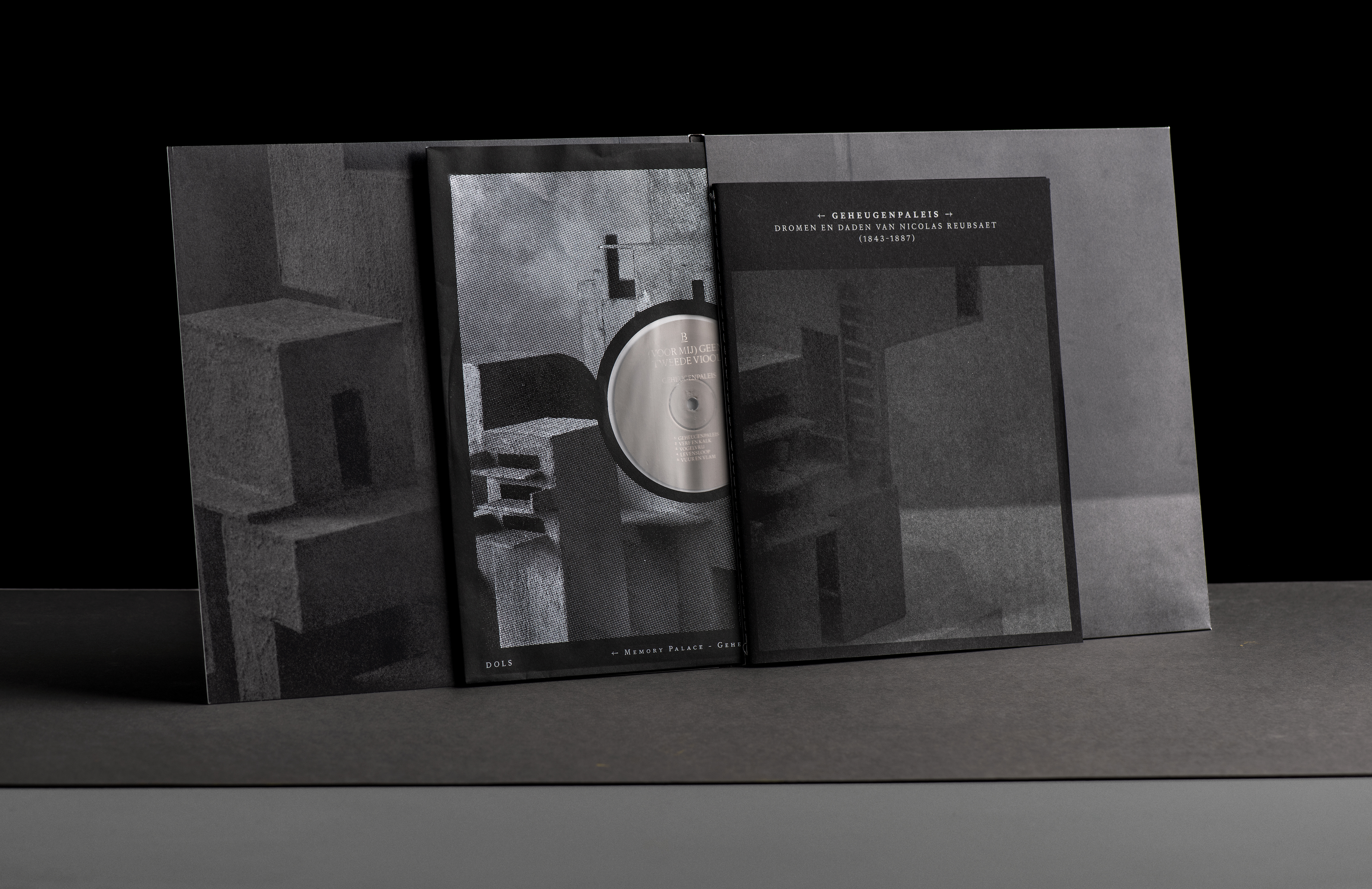
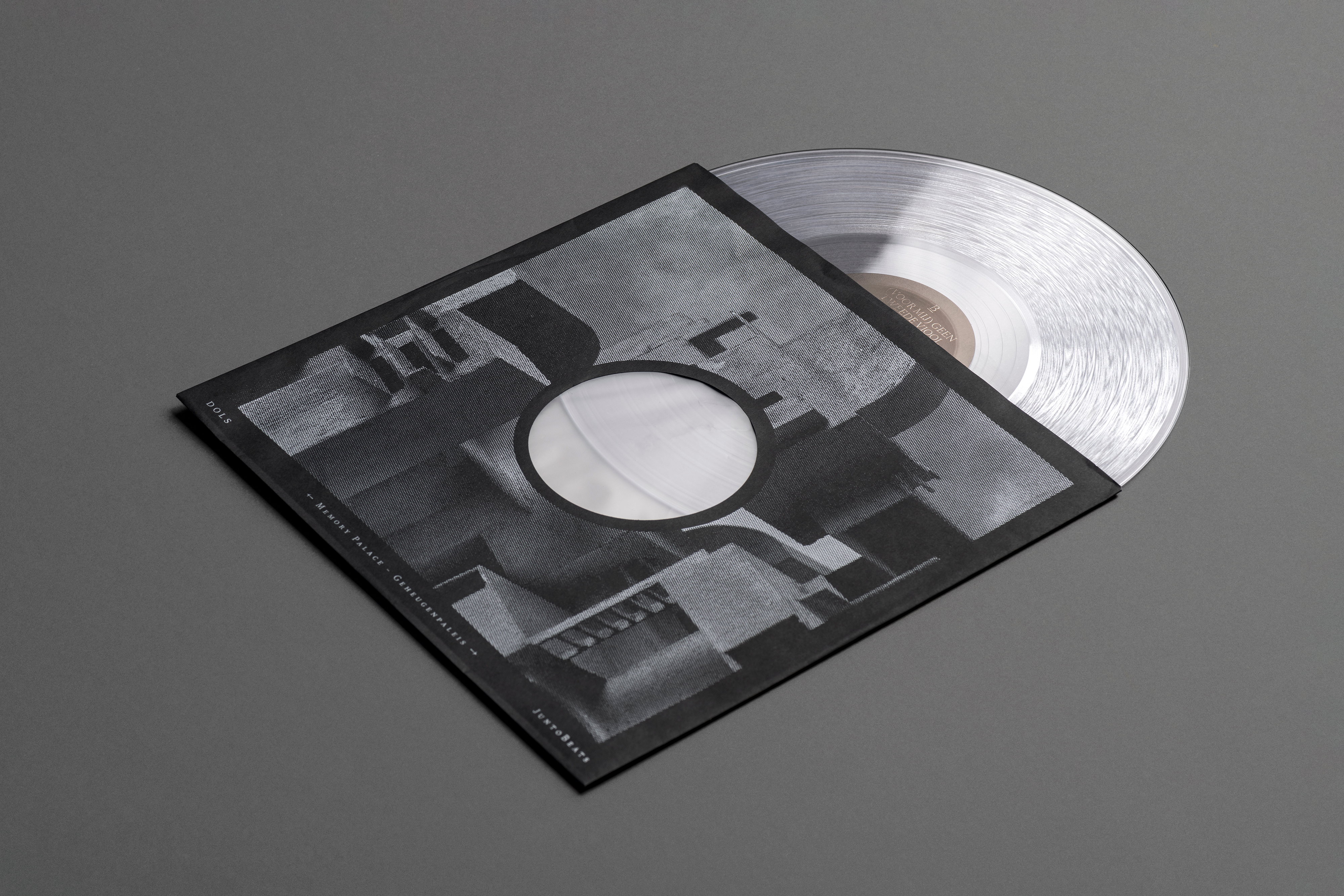
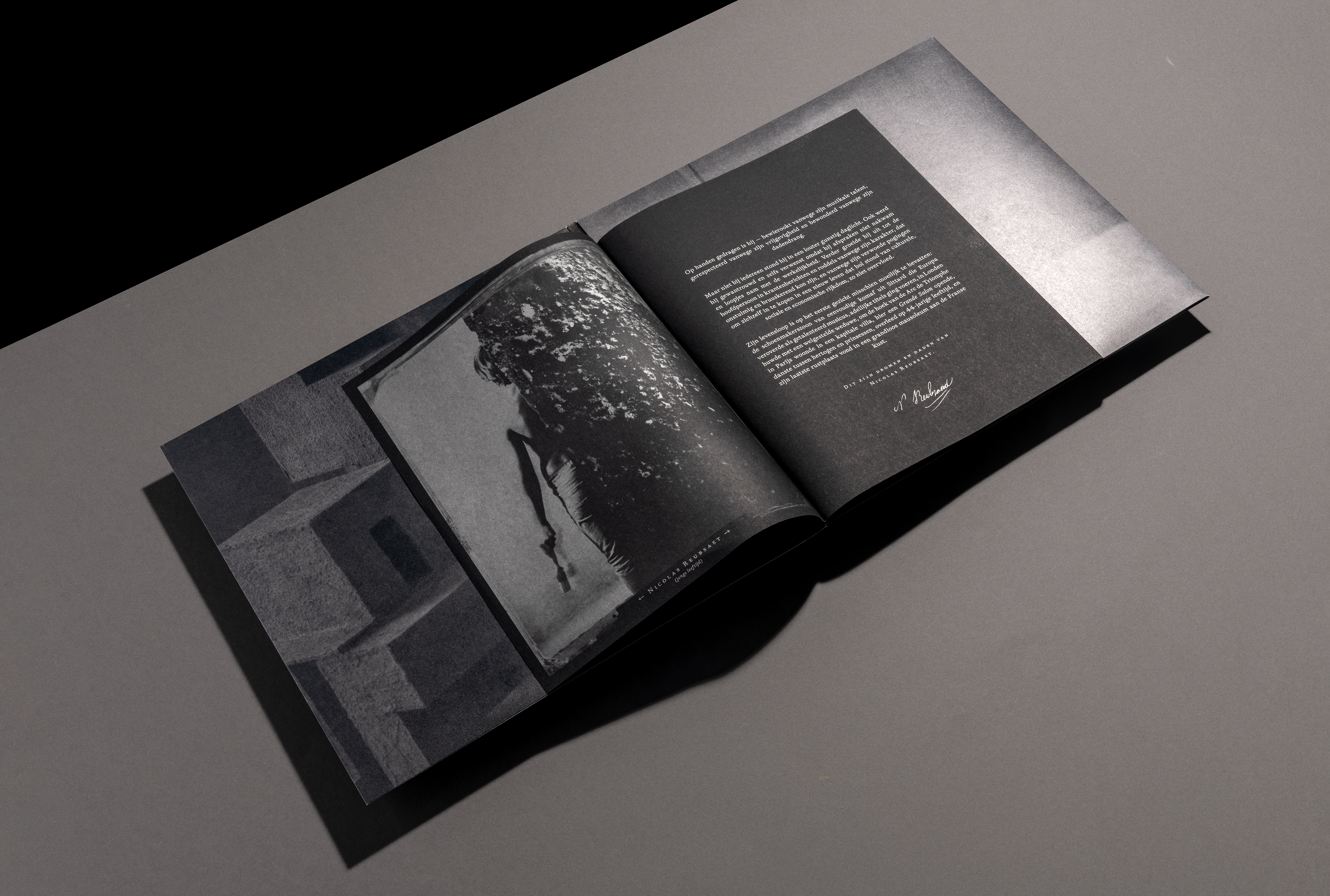
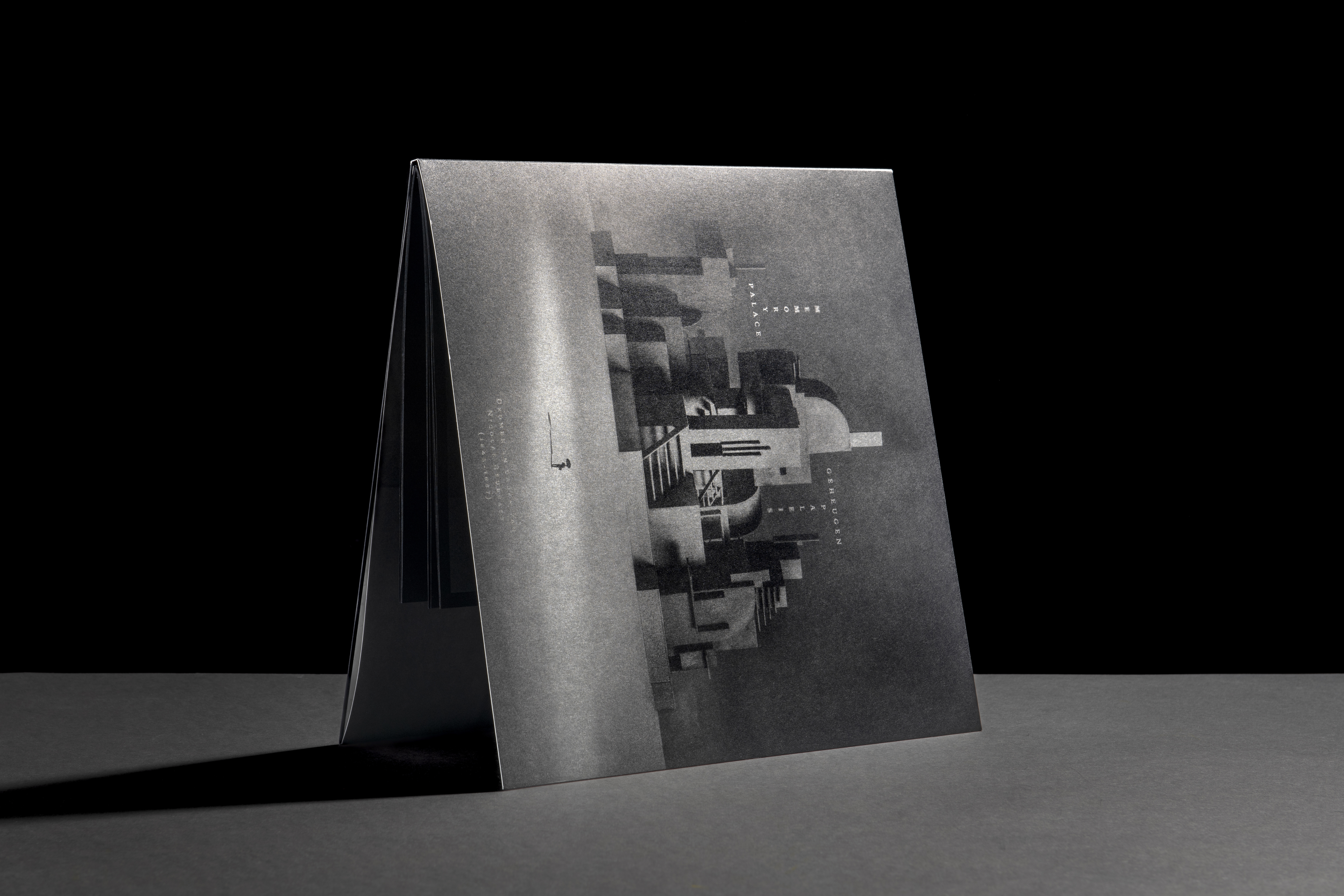
The brief was to translate academic research into a contemporary music release without diluting either the scholarly content or the musical experience. Artist and researcher Chris Dols composed an album based on Reubsaet’s life, while the graphic design embeds the full research physically within the vinyl object itself. The result is a vinyl LP whose sleeve contains a bound research book, forcing listening and reading to coexist as one continuous narrative experience.
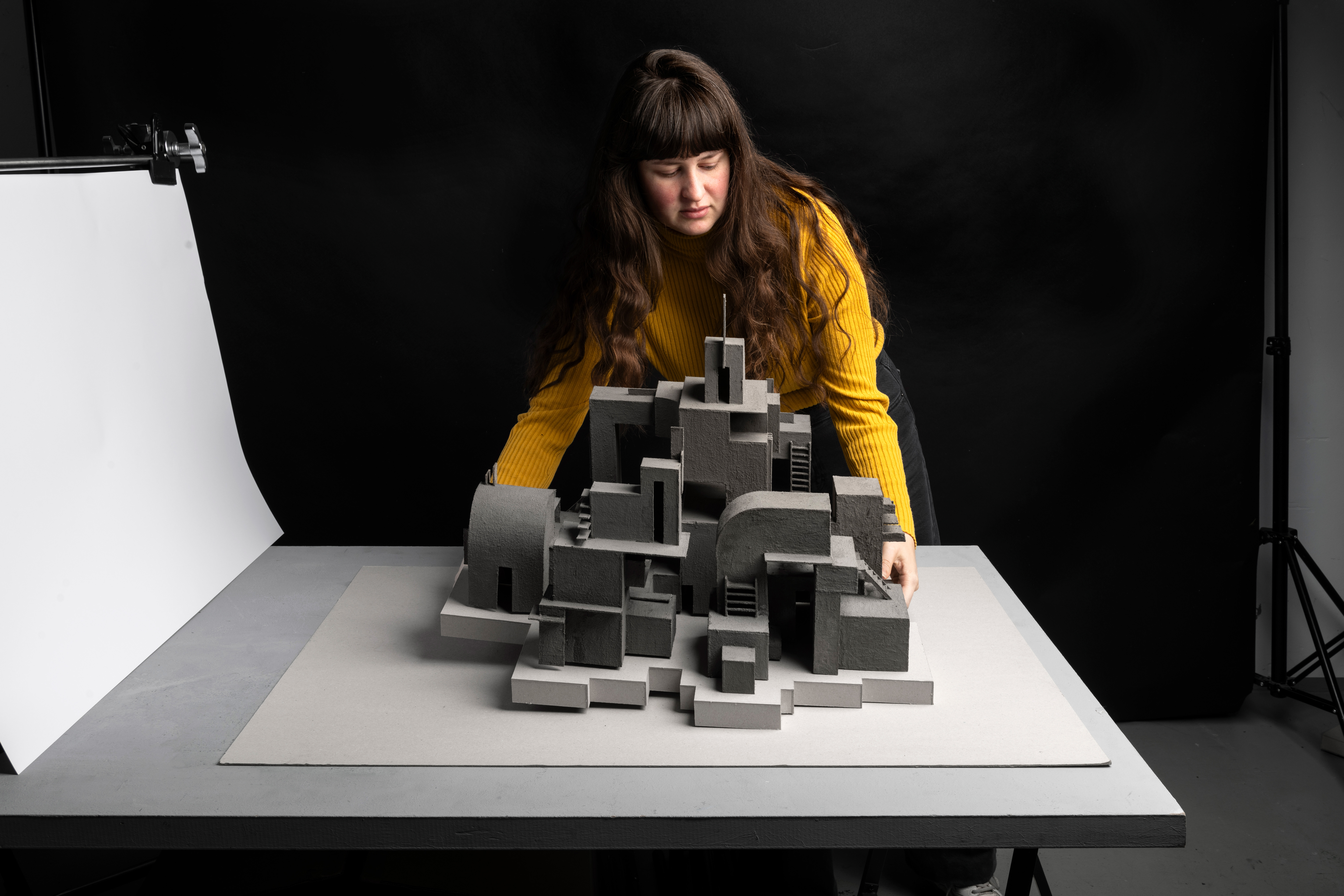
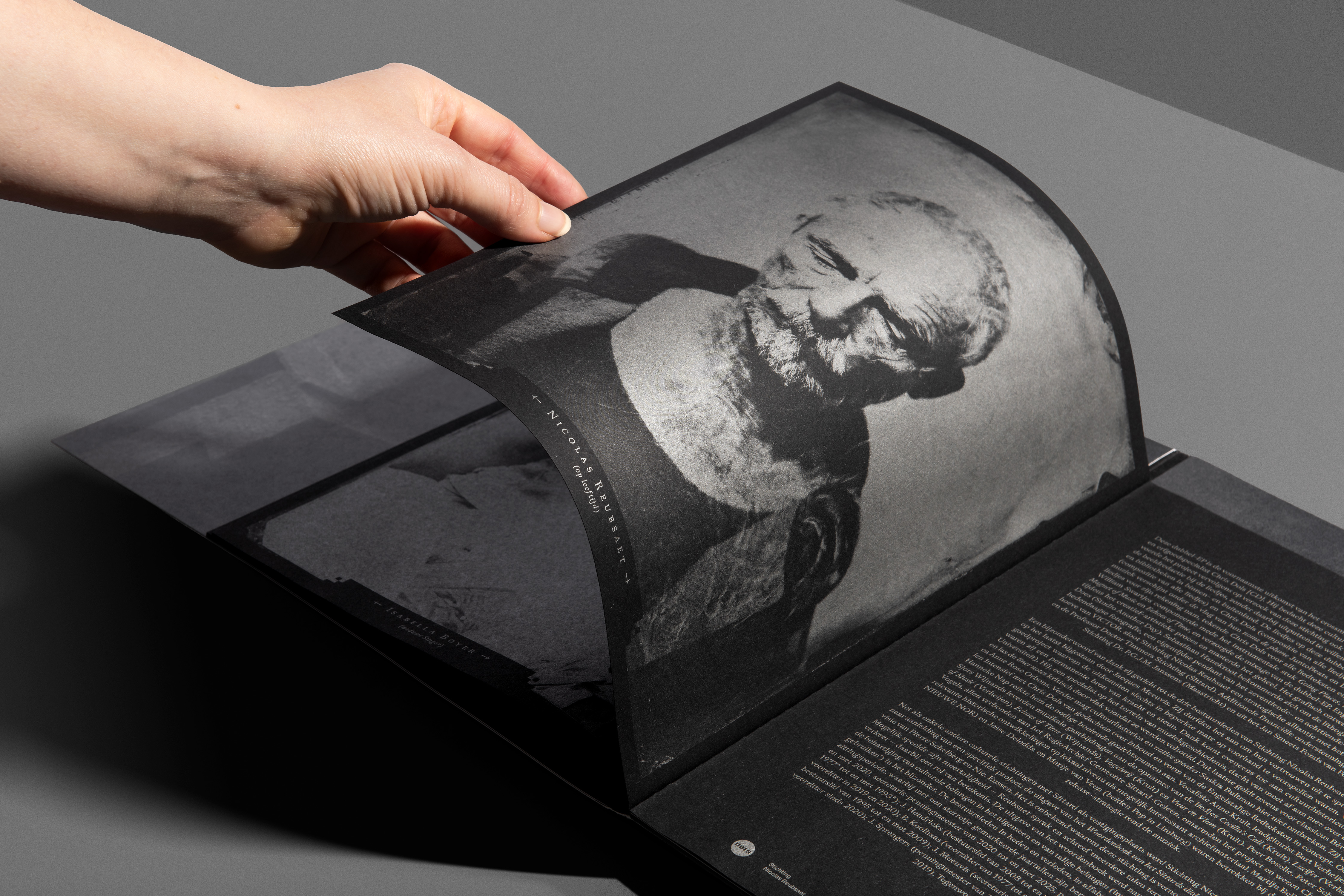
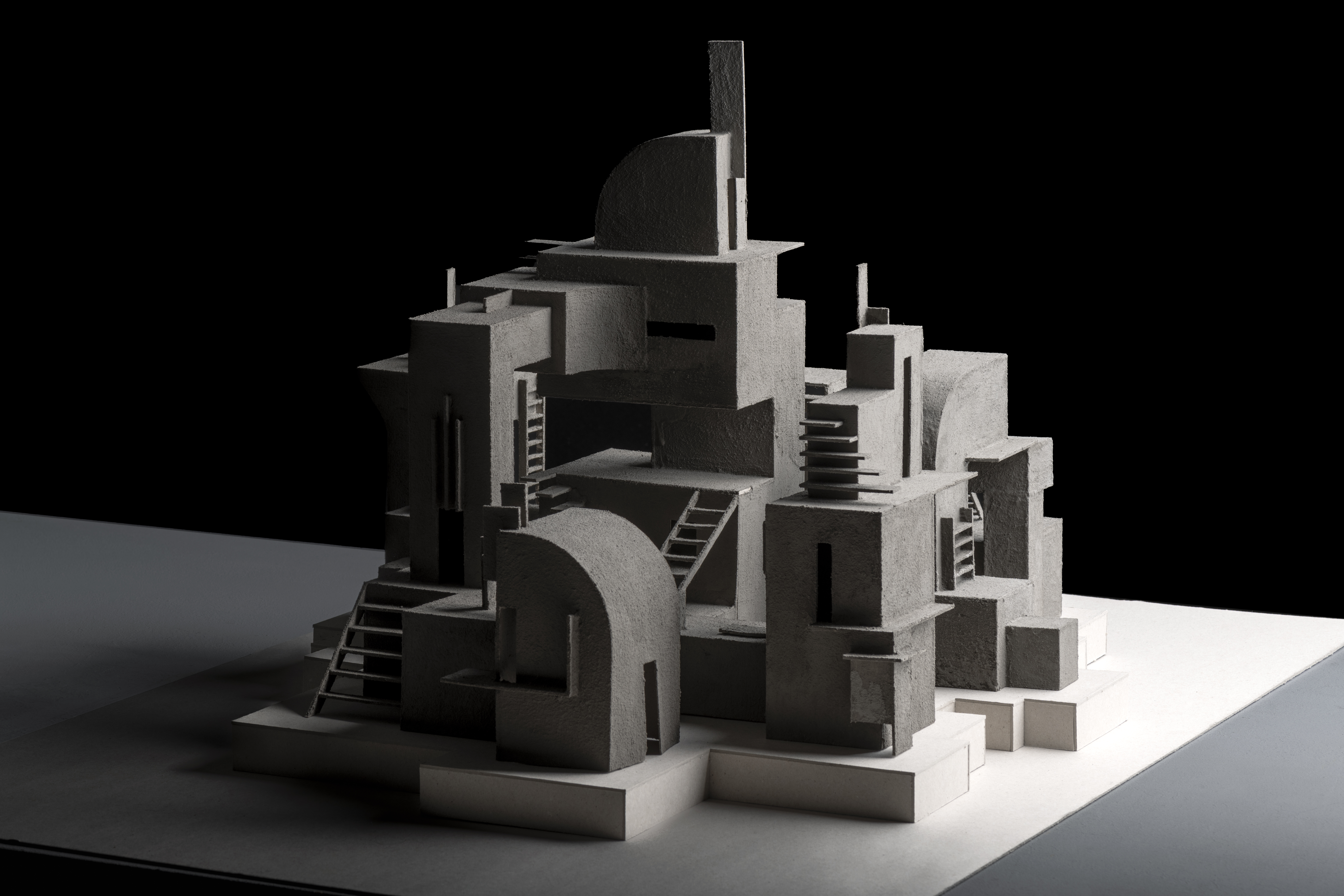
The title Memory Palace refers to a classical mnemonic technique in which knowledge is stored within imagined architectural spaces. This concept directly informs the design: content is literally housed inside a structure. A hand-built cardboard palace was photographed using analogue techniques, including wet-plate collodion portraits, to reference 19th-century image-making and ideas of authenticity, permanence, and memory.
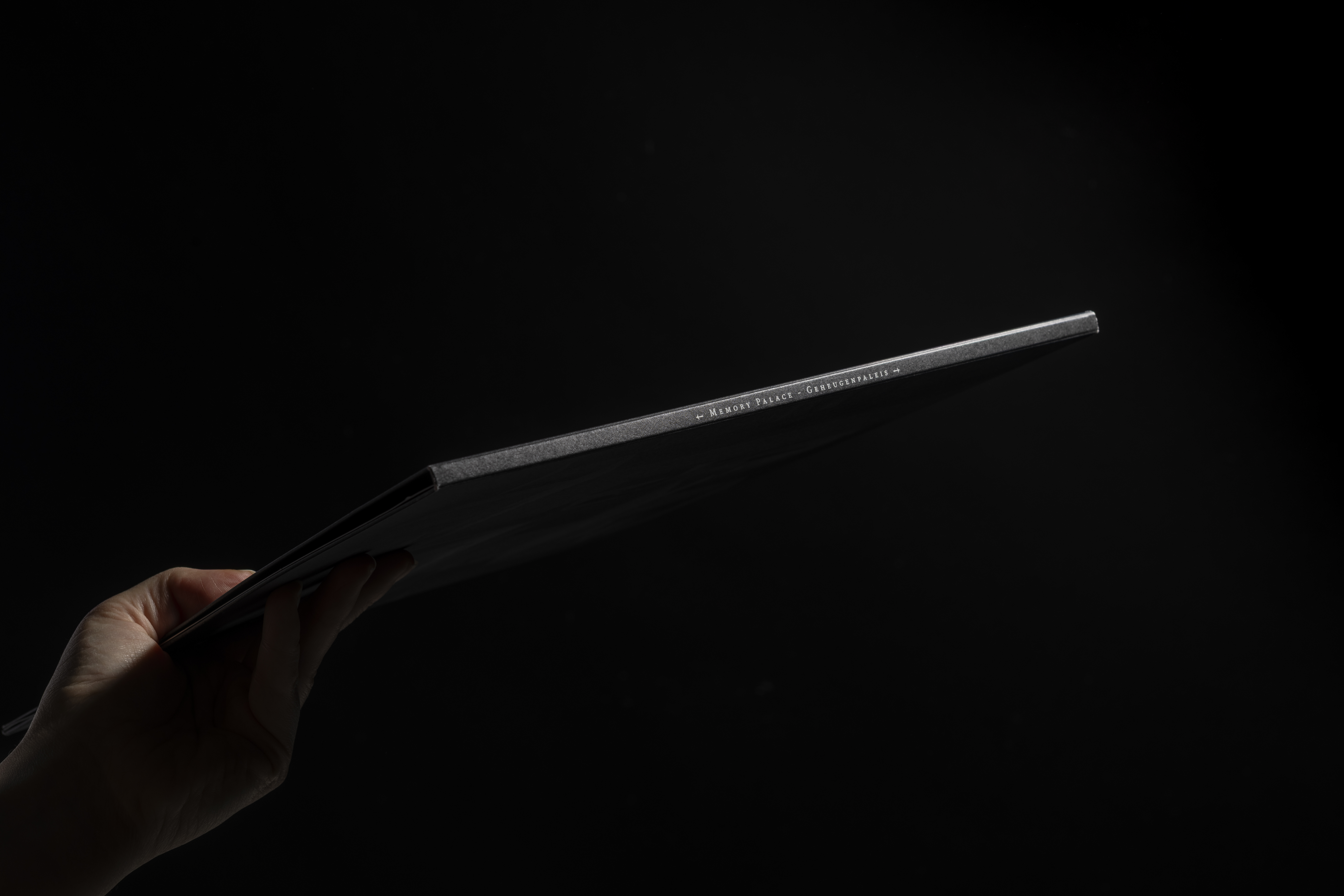
Material and production choices are central to the graphic concept. The outer sleeve is printed in four passes using black, grey, and silver inks, creating depth through restraint rather than colour. The inner sleeve is screen-printed entirely by hand, foregrounding imperfection and tactility. The research booklet is Singer-sewn, with silver thread on the exterior and black thread on the interior, making the binding a visible and conceptual element rather than a hidden technical detail.
This binding technique is not incidental. Reubsaet married Isabella Eugénie Boyer, widow of Isaac Singer, founder of the Singer Corporation. By using Singer binding, the project embeds a historical connection directly into the object’s construction, allowing narrative and material process to mirror one another.
Set against the backdrop of 19th-century European cultural mobility—Parisian salons, industrial wealth, and self-invention—Memory Palace positions graphic design as an archival, narrative, and performative medium. It demonstrates how design can function not merely as packaging, but as a physical system for storing, performing, and experiencing memory.
Credits