Writing history
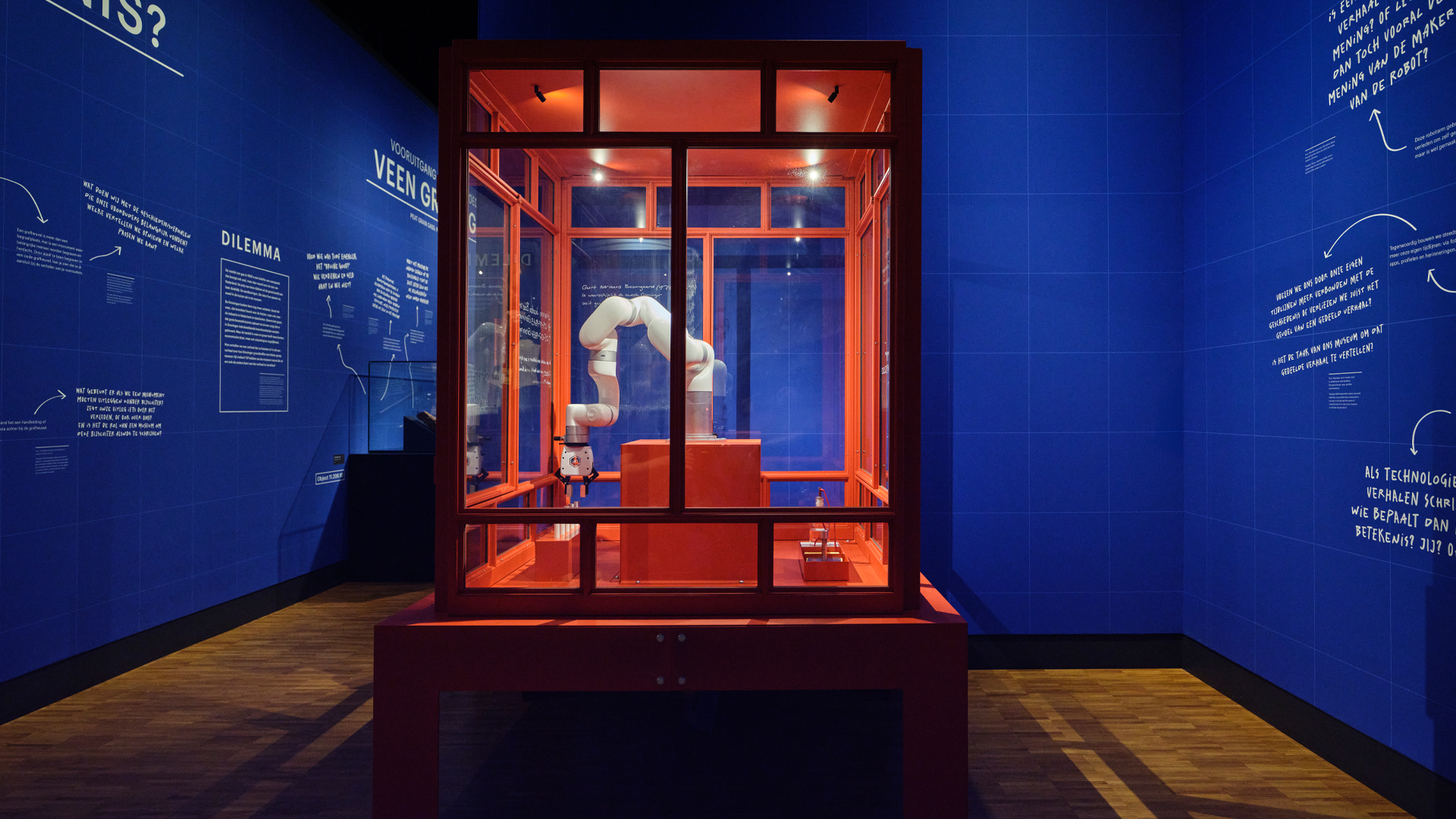
Writing History is the centerpiece of the exhibition “Who Writes History?” at Museum aan de A. The exhibition explores how history is made and told, inviting visitors to reflect on which stories of Groningen and its inhabitants should be included in the new museum under construction.
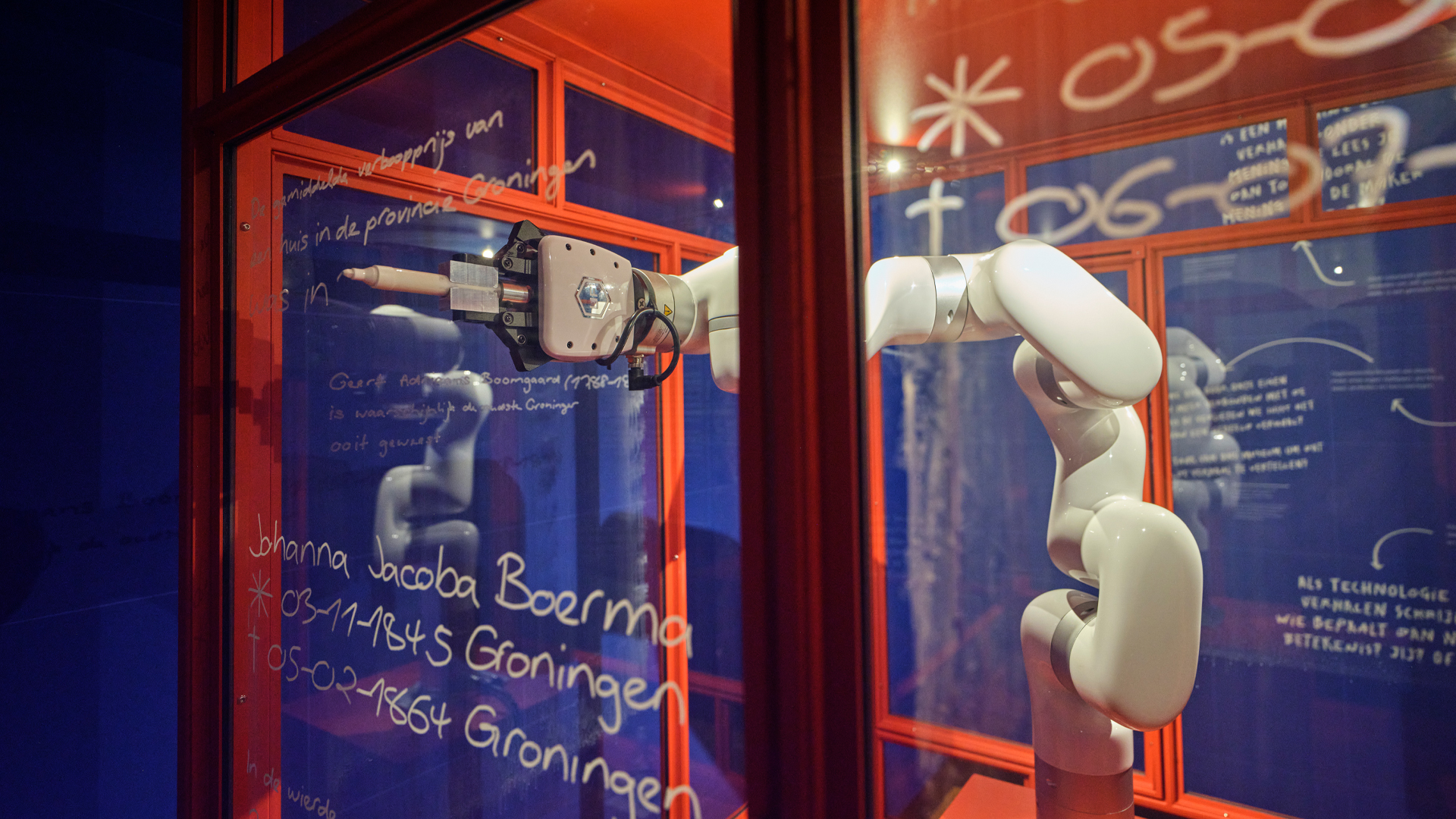
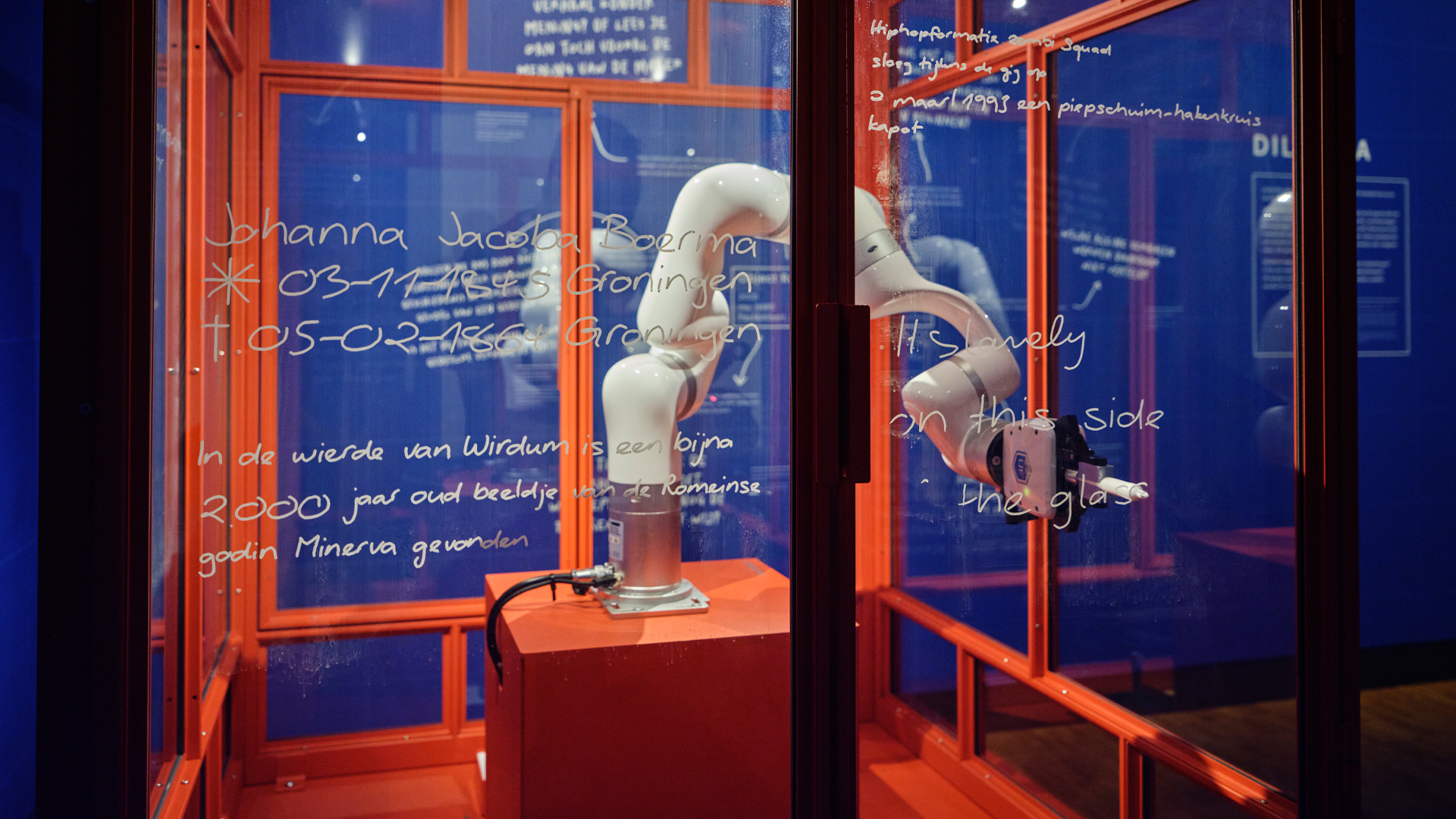
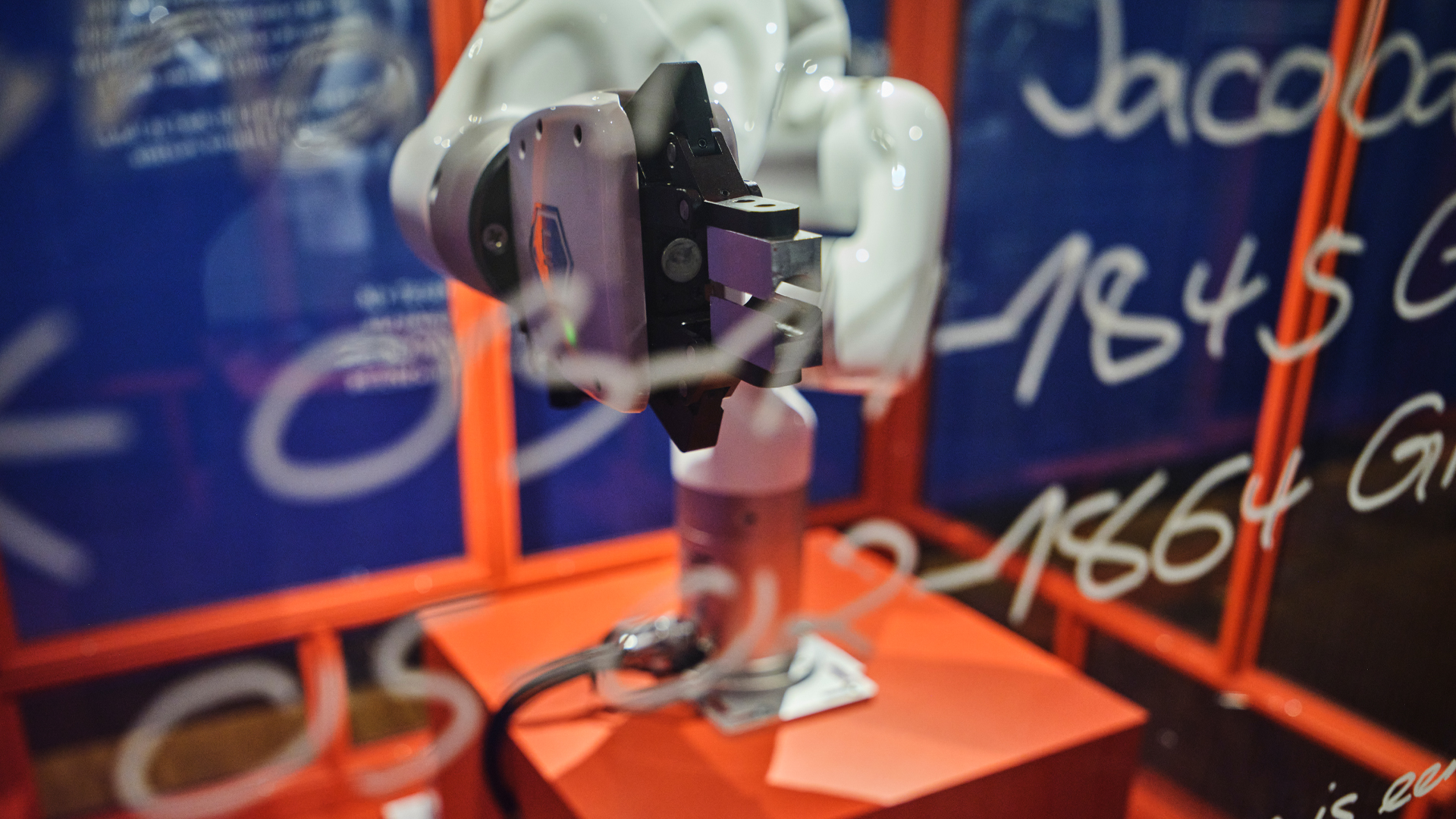
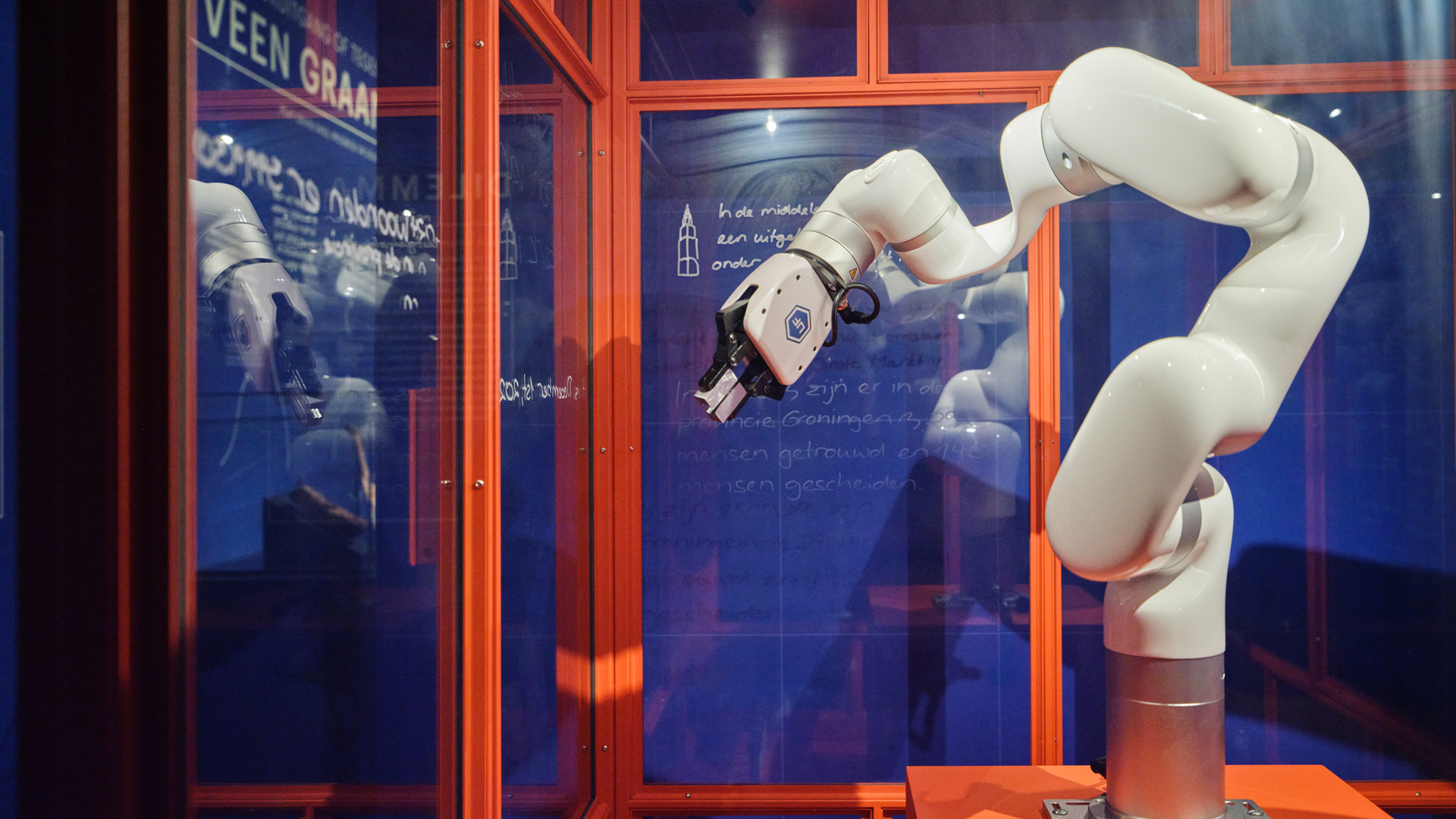
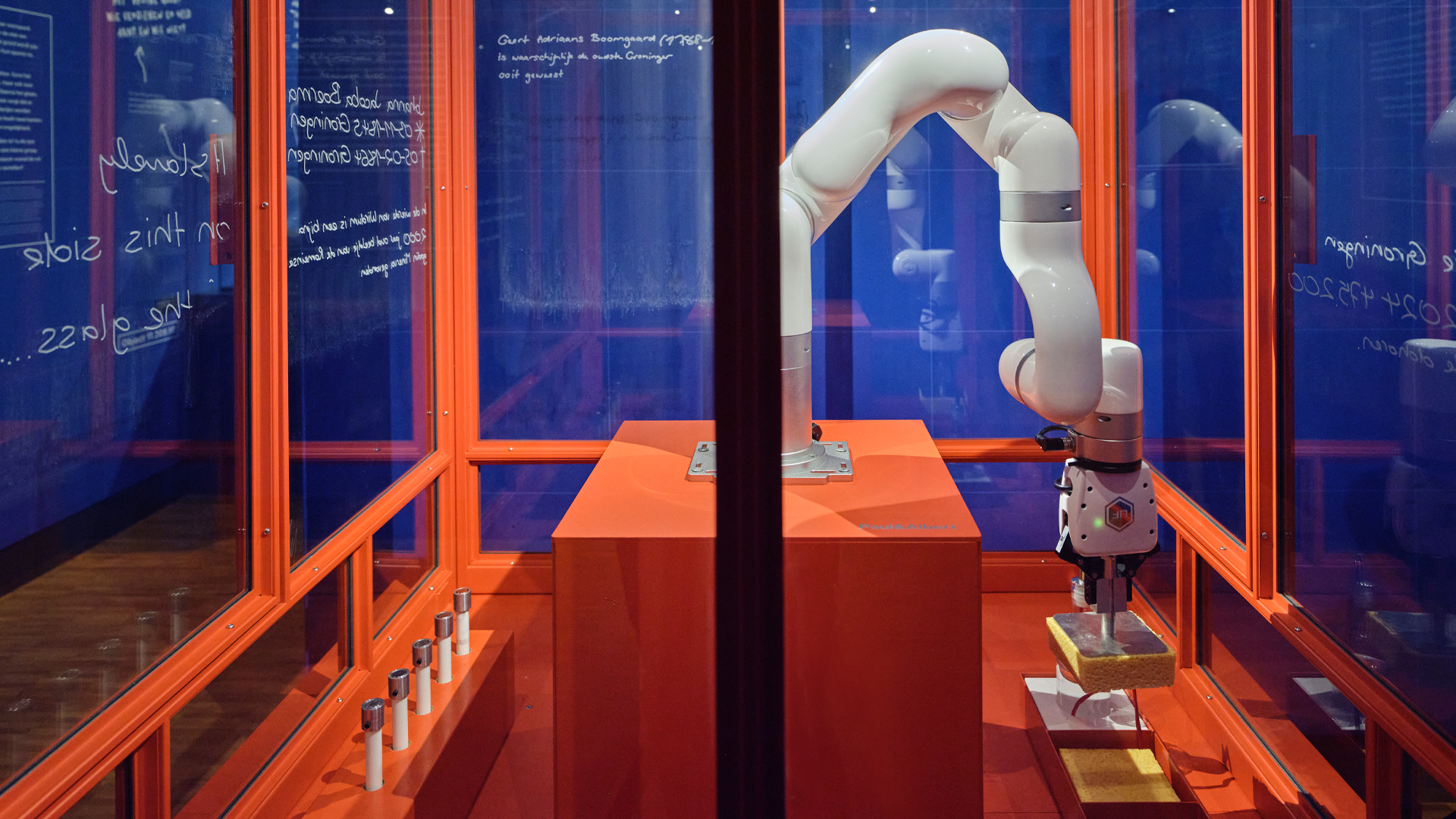
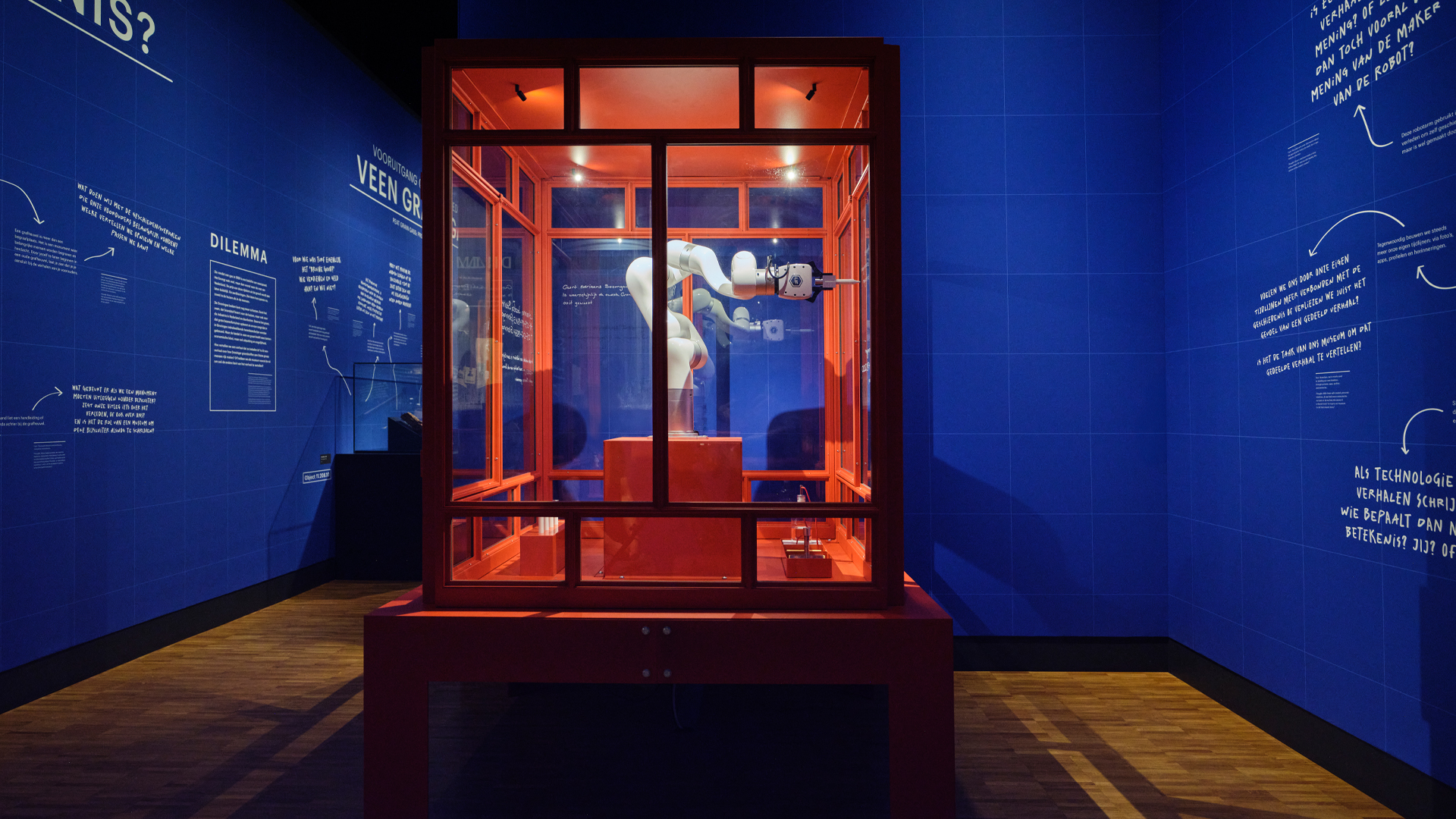
The installation consists of an autonomous industrial robotic arm, enclosed behind glass, which writes and erases history in real time. What appears on the glass is temporary; what exists in one moment may disappear the next. Here, history is not a static record, but an ongoing process in which the present eventually becomes the past. The robot initiates a dialogue around the central question of the exhibition: who actually writes history?
The robot operates entirely independently, drawing from an extensive database of Groningen’s historical events, while simultaneously integrating real-time data such as water levels, traffic flows, and weather conditions. It also produces corresponding illustrations based on the data. By combining archival knowledge with live data, the work remains constantly current and in motion, serving as a mirror of Groningen as a living, changing organism.
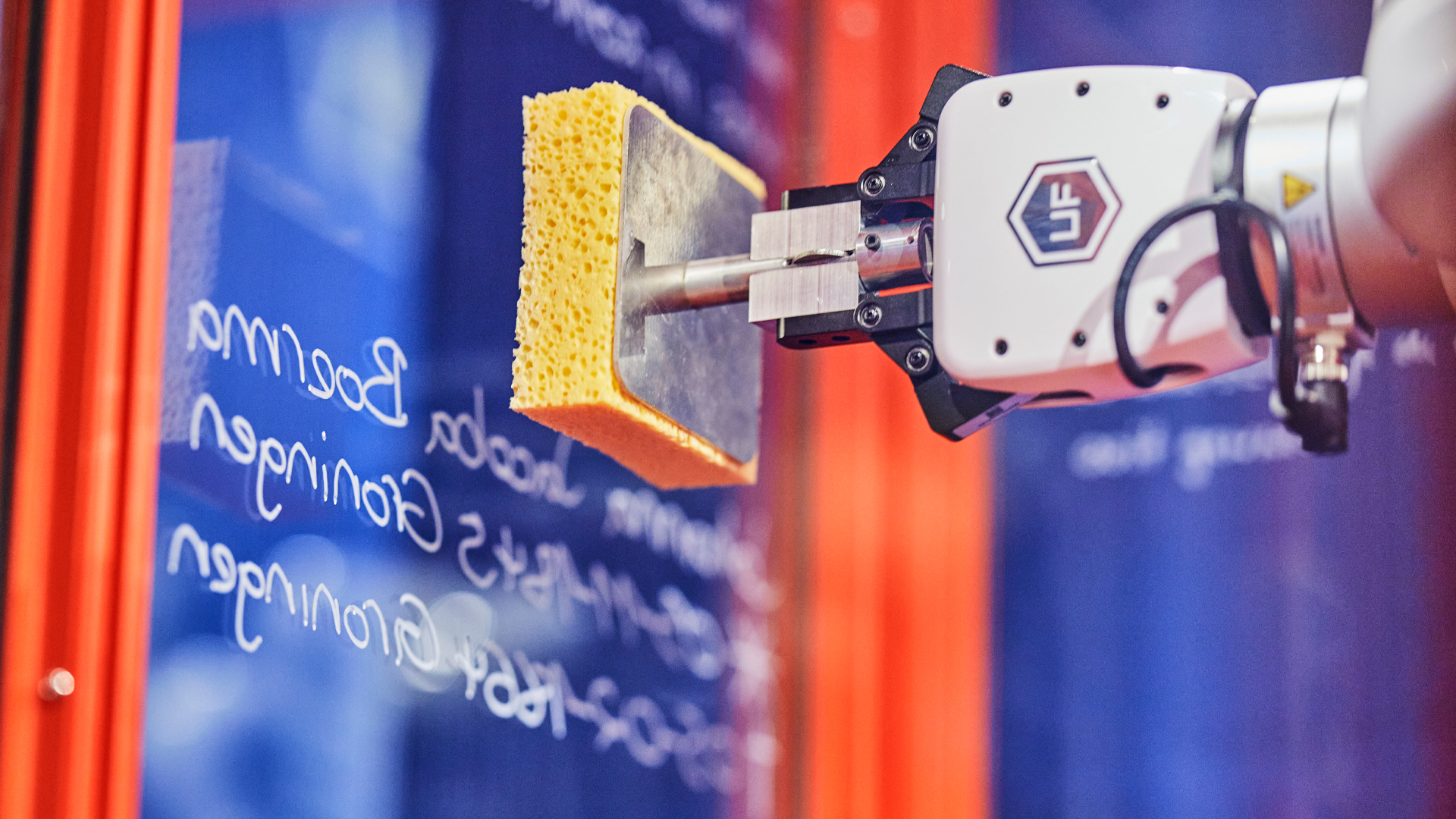
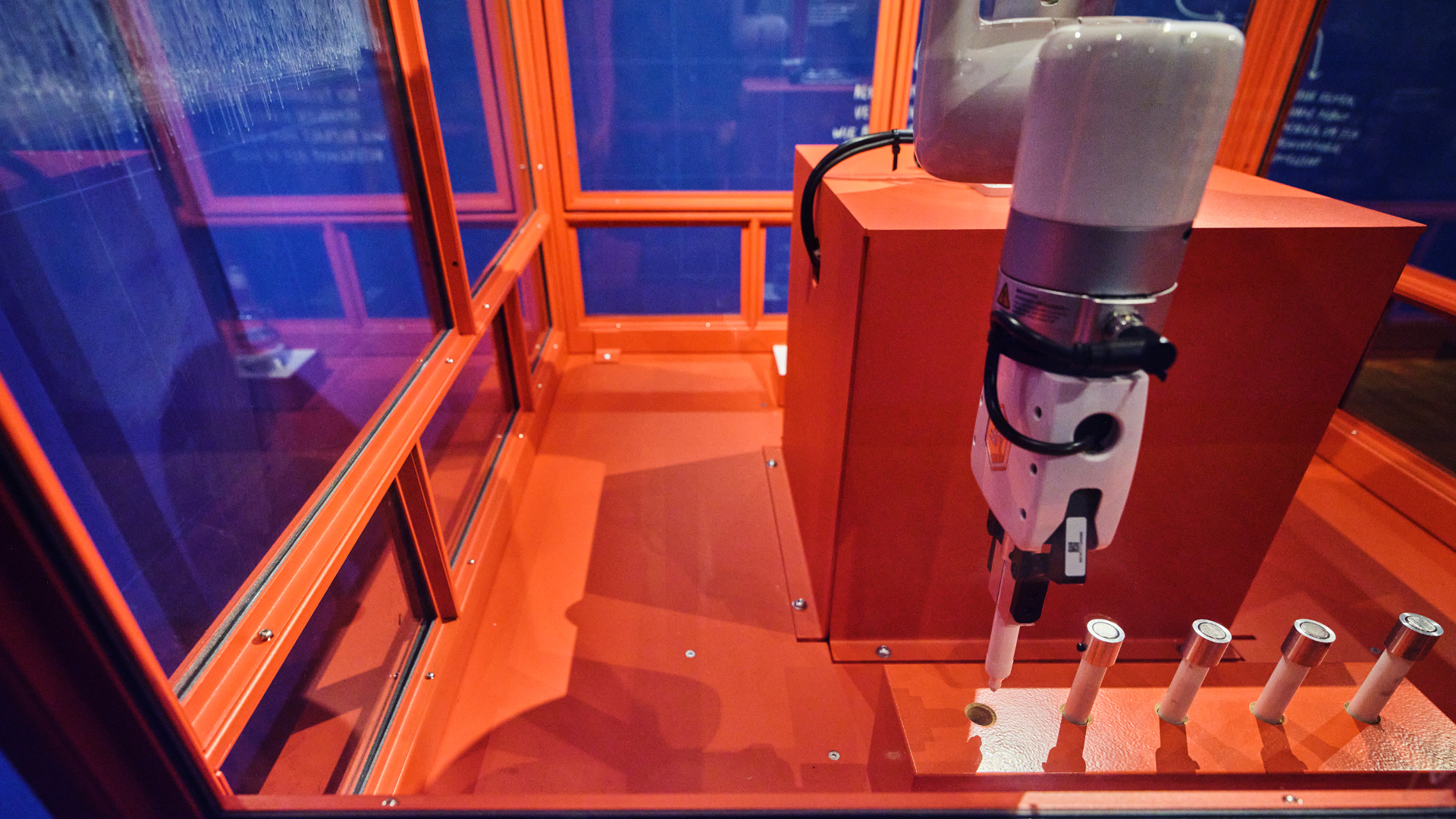
The development of the work required the utmost precision and care. The durability of the glass markers, the moisture of the sponge, and even millimeter tolerances in the glass were carefully tested. A magnetic spring system balances the marker, gripper, and glass, while the 200-kilogram steel vitrine safely absorbs the arm’s force. These technical details serve the concept, not the other way around: they allow the robot to perform its delicate, continuous choreography.
Despite its industrial scale, the robot feels almost human. Subtle pauses, a fleeting ‘breath,’ recording its own ‘feeling,’ and occasional glances at its writing or at visitors give it presence, diligence, and a quietly approachable personality. The robot also has its own unique handwriting, which further emphasizes its individuality and character.
Writing History makes the impermanence of memory and the fluidity of time tangible. As the centerpiece of “Who Writes History?” it invites visitors to consider how history is shaped, experienced, and remembered, and each erased line reminds us that history is never fixed, but always in motion.
Credits