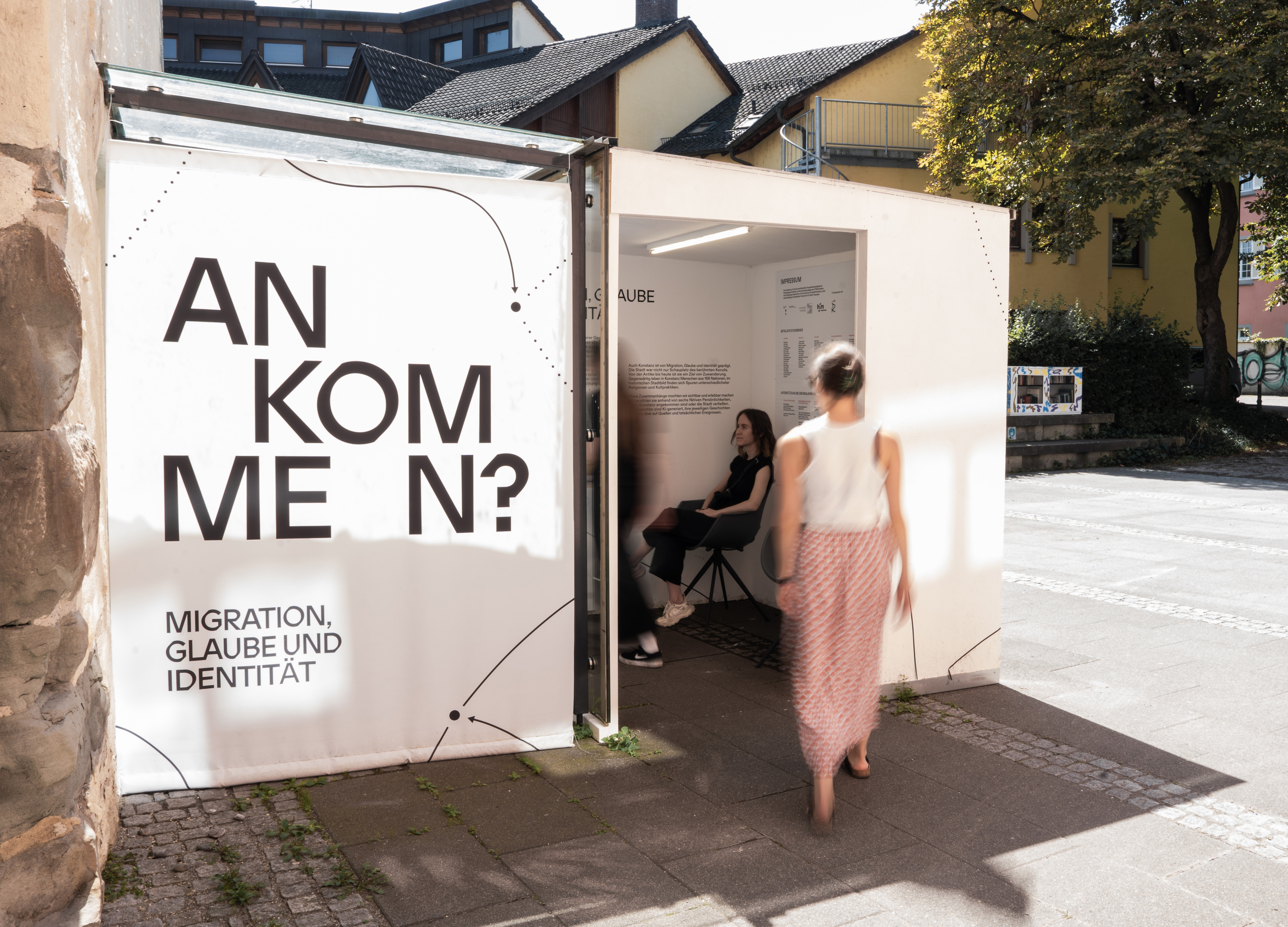
Arriving? Migration, Faith and Identity
https://ankommen-ausstellung.de/startseite-englisch/
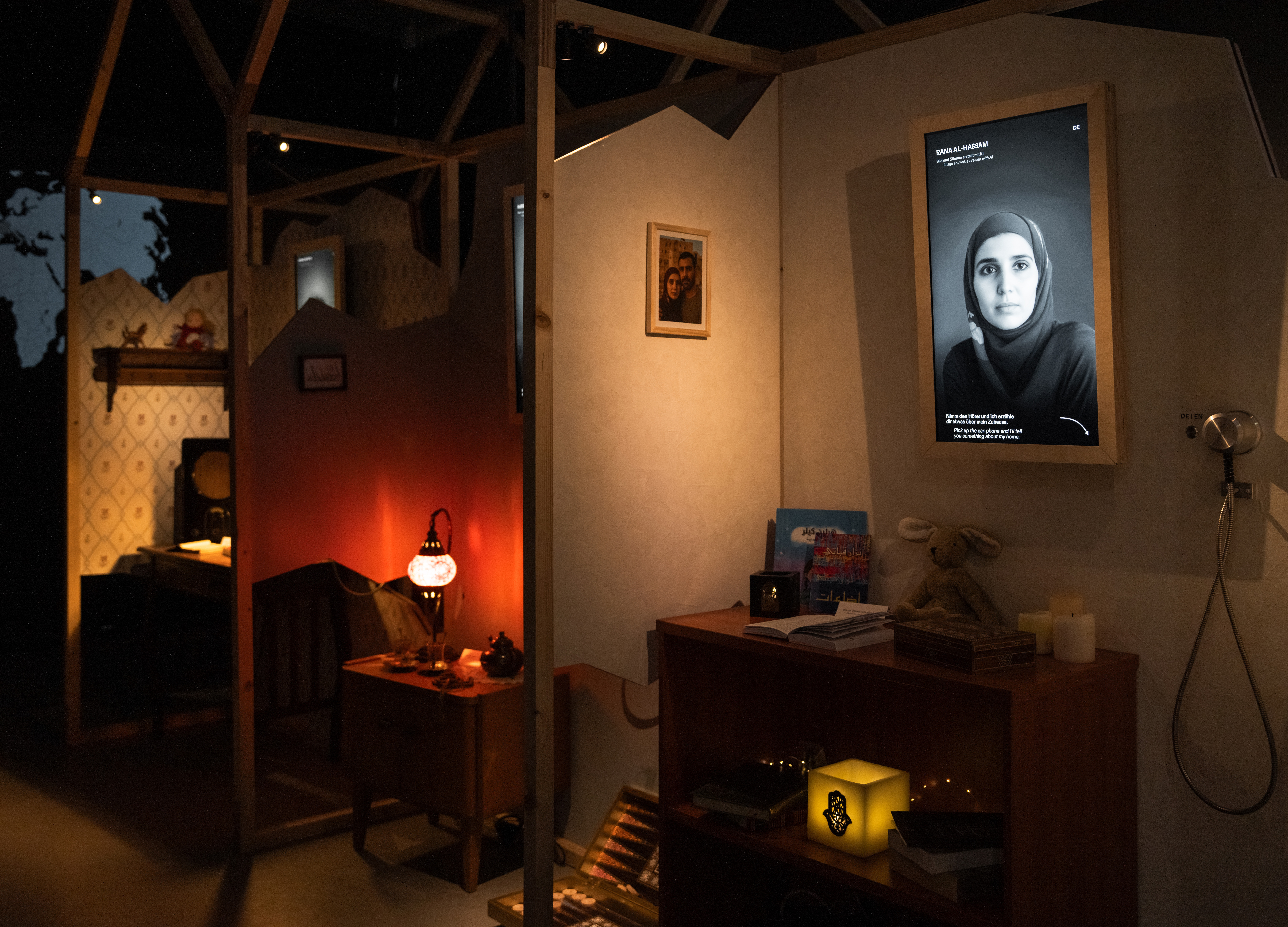
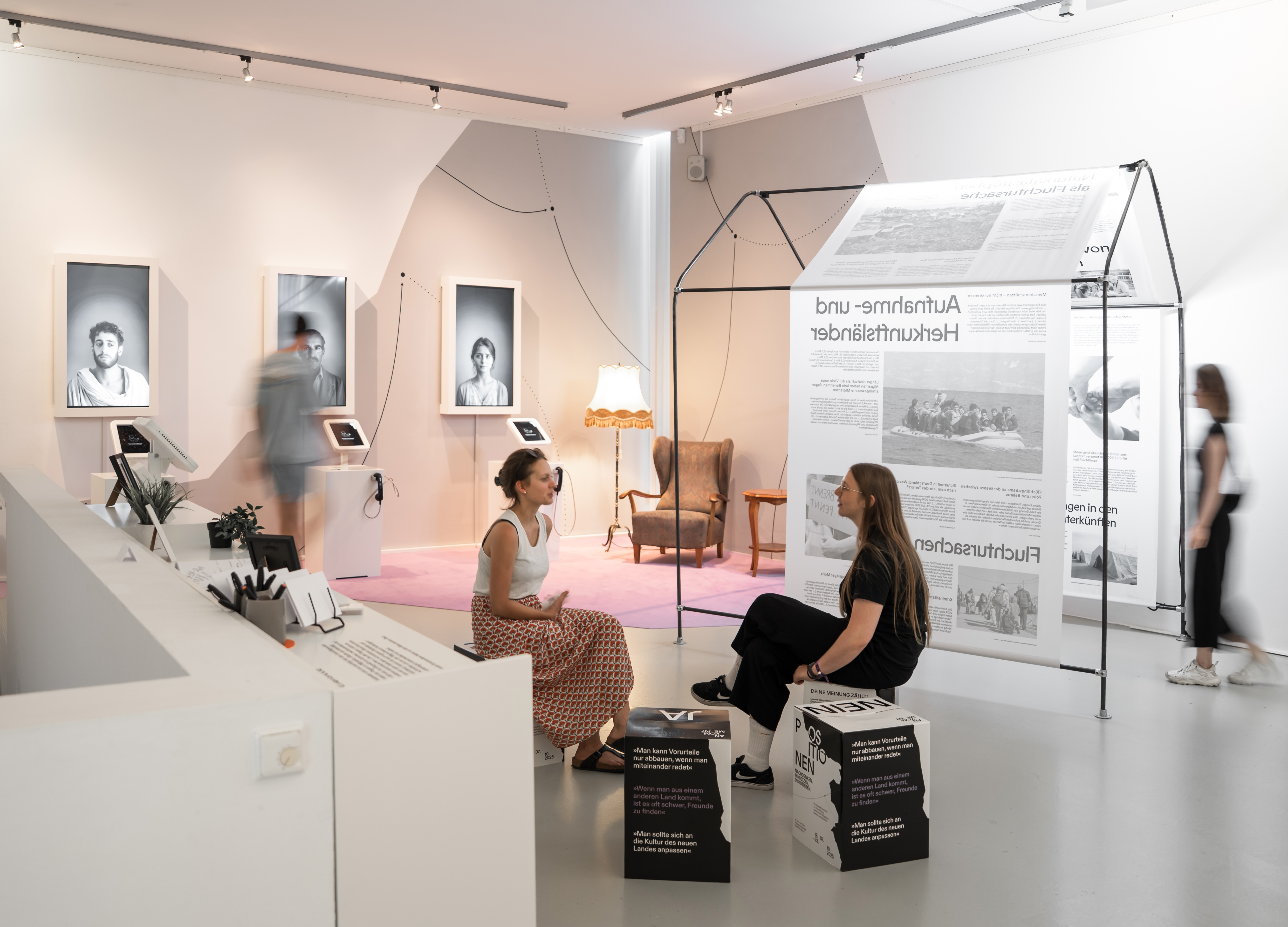
The exhibition is the result of a collaborative project in which students from the fields of architecture, communication design, music design, history, and computer and information design work to develop and realize an exhibition. Together, they address the question of how the topic of migration can be made tangible. “Arriving?” tells such stories through six life stories based on historical sources and interviews. Although these characters are fictional, they face challenges that are similar to those found in the Middle Ages, the post-war period or today. With the help of AI technology, they were given voices and faces – and are presented in the exhibition at different ages and in two languages (German/English).
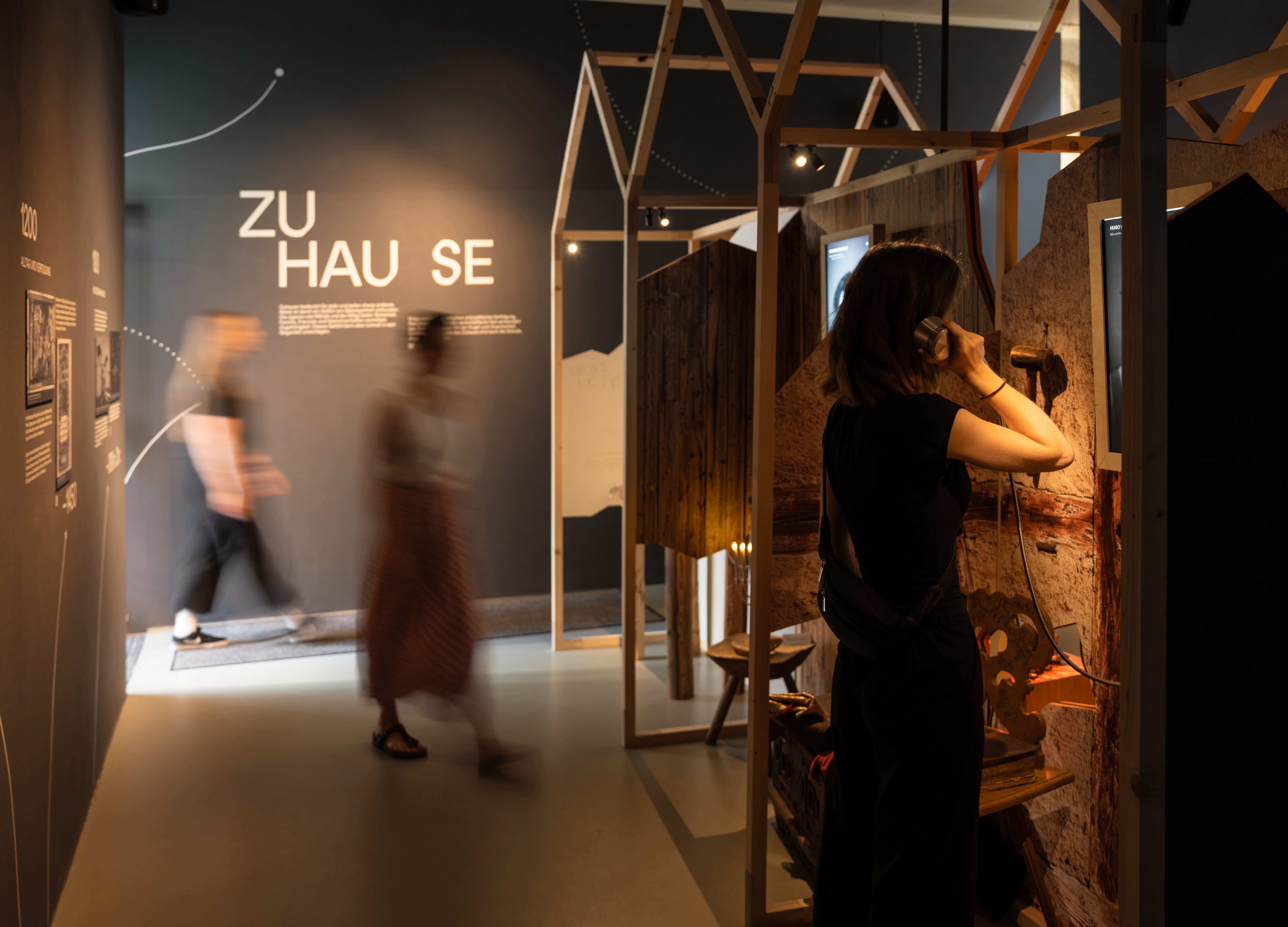
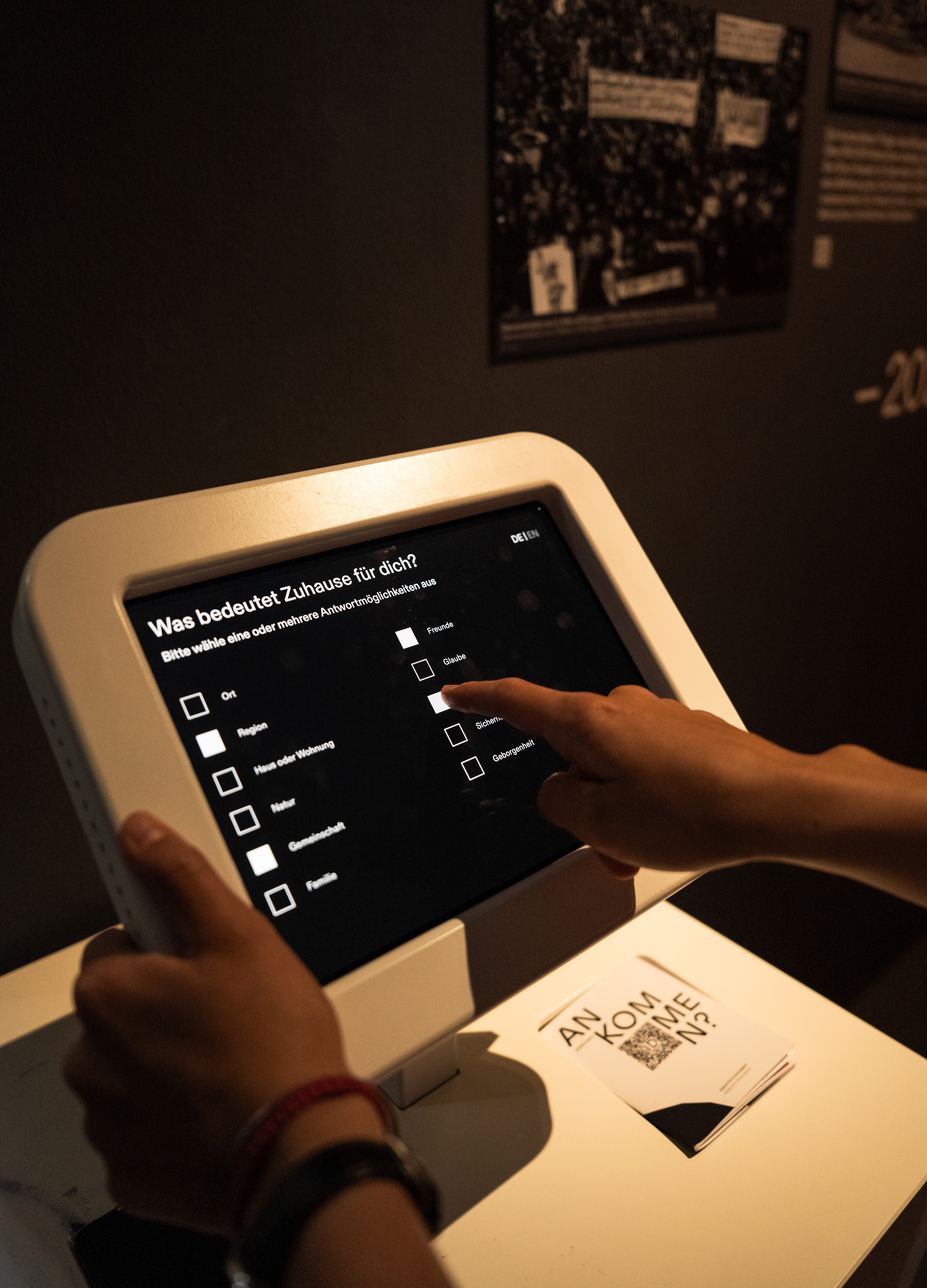
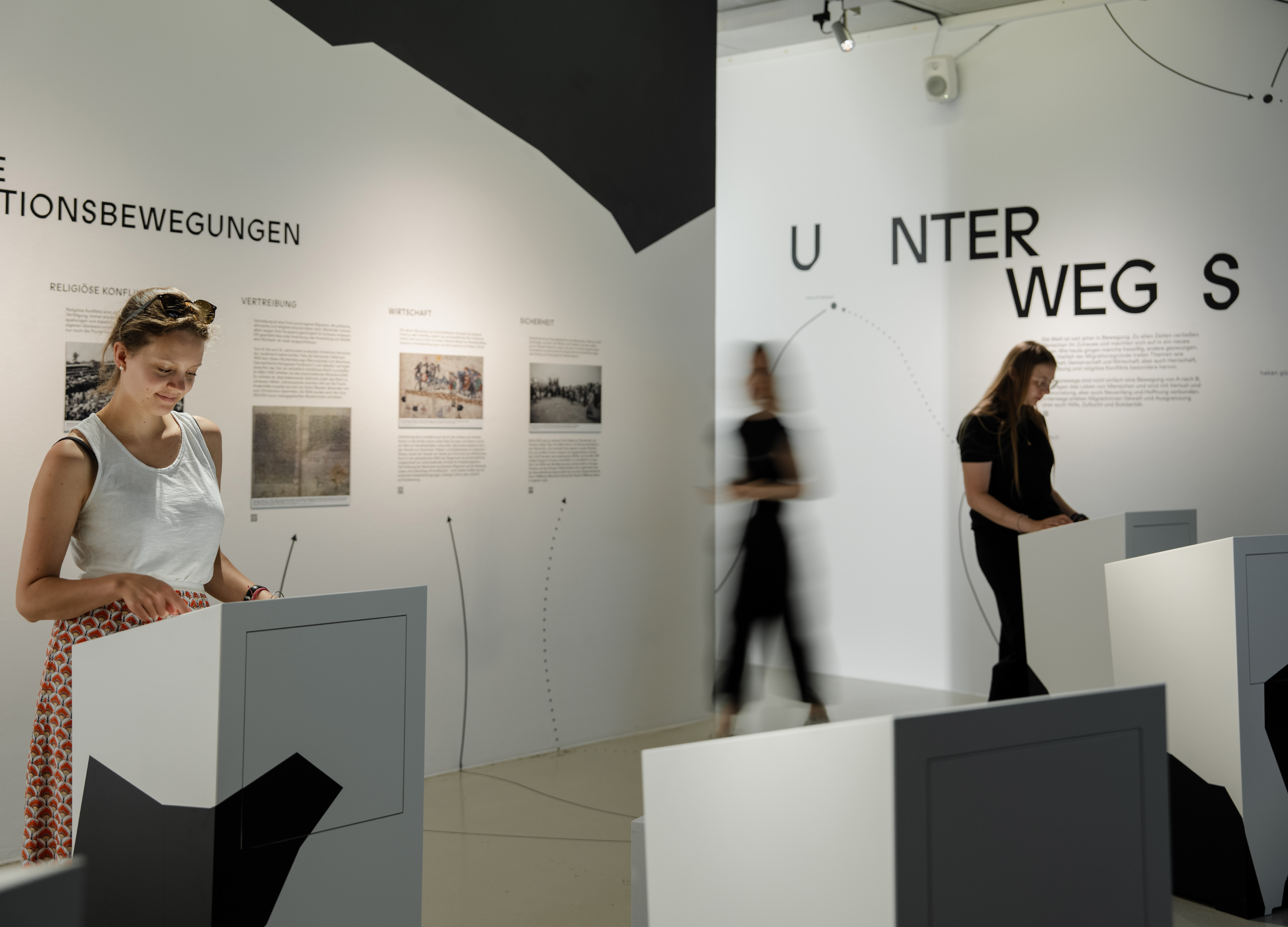
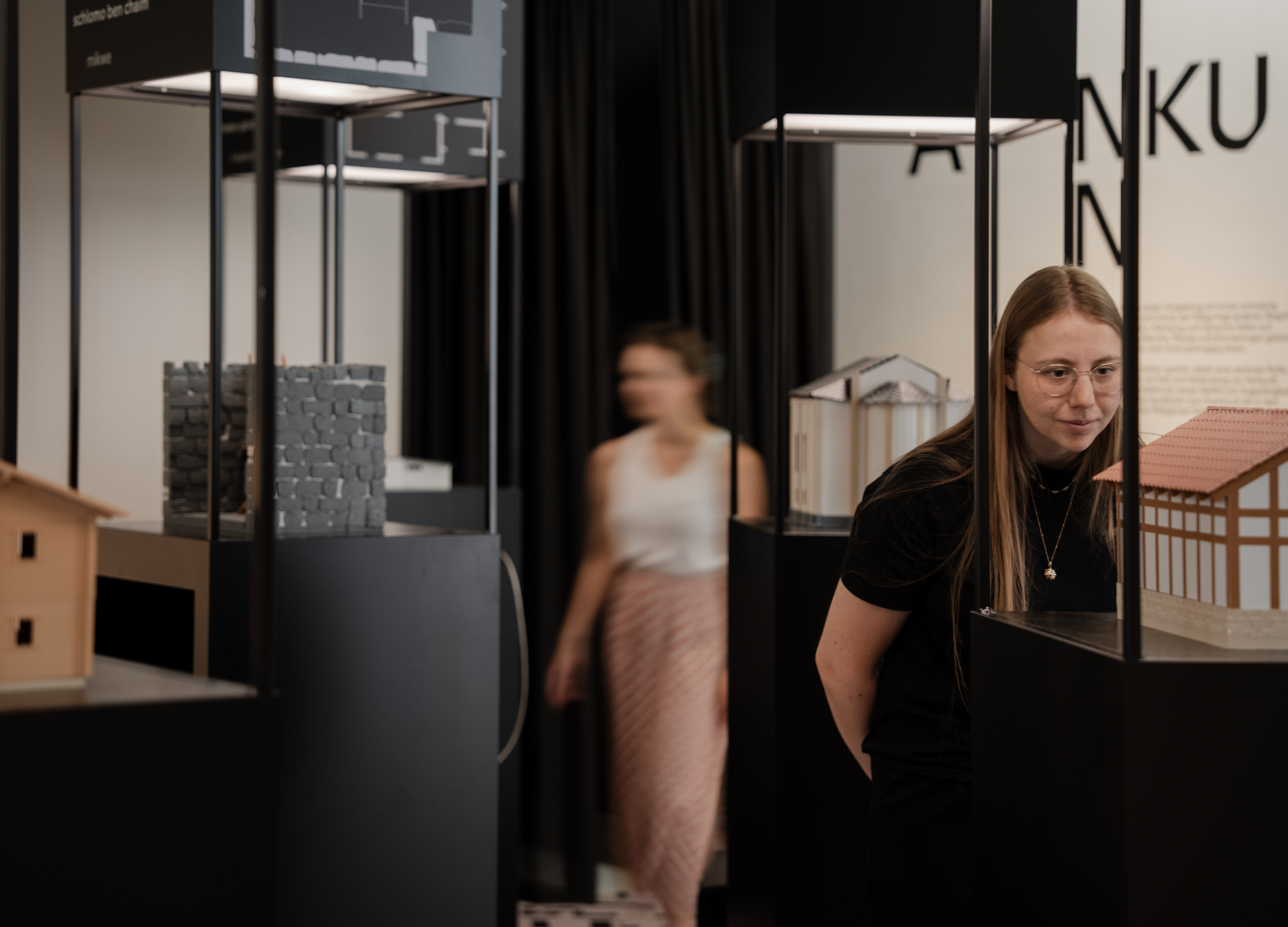
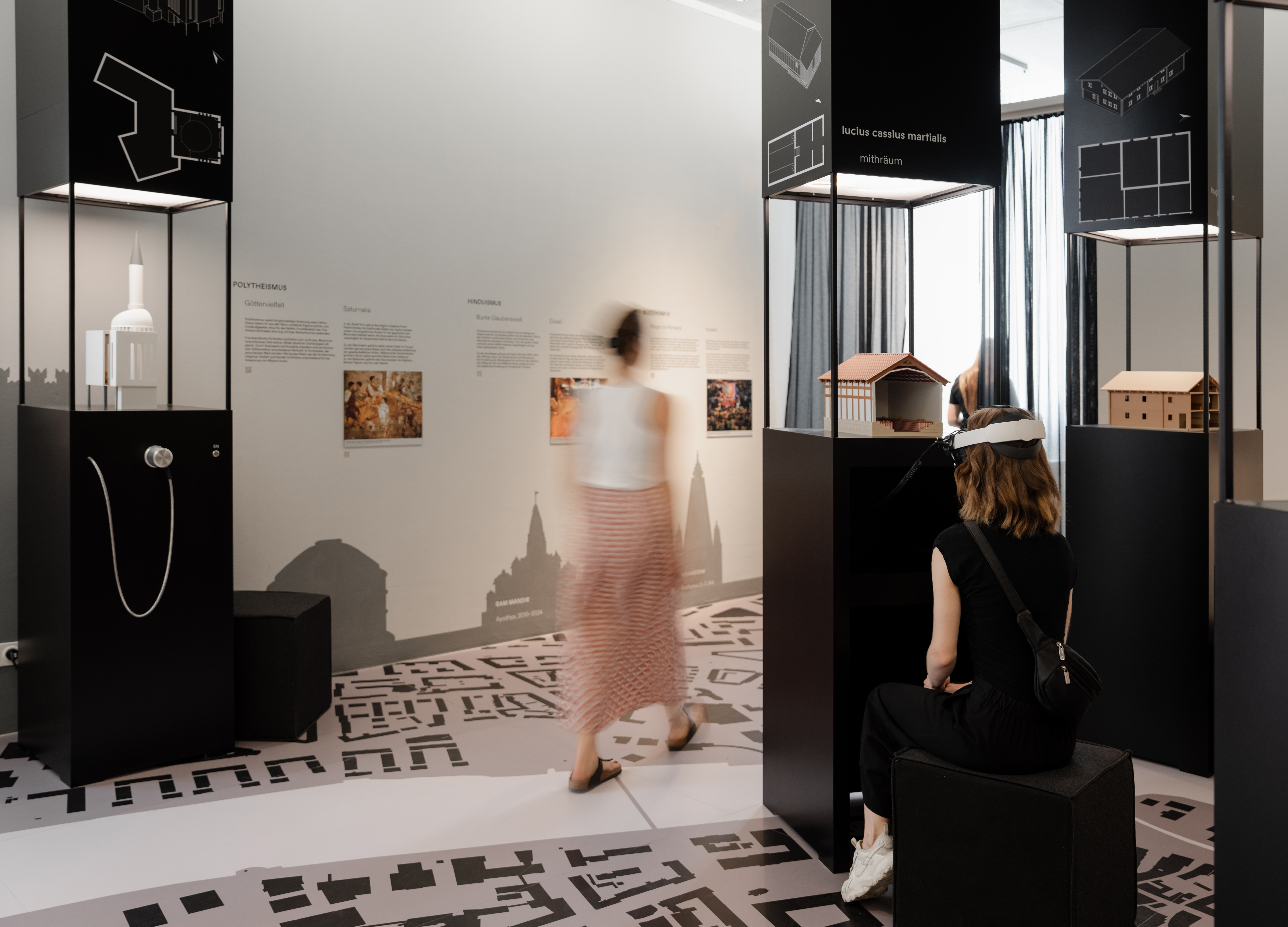
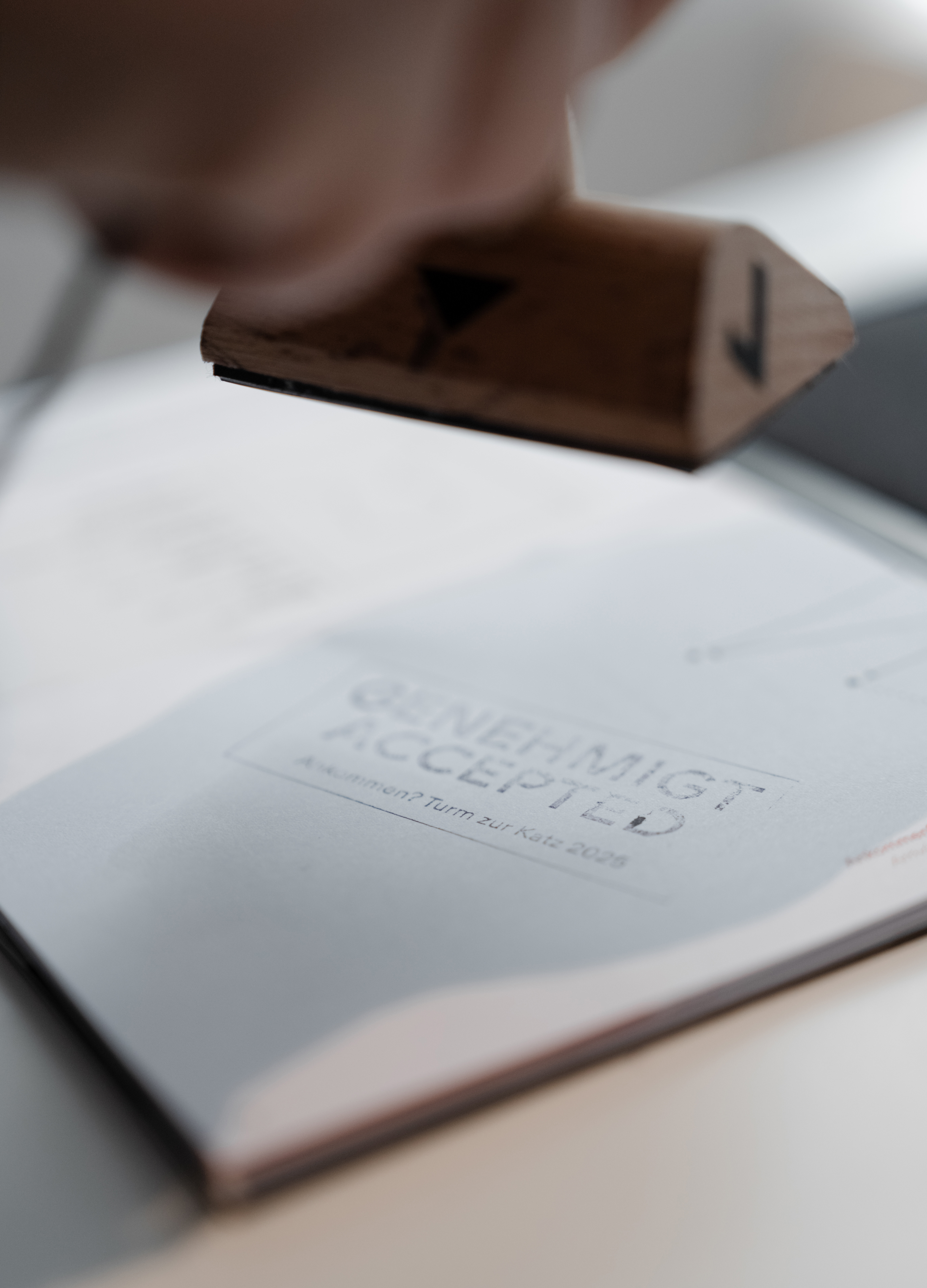
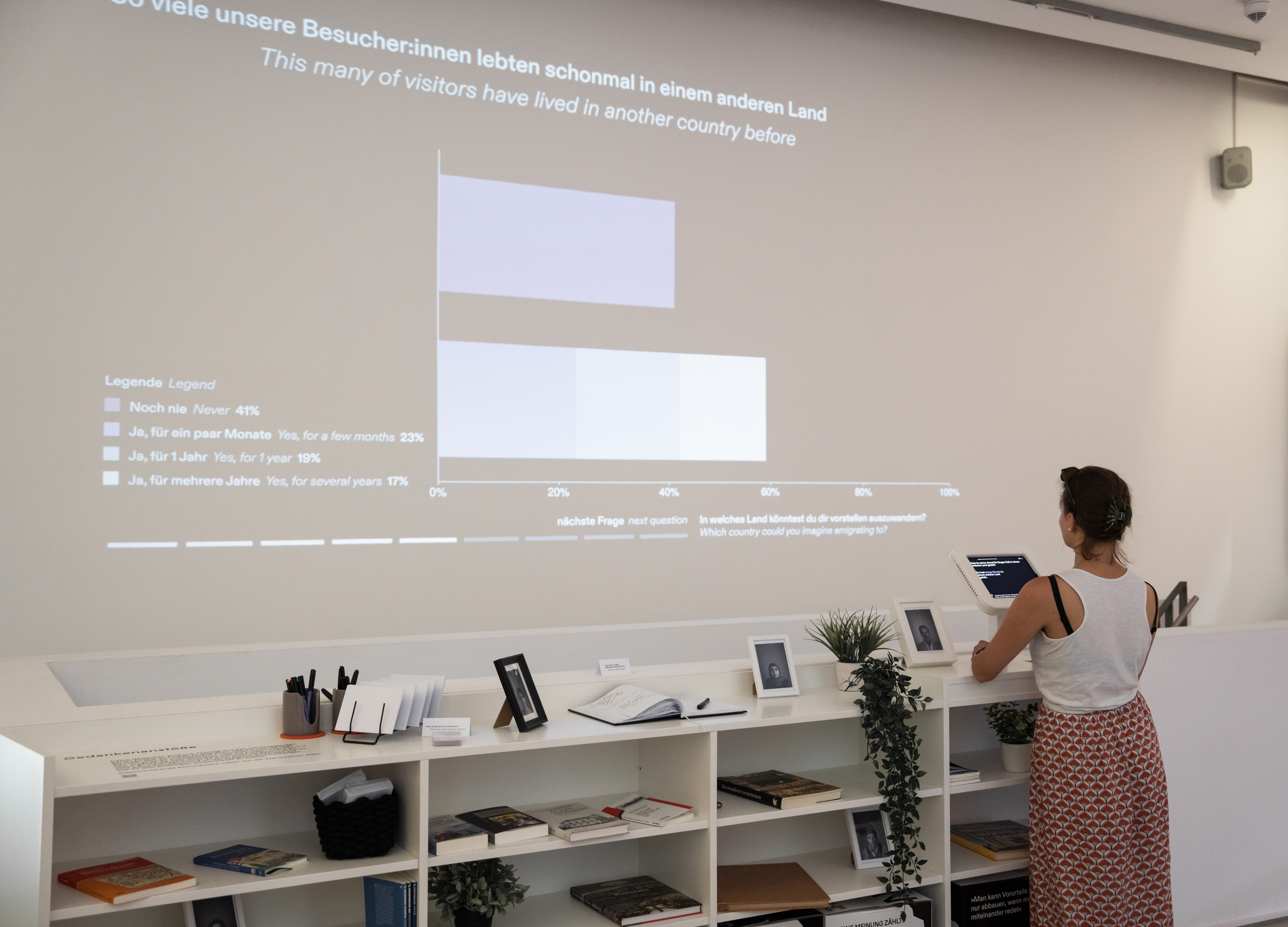
Across the four floors of the Turm zur Katz in Konstanz, we accompany visitors through the process of arrival. Starting with leaving home, moving on to being on the road, and finally asking what it means to have truly arrived. We also show that local experiences are part of global developments. To create an immersion the visitors receive an identification document that accompanies them through the exhibition at the first room, the registration office. The ID is a metaphorical passport that unlocks media stations and opens up a level of reflection. At the same time, the exhibition can be experienced in its entirety even without this “passport” so as not to provoke traumatic experiences. In the first room, they are introduced to the characters: a Roman legionnaire, an itinerant rabbi, an Anabaptist, a girl displaced from her home in the post-war period, a Turkish migrant worker, and a Syrian woman who has fled her country. The “Home” floor provides insights into their living situations before they leave their homes and embark on an uncertain journey for various reasons. The second floor is all about the journey. Visitors can follow the various stages of the routes using interactive maps. Eventually, they arrive in Konstanz and find community in their religion. The “Arrival” floor focuses on the city's places of worship and the practices that make them special and turn them into places of community. In all rooms, these personal stories are placed in relation to global contexts. On the top floor, the question arises as to what it really means to arrive. Here, the characters' experiences are mixed with the image of today's media and the opinions of visitors. This floor forms a conclusion that invites dialogue.
Credits