Treblasé
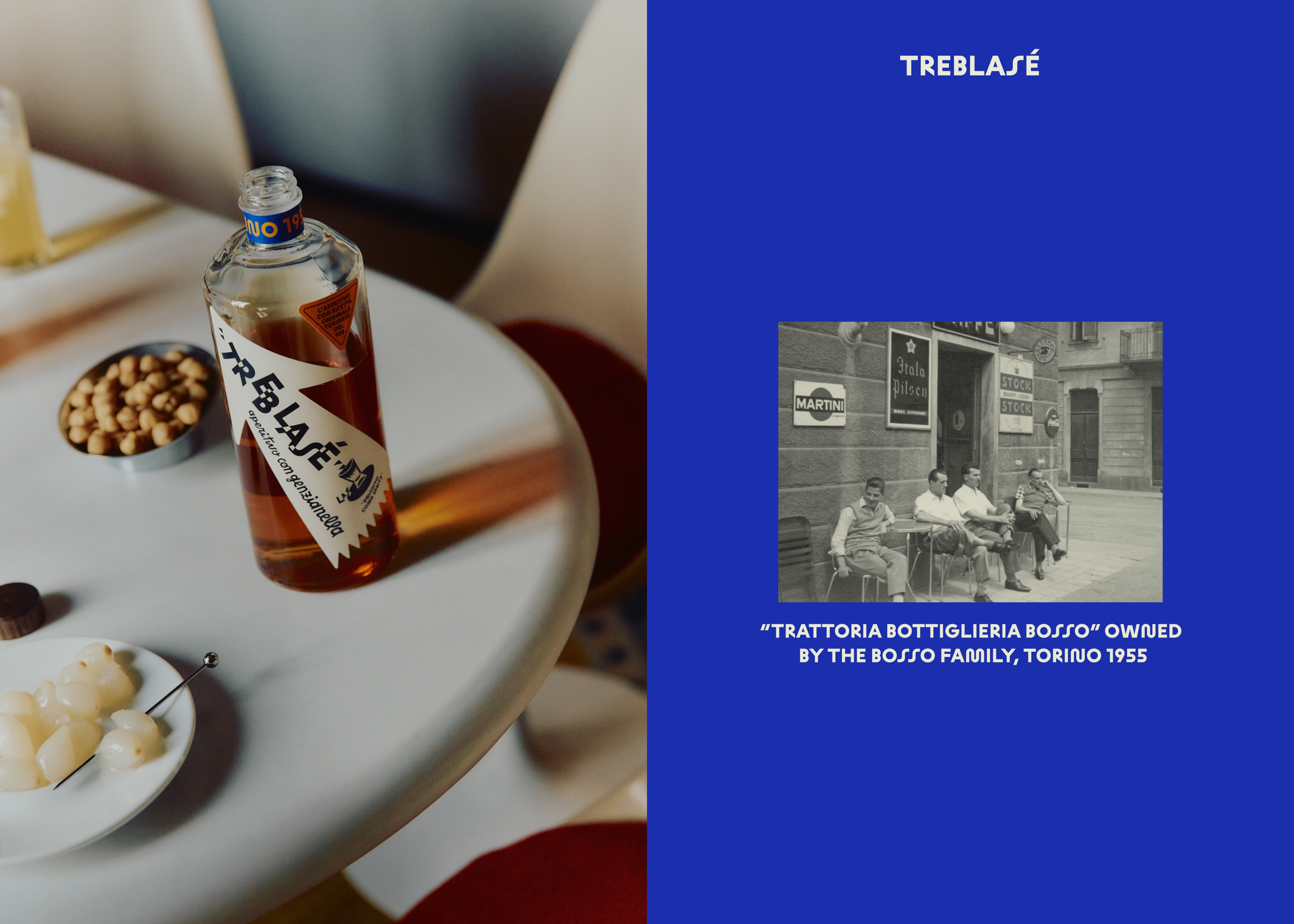
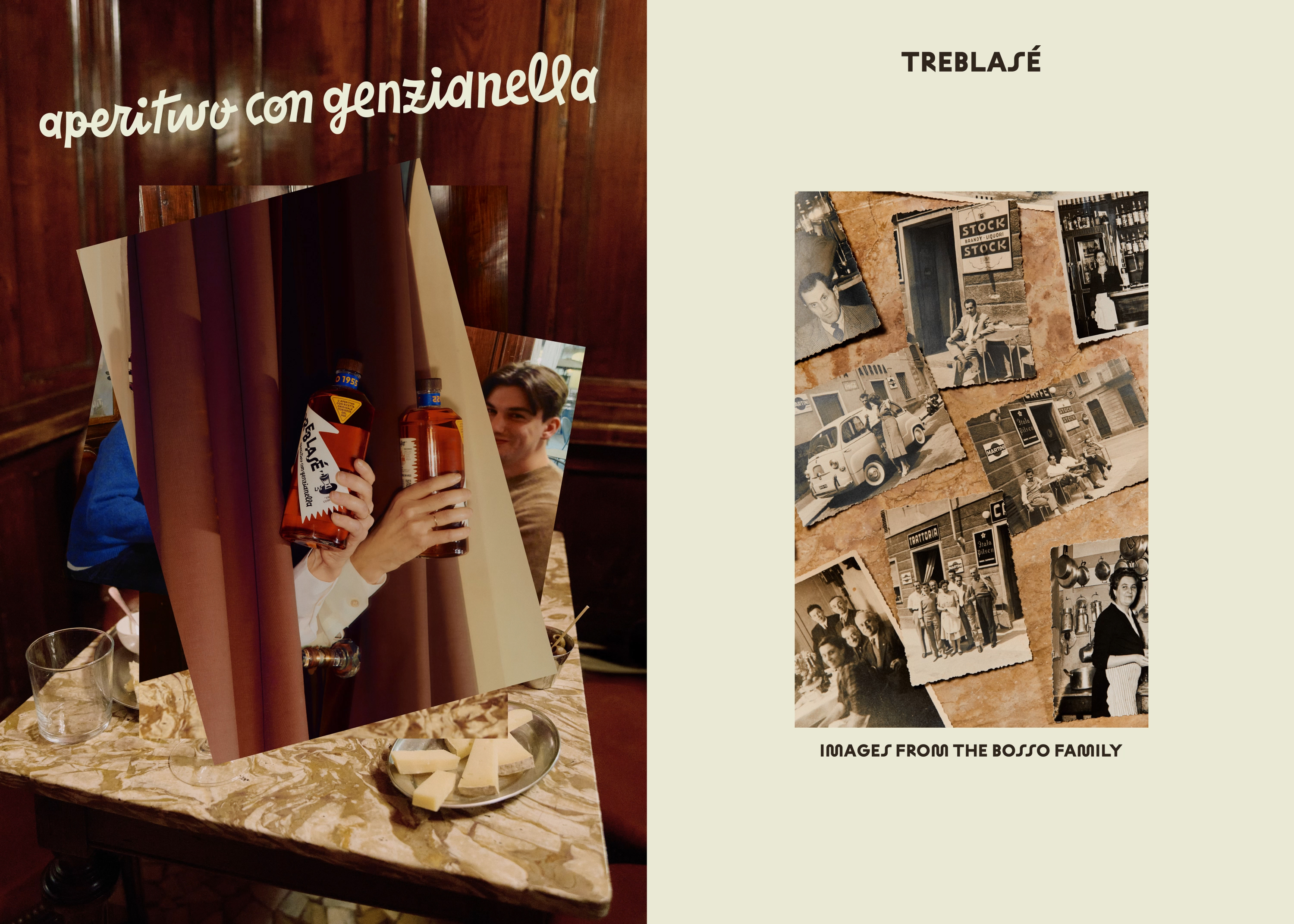
Treblasé builds on a family legacy rooted in Turin’s aperitivo culture, where togetherness and craft have long gone hand in hand. In 1930, Simonetta Bosso’s grandparents moved to Turin and opened Trattoria Bosso. Through hospitality and fair prices, it flourished, enabling the family to acquire a distillery. Nearly a century later, Simonetta wanted to reinterpret her family’s heritage for a contemporary audience. The task was to relaunch the Genzianella recipe as a modern aperitif that honours its origins while moving away from the 19th-century visual language of the classic Turin vermouths.
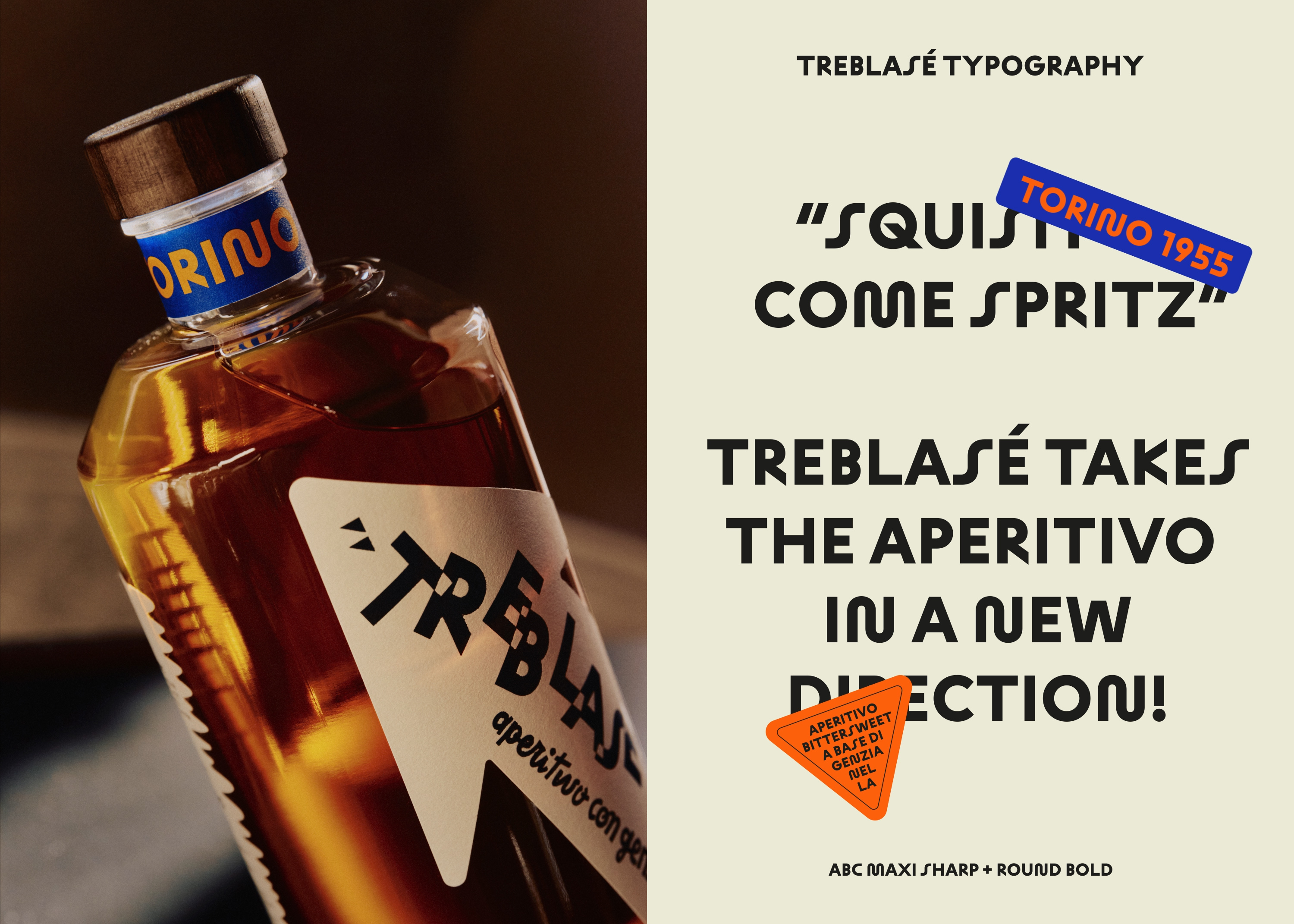
Treblasé takes the aperitivo in a new direction. The spritz, with its recent international success has become a symbol of the Italian lifestyle, but in Italy, it has sparked a counter-movement: new Italian brands are looking inward, rediscovering historical roots, forgotten recipes, and locally sourced ingredients to reclaim depth and identity to expand the regional expression. Within this context, Turin holds a significant role as the birthplace of aperitivo. In 1926, Fortunato Depero famously submitted an advertising poster for Campari ‘Squisito al Seltz’ to the Venice Biennale, elevating advertising to art. The image depicted a group of ‘avventori’—people frequenting a bar—almost a replica of a family photograph from Famiglia Bosso Trattoria. This intersection of design history and drink culture explains why the visual language of aperitivo often nods to Futurism, and specifically Fortunato Depero, whose work captures the energy and optimism of aperitivo culture. Too often, these references are used without true cultural connection. Rooted in history yet designed for today, Treblasé reinterprets the aperitivo through the lens of place—celebrating Turin’s legacy while contributing to the evolving language of modern Italian aperitivo.
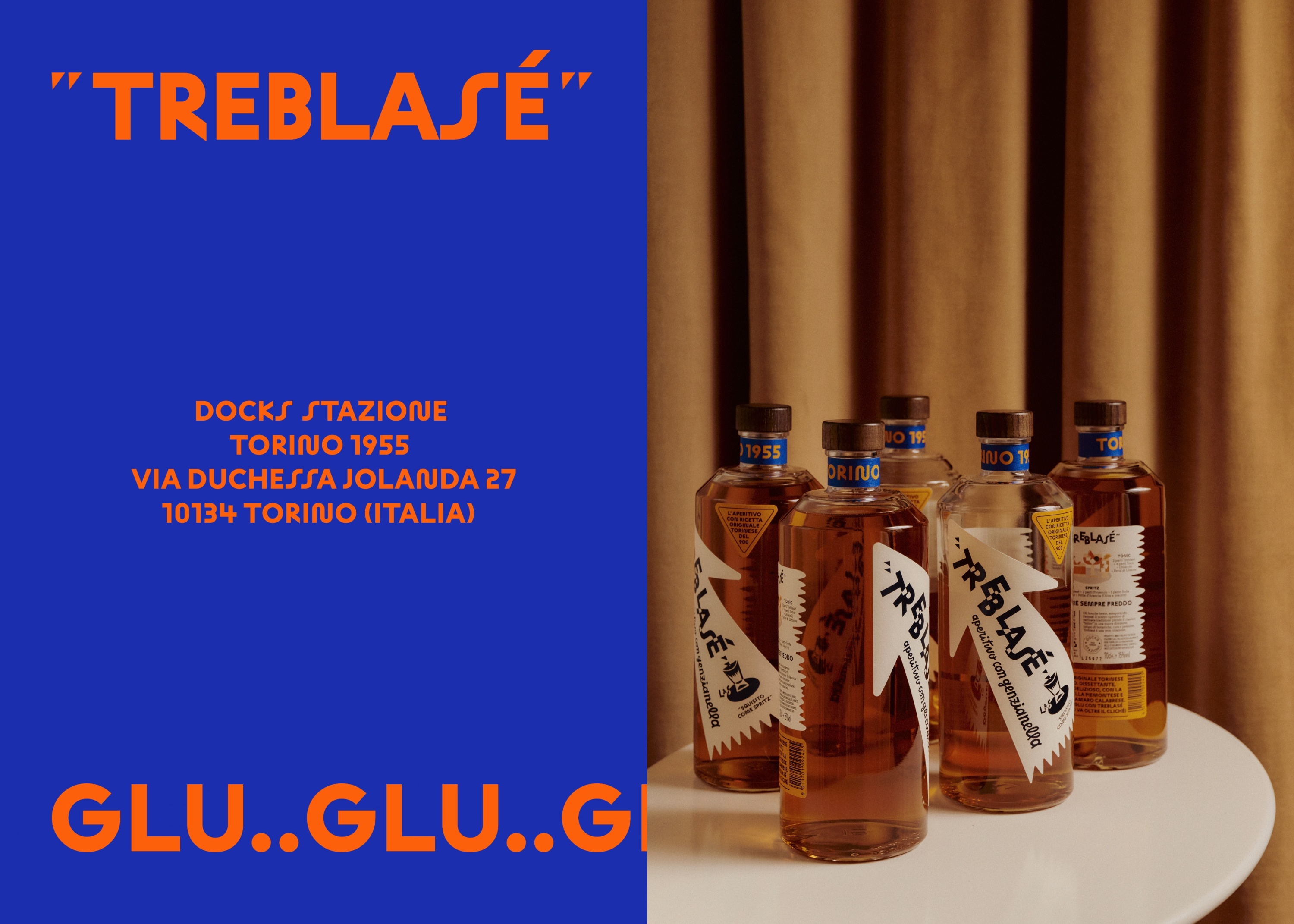
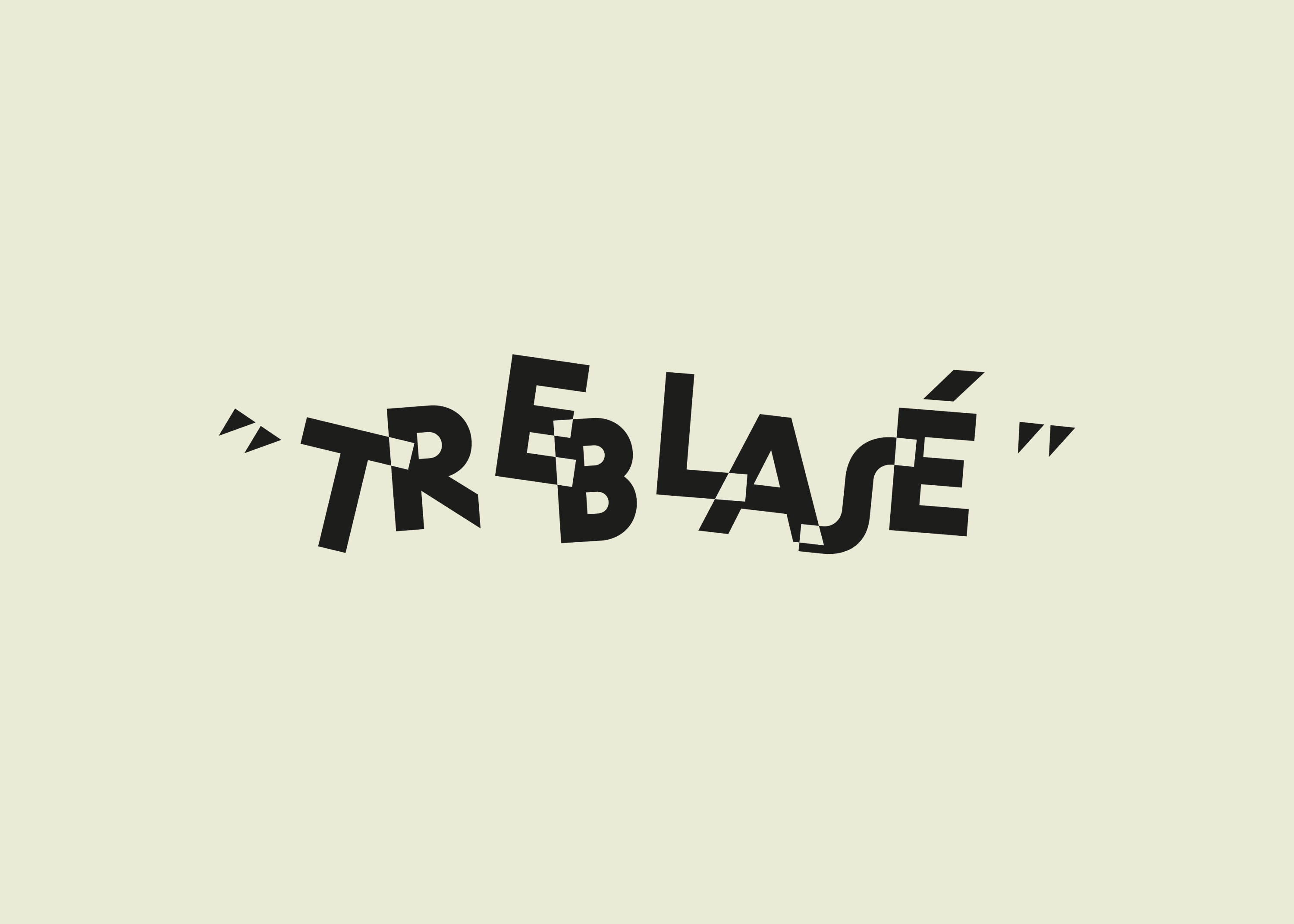
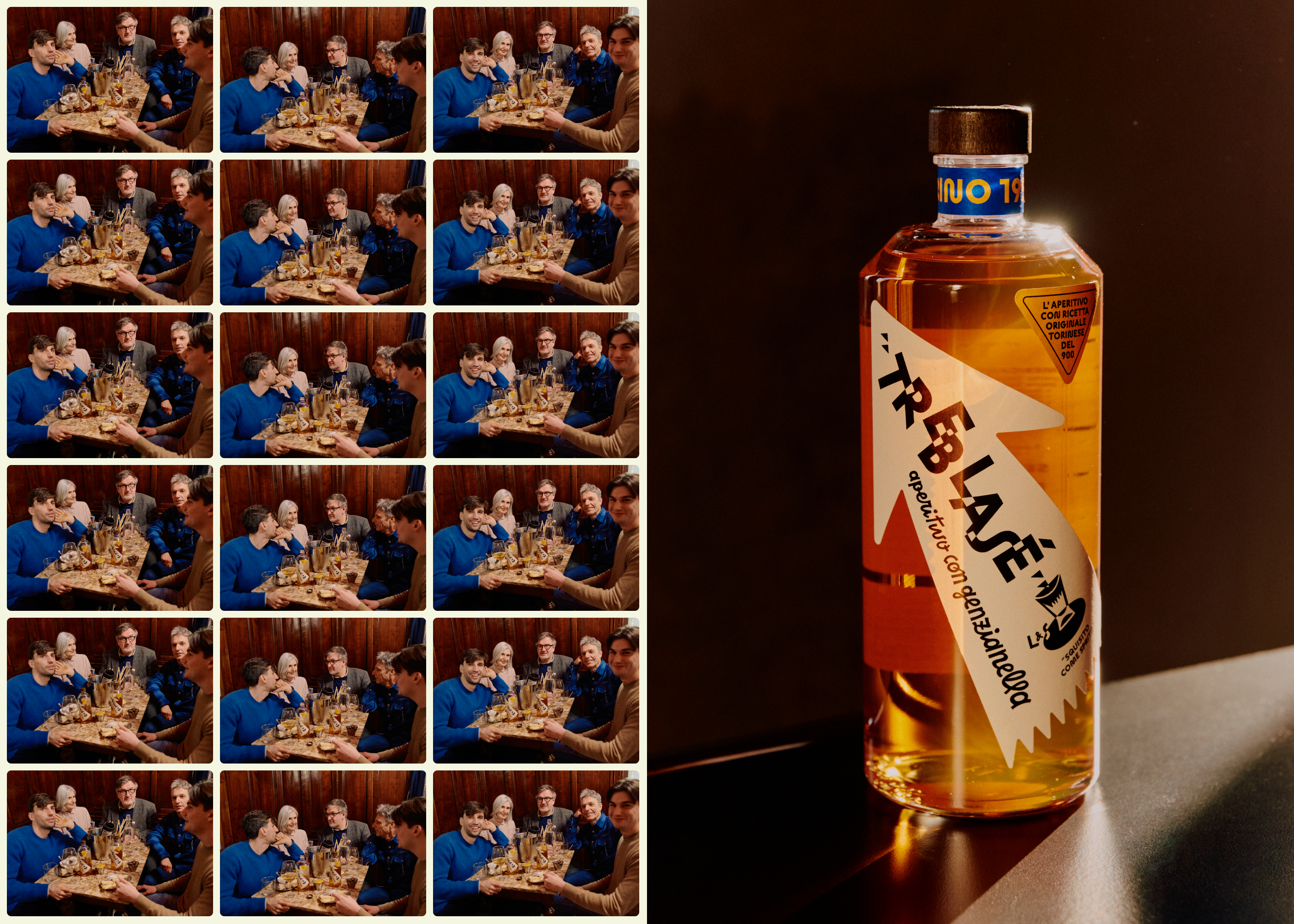
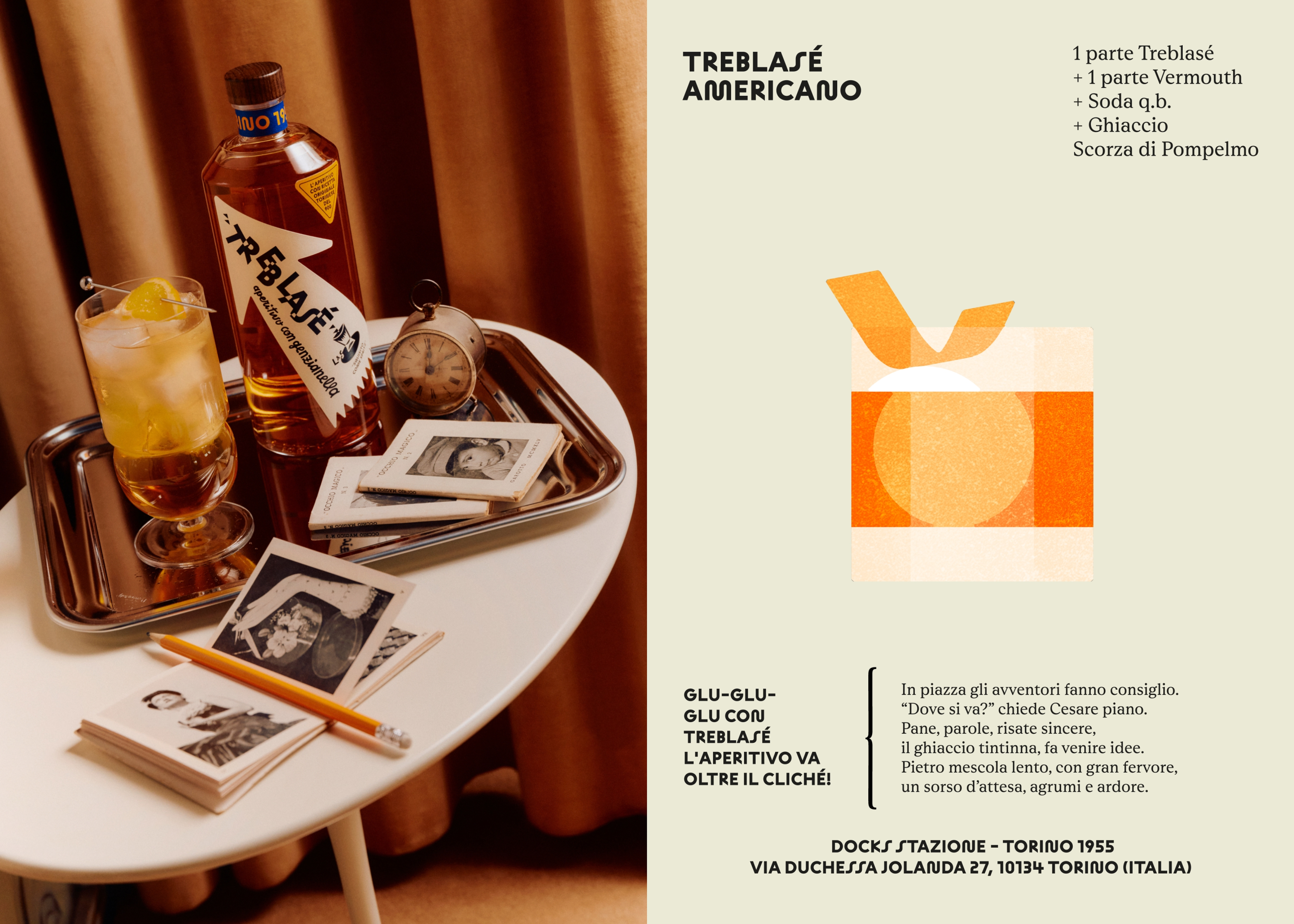
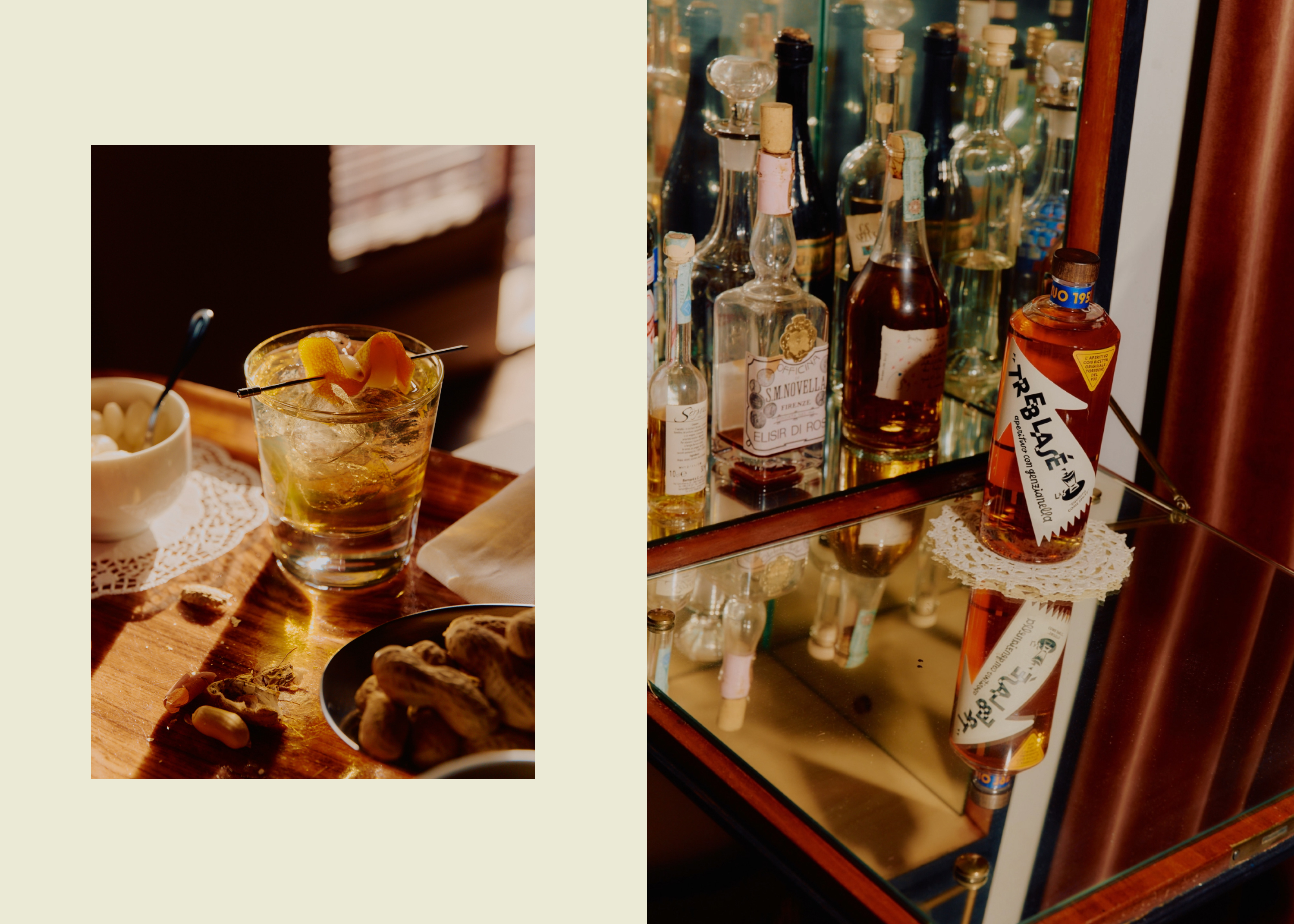
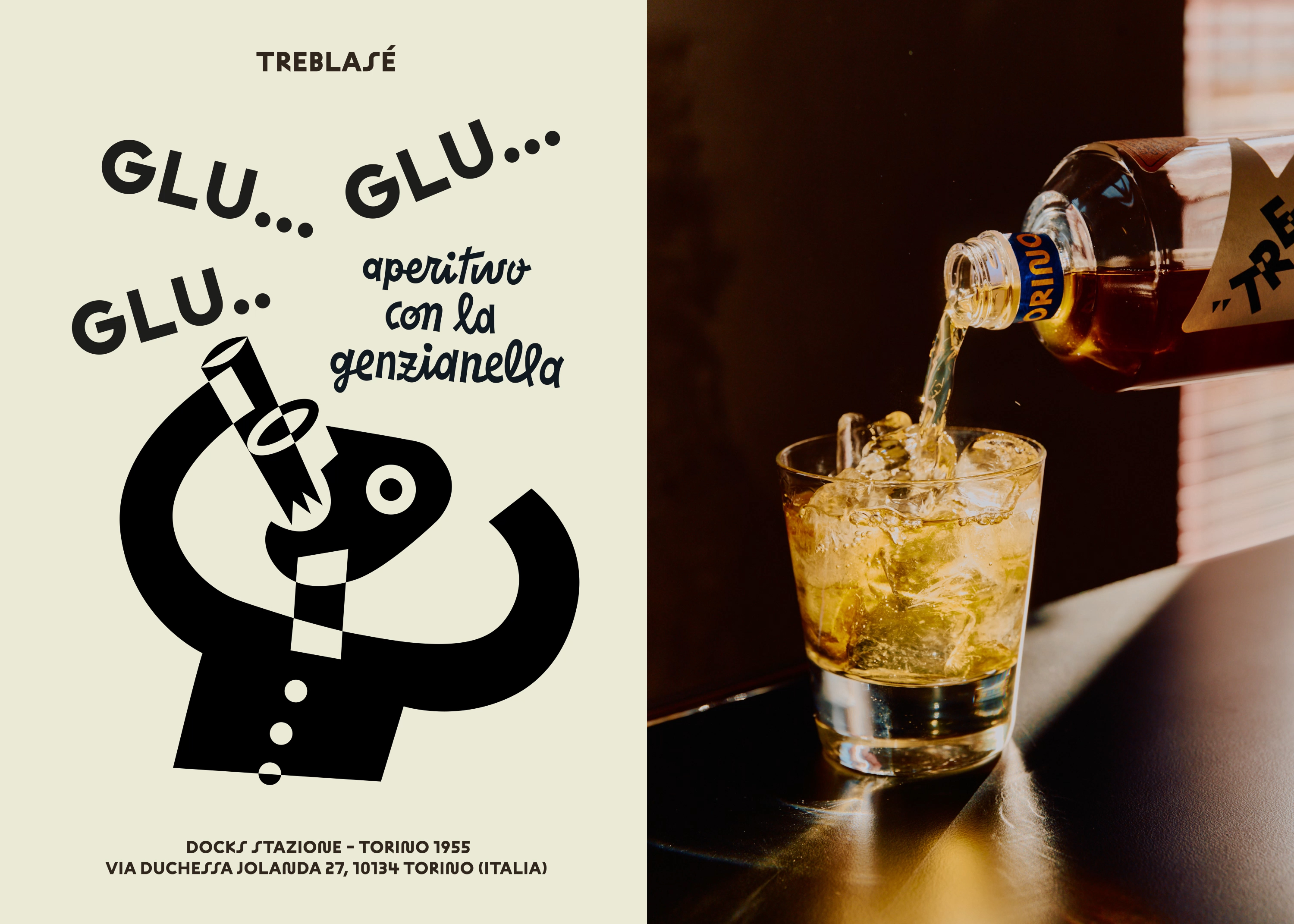
We borrowed from the Futurist vernacular to create a visual language rooted in the history of aperitivo, reinterpreted through a contemporary lens. Typographically, black-and-white contrasts, overlapping all-caps bold type, and dynamic composition evoke a playful and energetic tone. The arrow—unmistakably Depero—symbolizes direction and intention. Onomatopoeia echoes literary and visual Futurism, offering a playful voice. The colour palette is inspired by Genzianella, a deep-blue alpine wildflower rooted in Piedmontese culinary and drinking traditions. The back label suggests three ways to enjoy the aperitif. The bottle is lightweight, with a single-material cork and threads carved directly into the wood to avoid plastic. Treblasé positions itself at the intersection of heritage and reinvention, speaking to a contemporary aperitivo culture while remaining unmistakably Torinese in spirit.
Credits