Heat Pumps, Renewables & Other Hot Stuff
Heating is political. Heating is complex. And heating is crucial to Europe's climate goals.
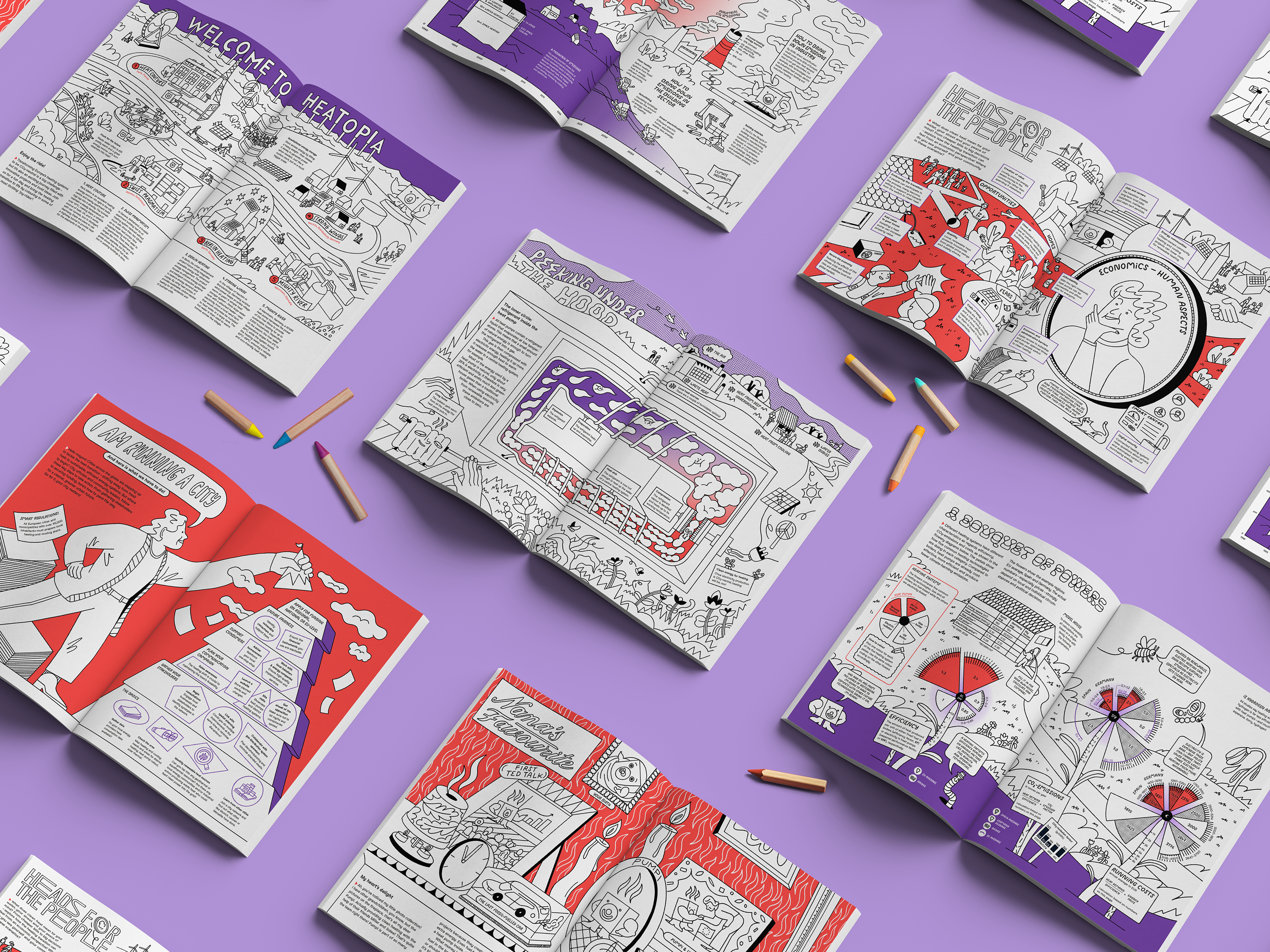
‘Heat Pumps, Renewables & Other Hot Stuff’ makes all of this visible – understandable, well-founded and visually extraordinary. Between data and debates, urban districts and heating networks, tech myths and political narratives, a panorama of the European heating transition unfolds. With illustrations, infographics and storytelling, the book invites readers to rediscover the most urgent but often overlooked dimension of the energy transition.
What does it mean when entire cities manage without fossil fuels? What does an intelligent, renewable heating network look like and who benefits from it? What role do heat pumps really play and what lies behind the common prejudices?
This book is not a technical manual. Nor is it an activism handbook. It is a visual compass for anyone concerned with the future of heating – professionally, politically or privately. With exciting infographics, pointed metaphors and well-founded research, it conveys the state of the debate, key technologies, political framework conditions and social potential – in a format that invites both reflection and a smile.
Heating accounts for almost half of Europe's energy consumption, yet its decarbonization lags behind electricity and mobility. At the same time, a political debate is raging in Germany about heating bans, while at EU level, the heating transition is simply not receiving enough attention. This is where the project comes in: the colouring book was designed to reach parliamentarians, NGOs and associations and make the complex topic tangible. Unlike traditional materials, it was designed to arouse curiosity, stick in the memory and position heat pumps as a key technology in an understandable way.
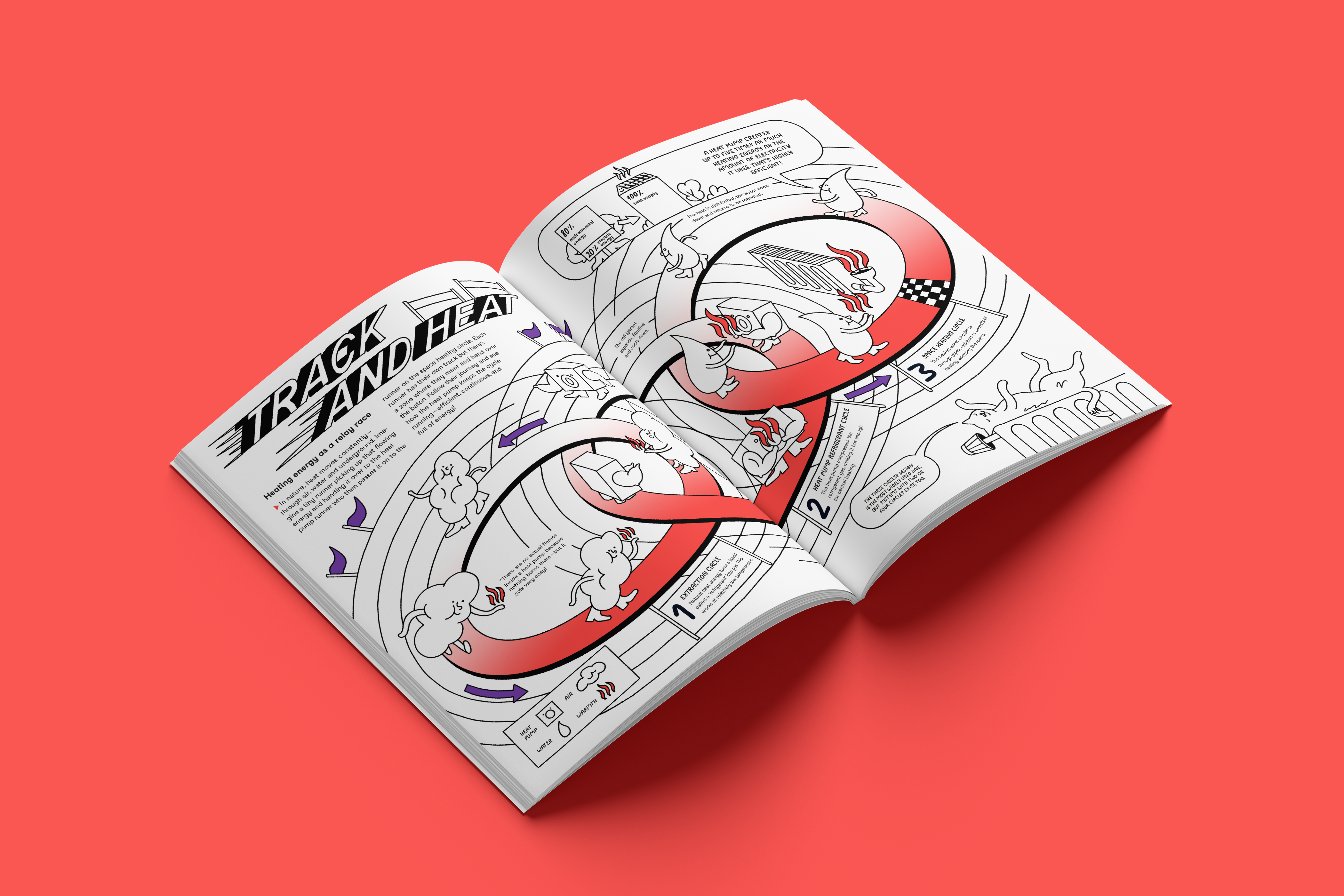
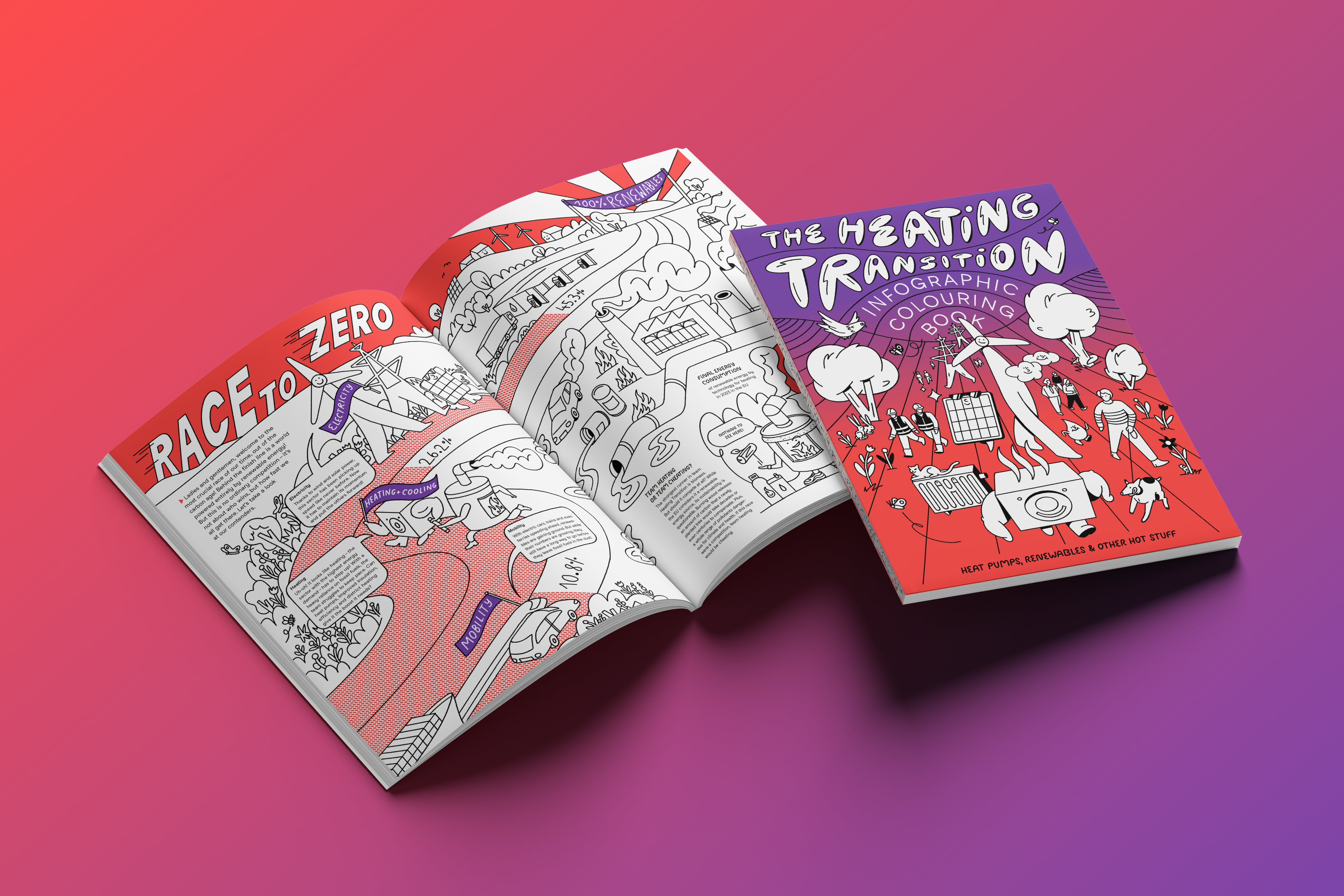
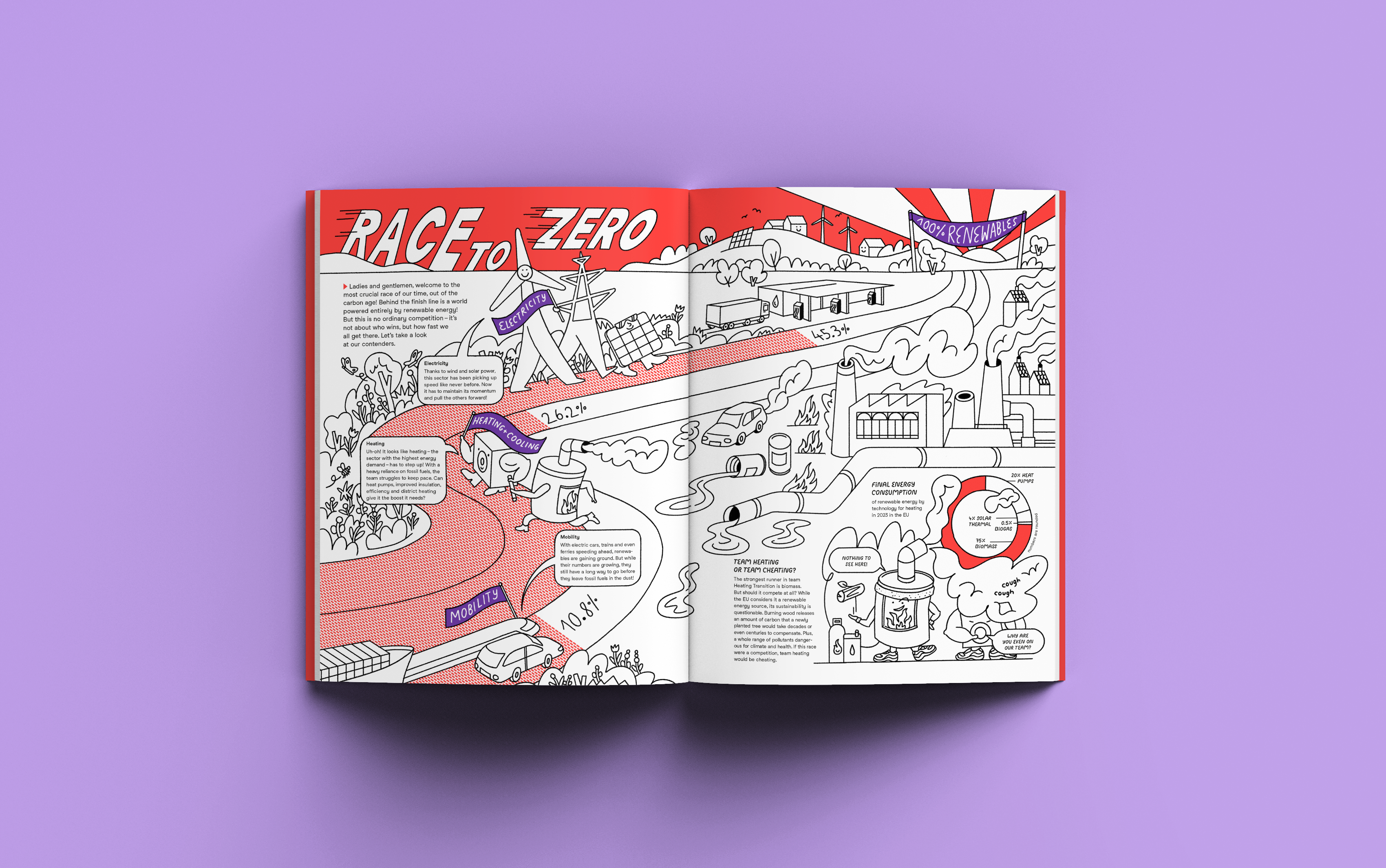
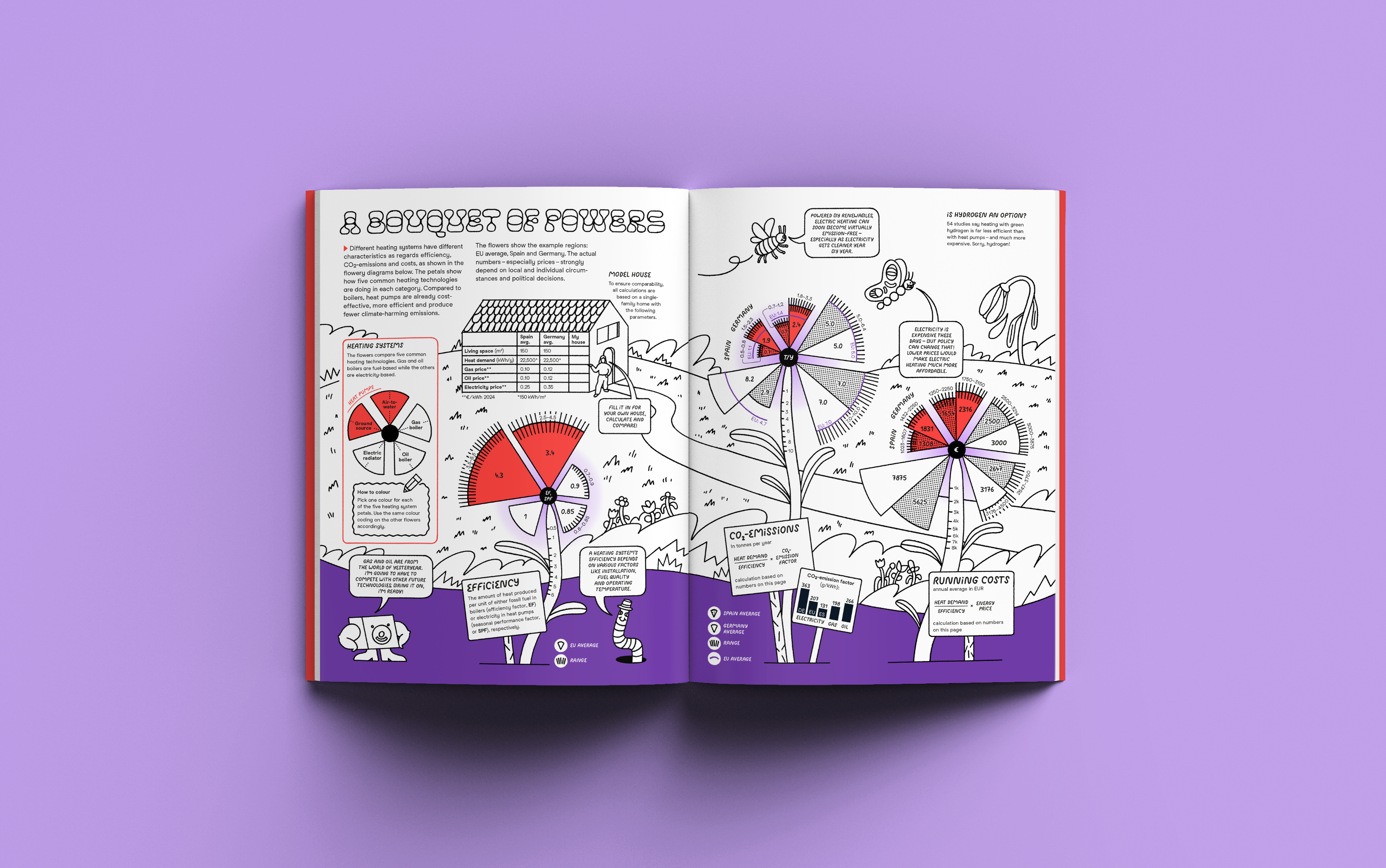
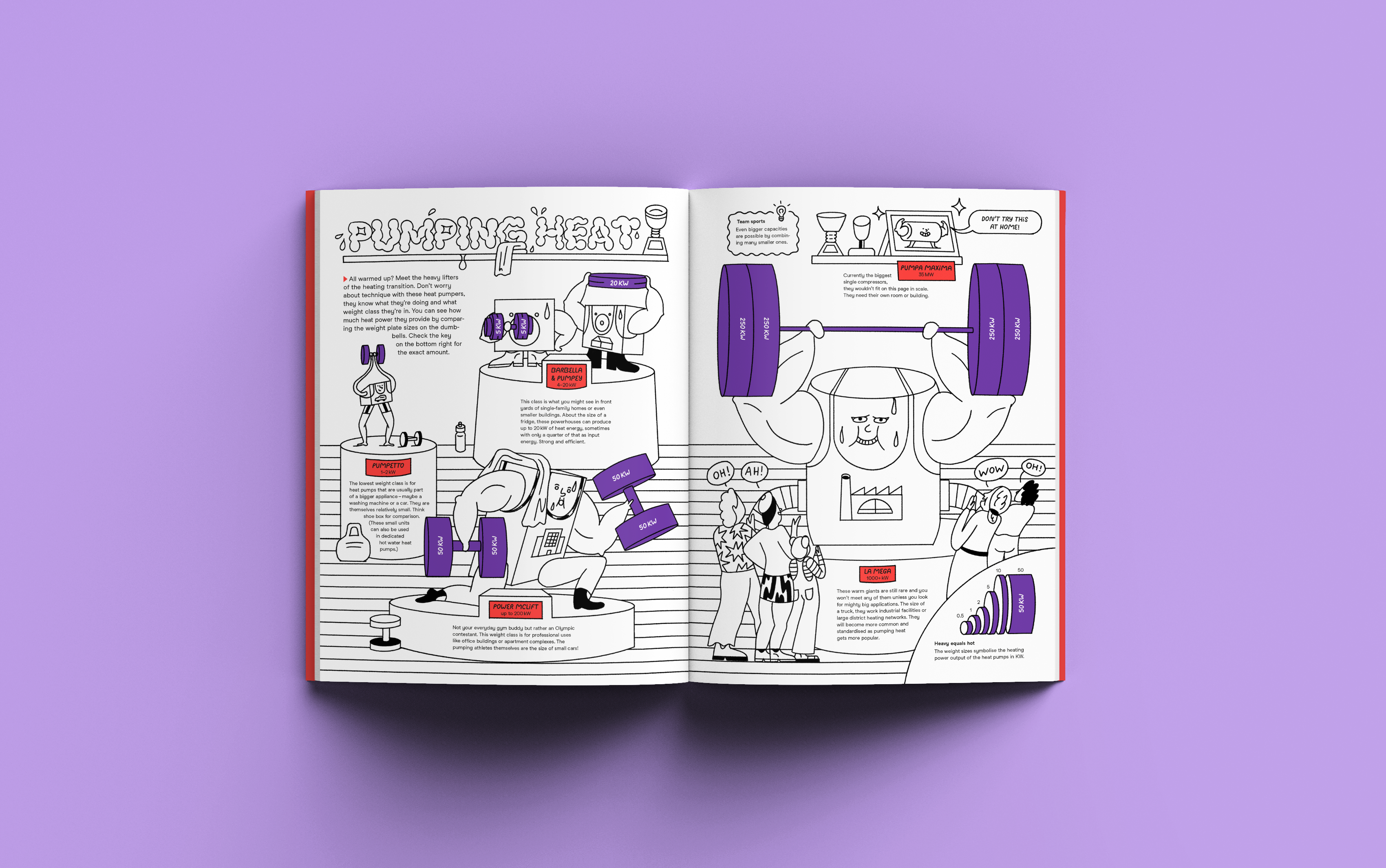
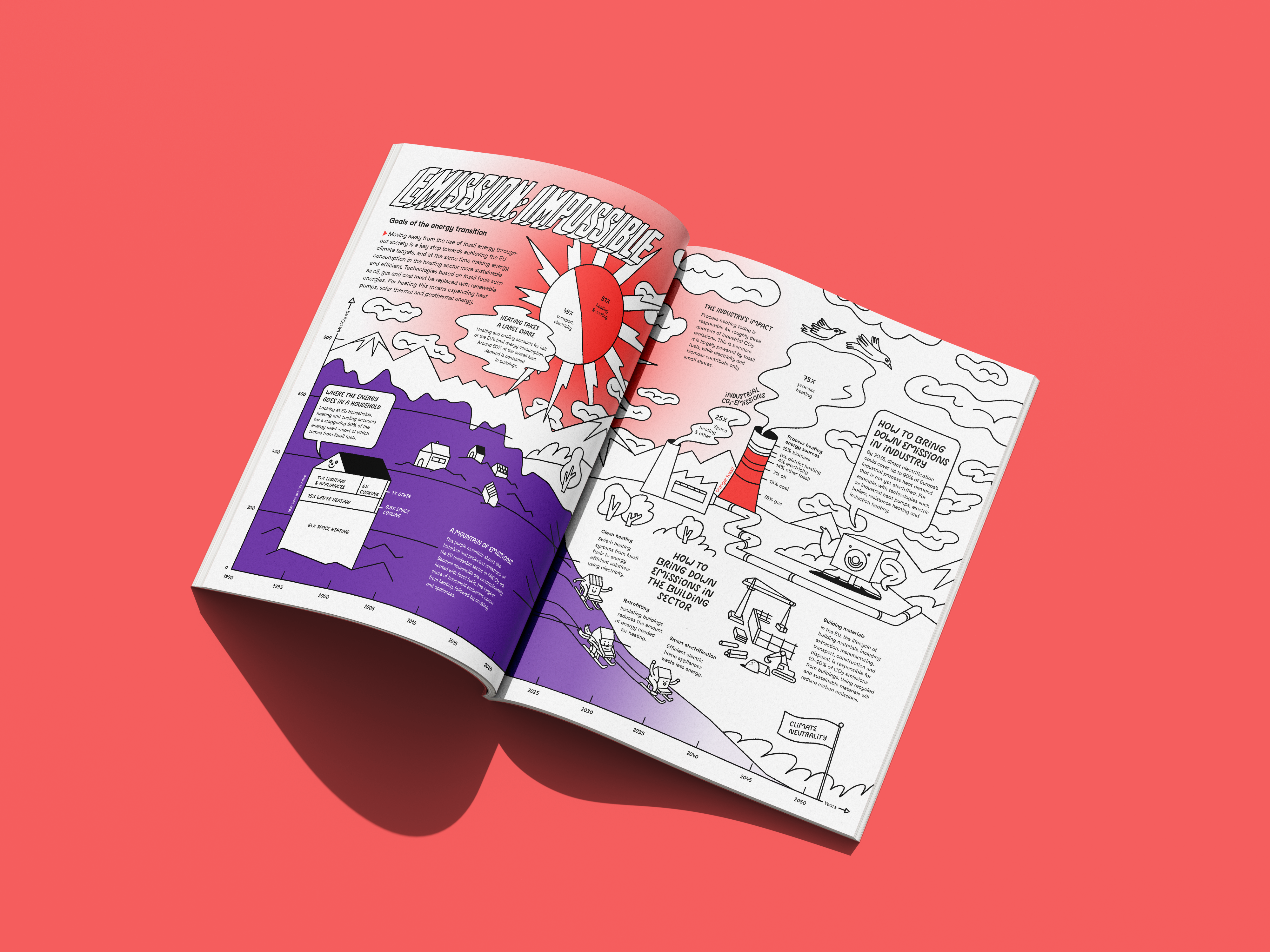
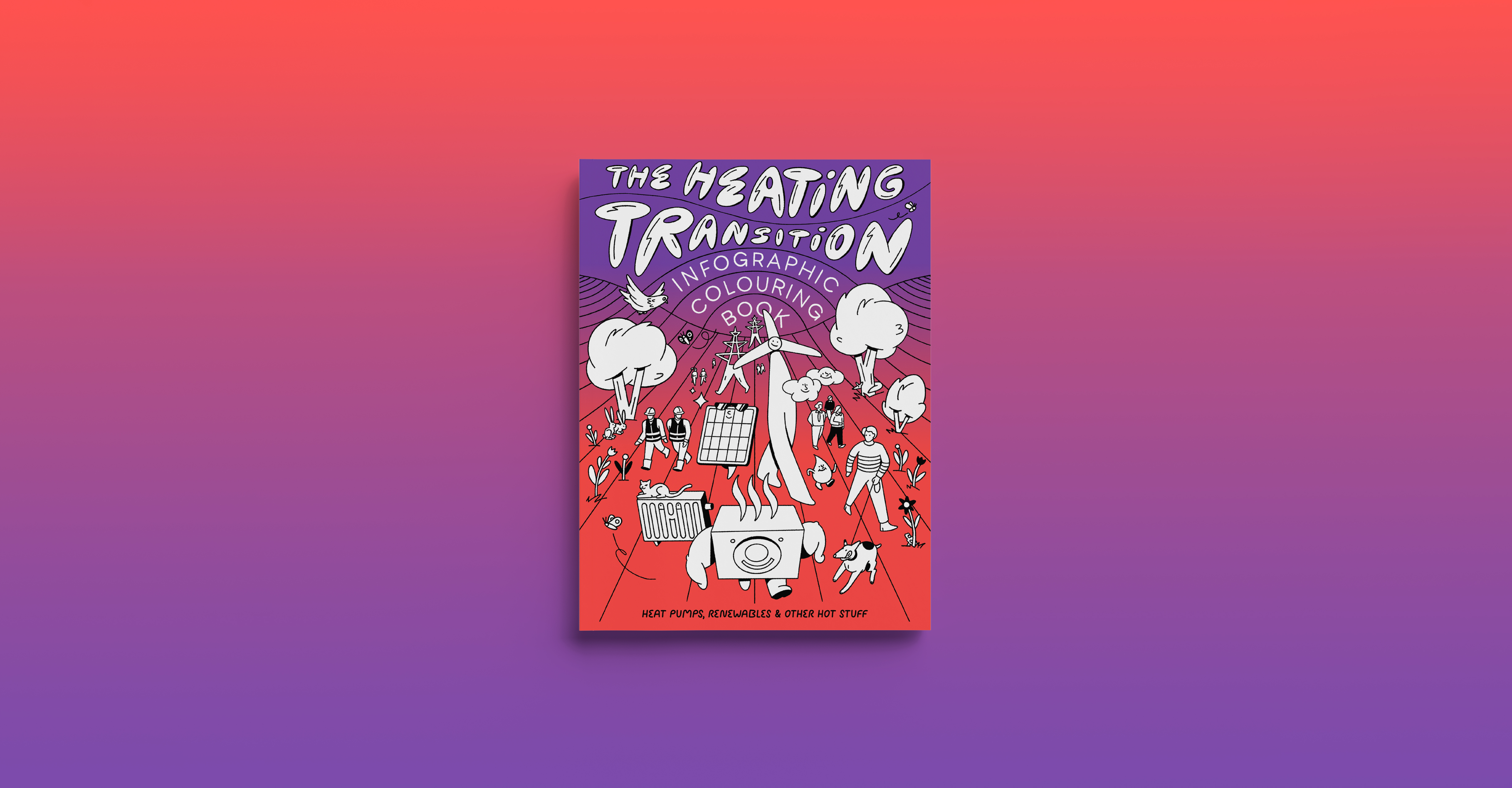
The result is a 68-page infographic colouring book with 30 thematic spreads that combines technical contexts, myth busting, practical examples and visions of the future. Hand-drawn illustrations featuring the recurring character ‘Pumpi’ make abstract concepts concrete. A thermochromic effect on the first page reveals the inner workings of a heat pump when heated. The book functions as a standalone communication artefact, with individual pages that can be used for presentations. The haptic feel and surprising medium deliberately break with conventional policy formats and create a playful but well-founded approach to the heating transition.
Credits