National Gallery Imaginarium
https://imaginarium.nationalgallery.org.uk/
Objective
How do you create a digital experience of a national art collection that is not a replica of the museum, but a meaningful extension of it? That was the central question behind the National Gallery’s Imaginarium.
The Gallery wanted a future-proof digital platform that would connect a global audience—from art lovers to people who feel art is “not for them”—with paintings from the permanent collection in a new, personal way. The audience included experienced visitors, new audiences, and international users without physical access to the museum.
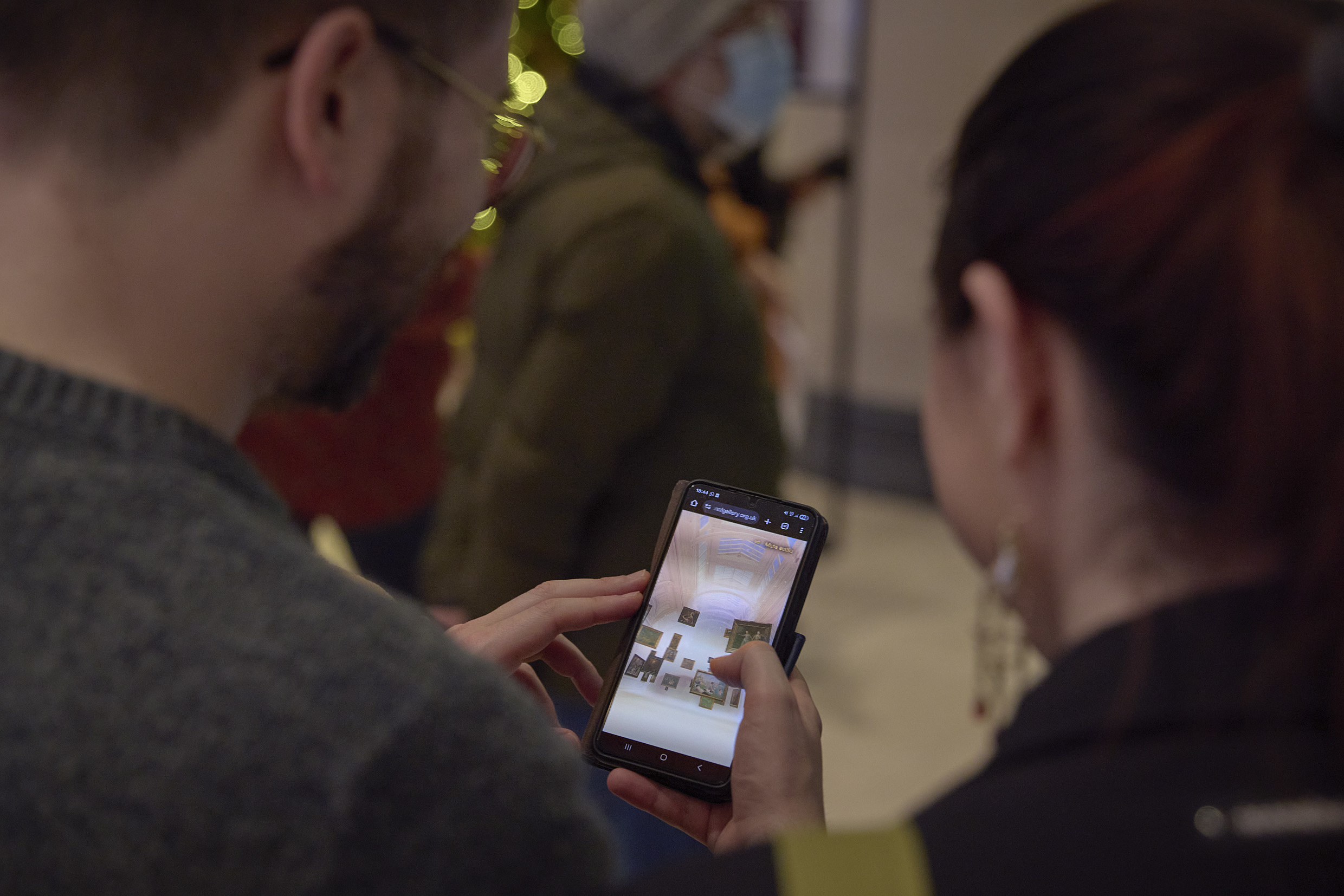
The goal was to create an inclusive, accessible experience that deepens engagement with art, invites reflection and conversation, works both individually and collectively, and is globally scalable without technical barriers such as VR hardware. Desired impact included increasing international reach and engagement, stimulating repeat visits, and strengthening the Gallery’s role as the “Gallery for the Nation and beyond.”
Solution and Approach
We chose a browser-based virtual art experience instead of a digital twin or VR solution, ensuring global accessibility while allowing creativity to lead. Extensive user research informed a multi-year roadmap developed in co-creation with curators, education specialists, and digital teams.
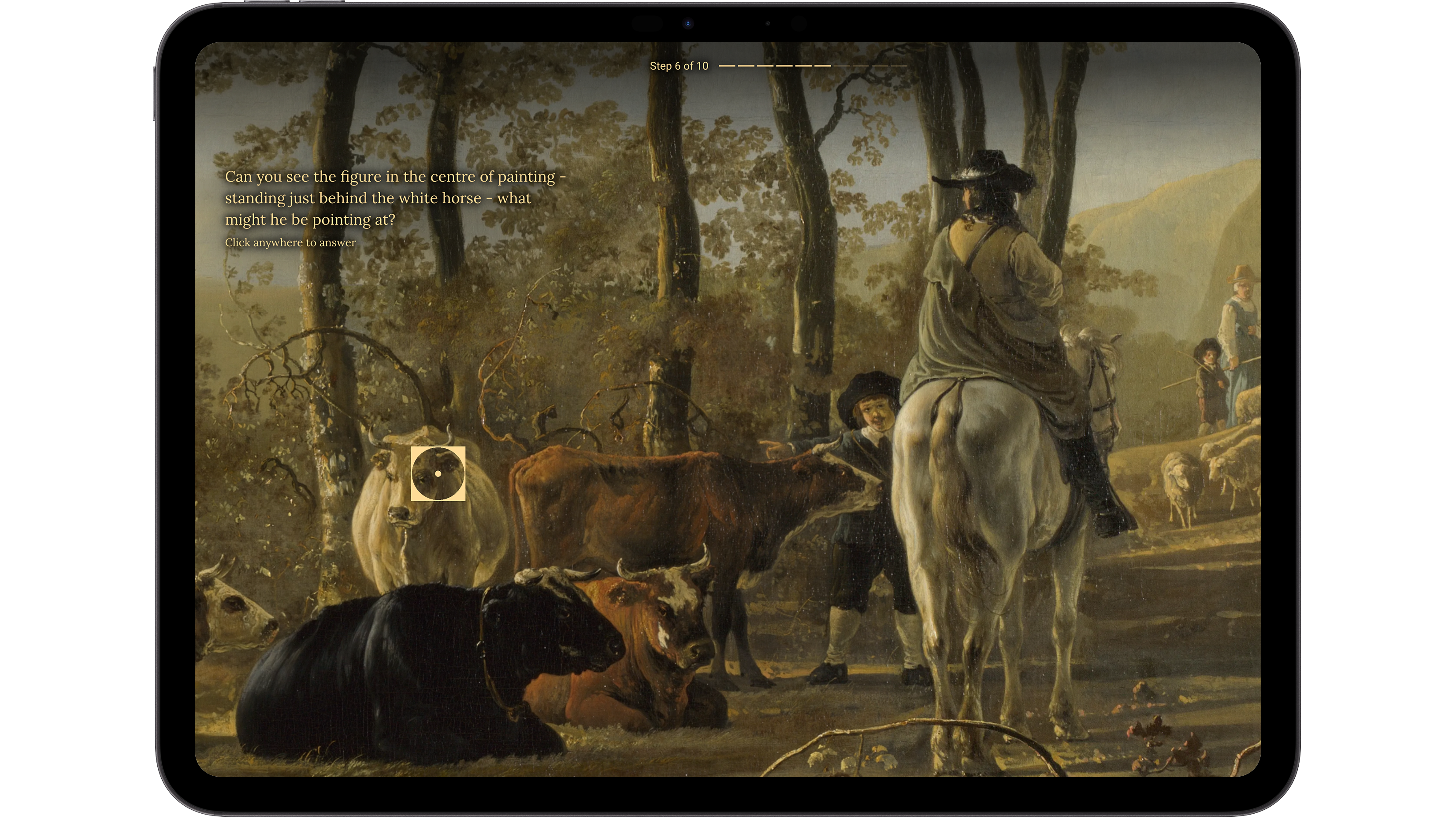
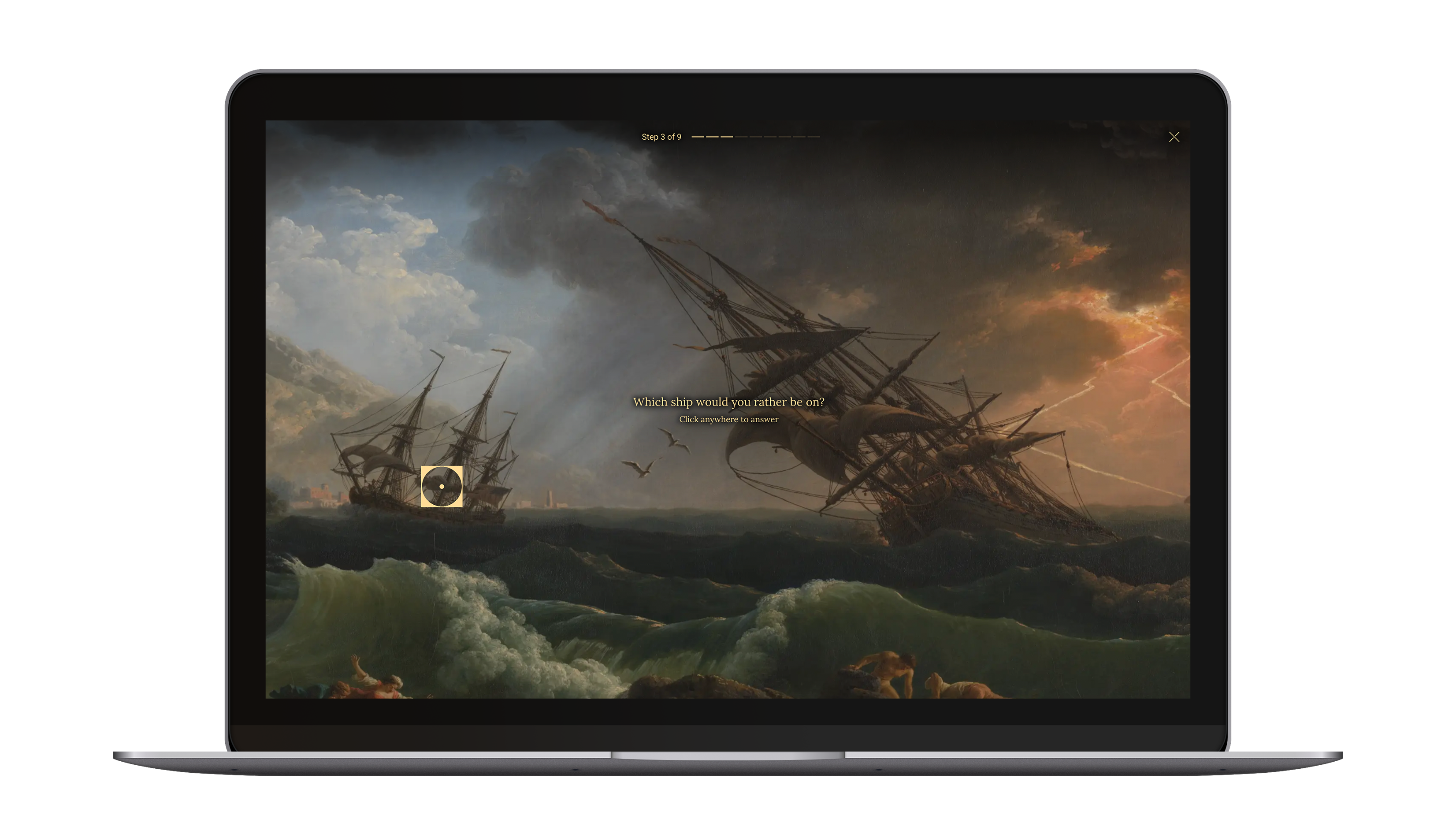
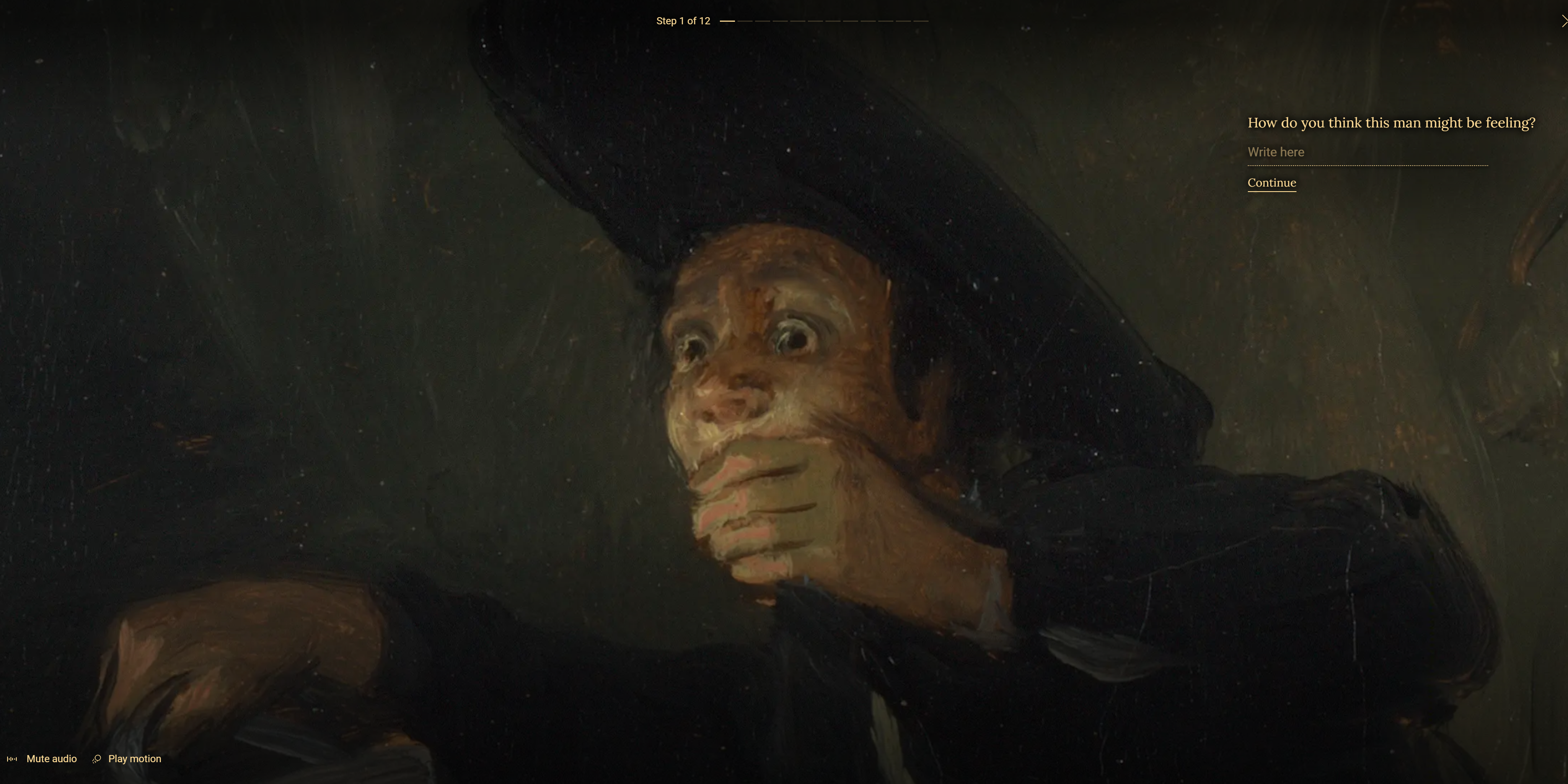
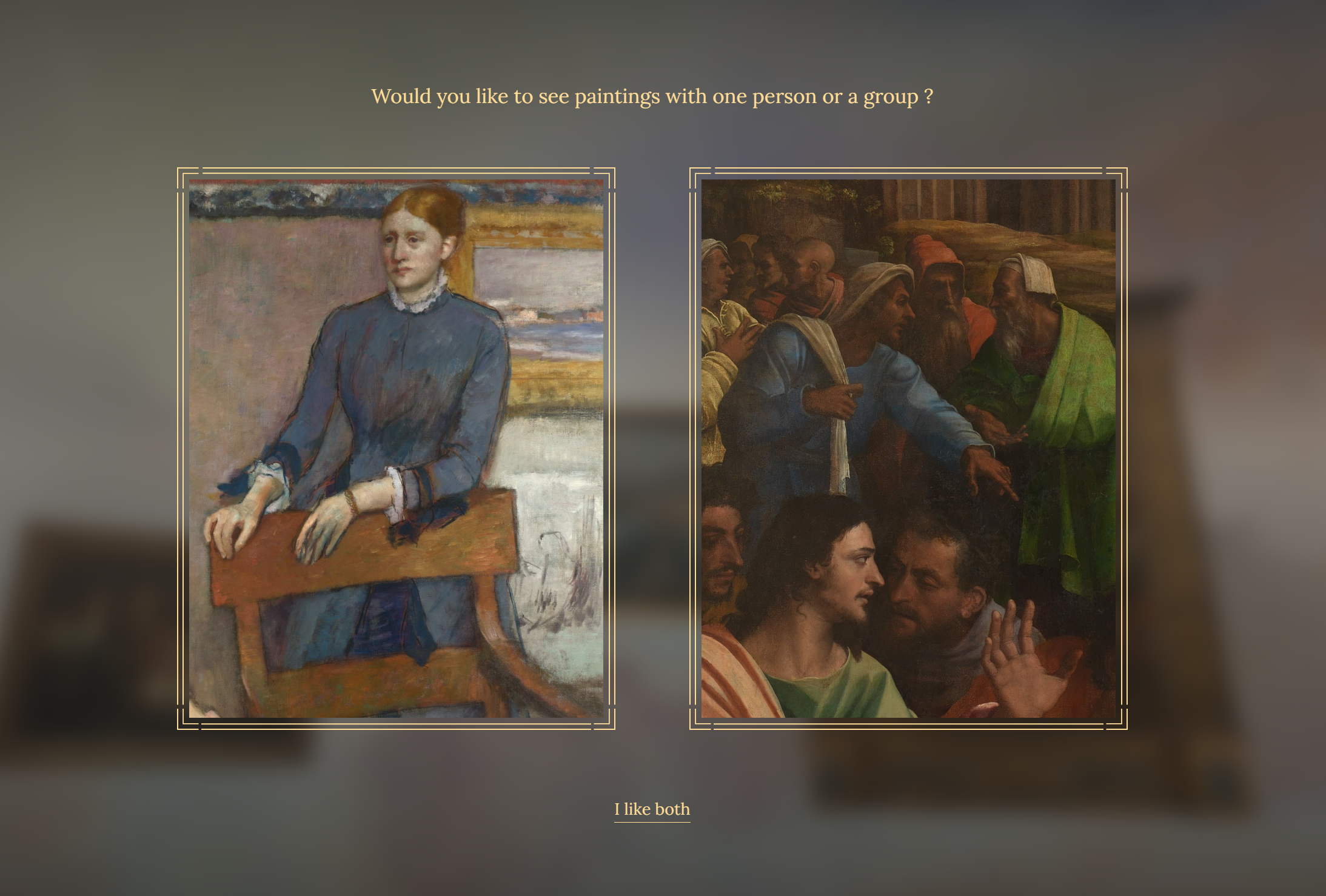
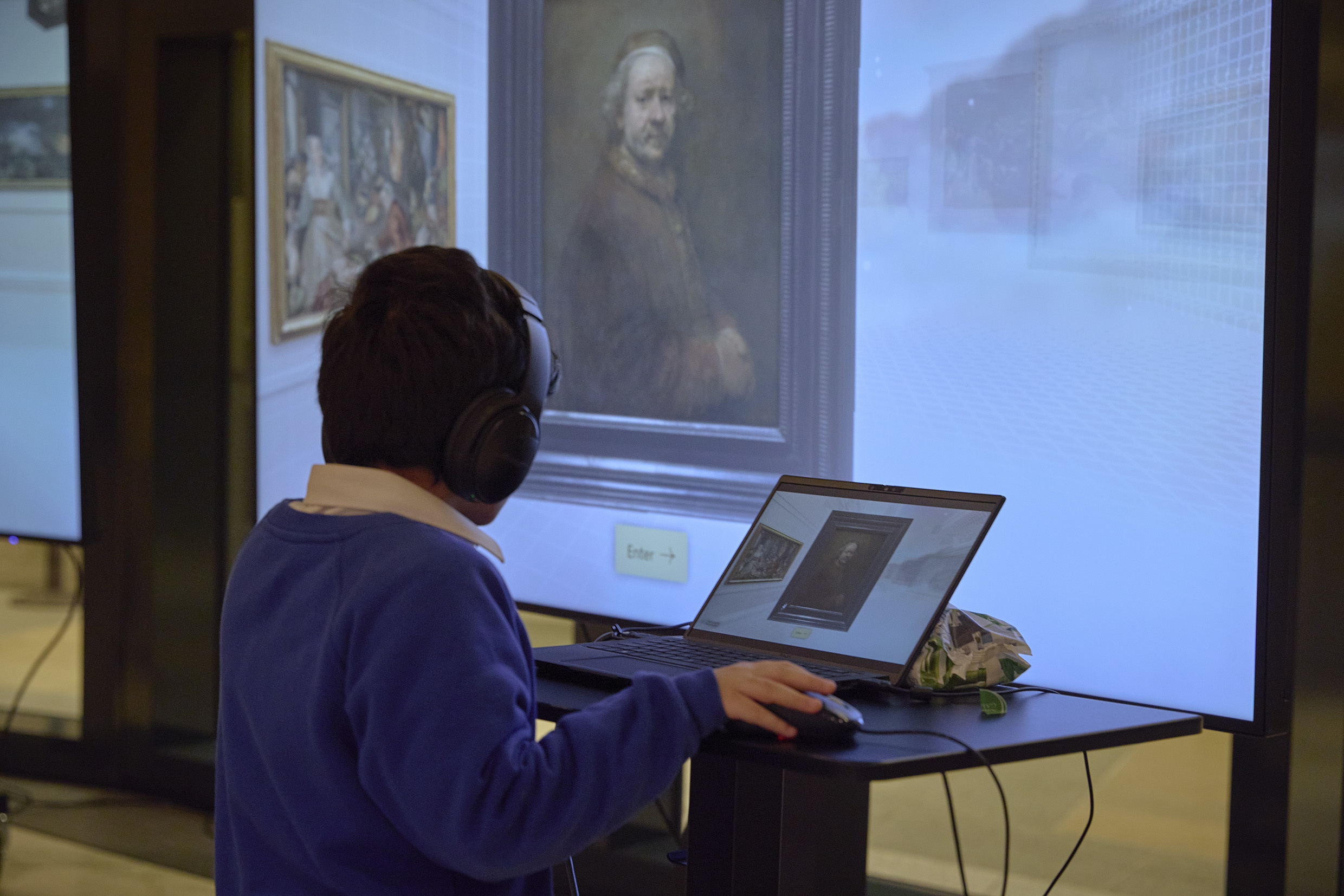
Imaginarium is a dreamlike digital space where paintings float rather than hang on walls. Using high-resolution imagery via Micrio, visitors can zoom in to an unprecedented level of detail. Through a conversational approach, visitors respond to prompts; AI subtly animates elements within the painting, accompanied by poetry and soundscapes, bringing the artwork to life.
At its core is “slow looking”: encouraging visitors to look, look again, and discover meaning at their own pace. The UX minimizes buttons and traditional didactic text, focusing instead on questions and dialogue. Rather than instructing, the platform guides gently—offering a personal, imaginative way to experience art.
Result and Impact
In its first month, Imaginarium attracted over 33,000 visitors, reaching more than 192,000 views within ten months, with a significant share of returning users. Seventy-two percent of visitors are international, extending the Gallery’s reach far beyond its physical walls.
Feedback shows that users feel more connected to the art, valuing the close-up detail, poetic interpretation, and freedom to form their own meaning. The experience lowers barriers for new audiences and encourages longer, more attentive looking.
By combining strategy, creativity, and technology, Imaginarium has become both a globally accessible experience and a strategic step in the National Gallery’s digital transformation.
Credits