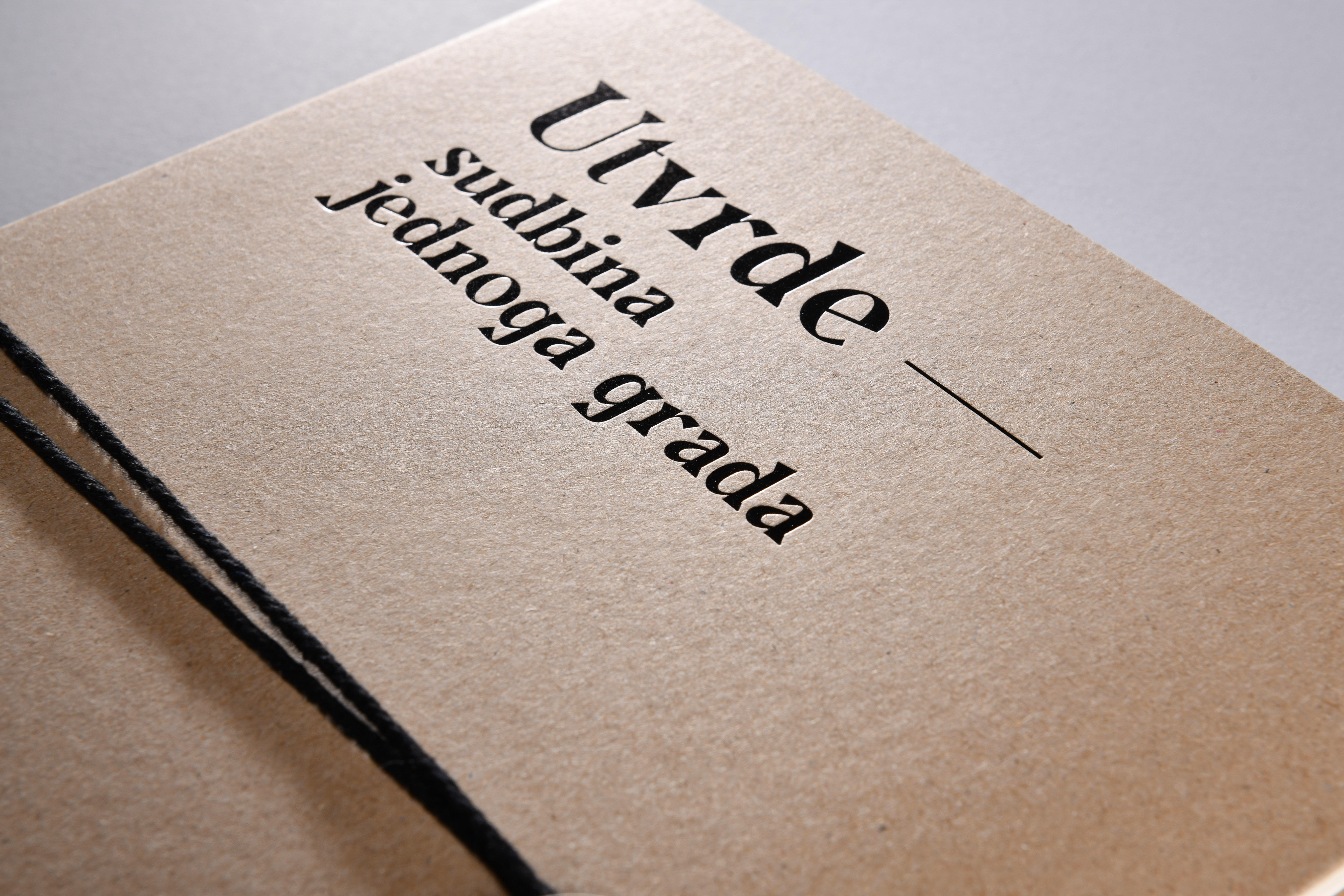
Fortresses – The Fate of a City
The scholarly book “Fortresses – The Fate of a City”, produced for the Historical and Maritime Museum of Istria (Croatia), aims to draw renewed attention to Pula’s neglected fortification system and to present museum and archival materials that document its history.
The book systematically presents a wide range of defensive structures, from complex fortification systems to smaller military buildings, which testify to the development of military technology, defensive strategies, and outstanding engineering achievements of the 19th and early 20th centuries.
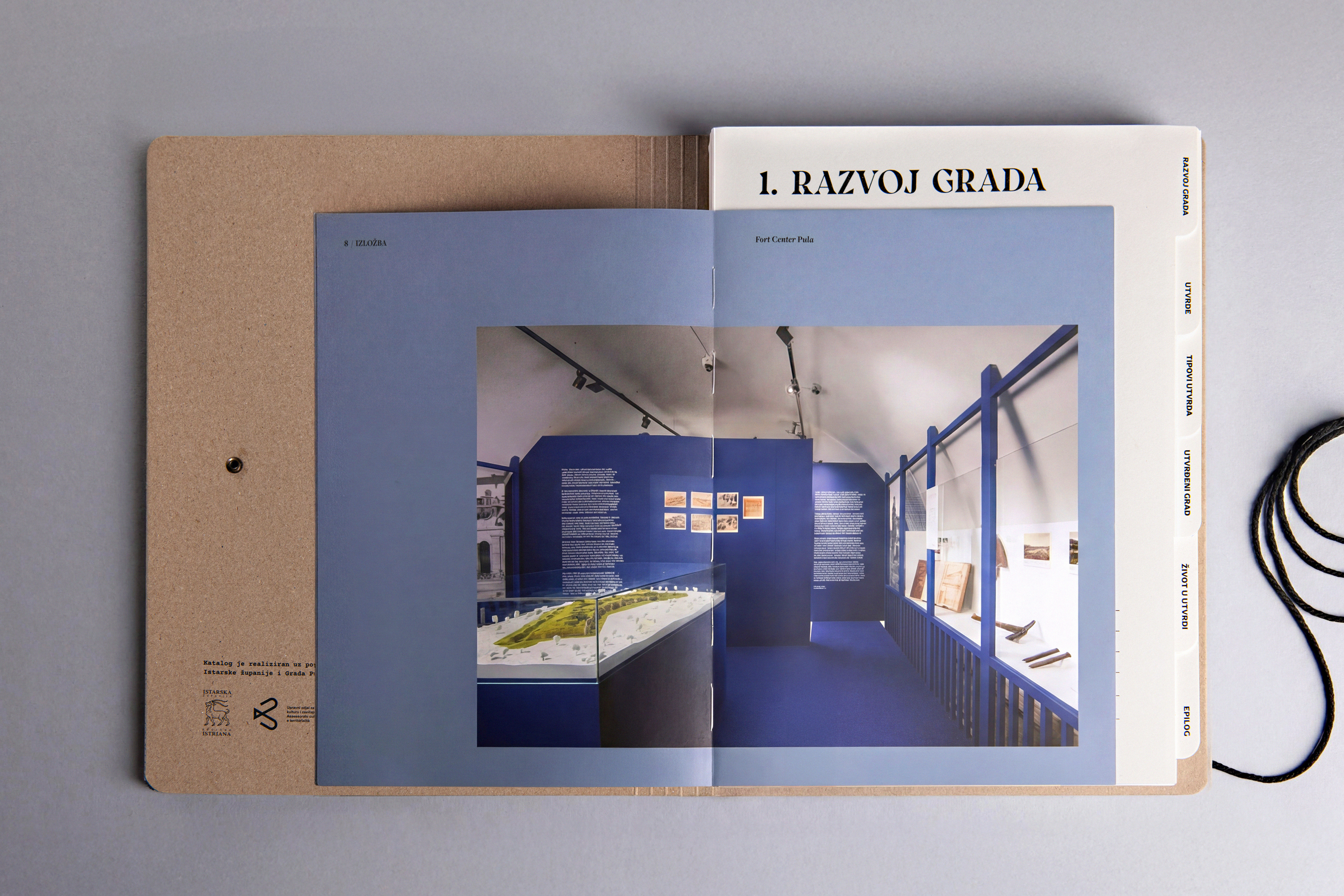
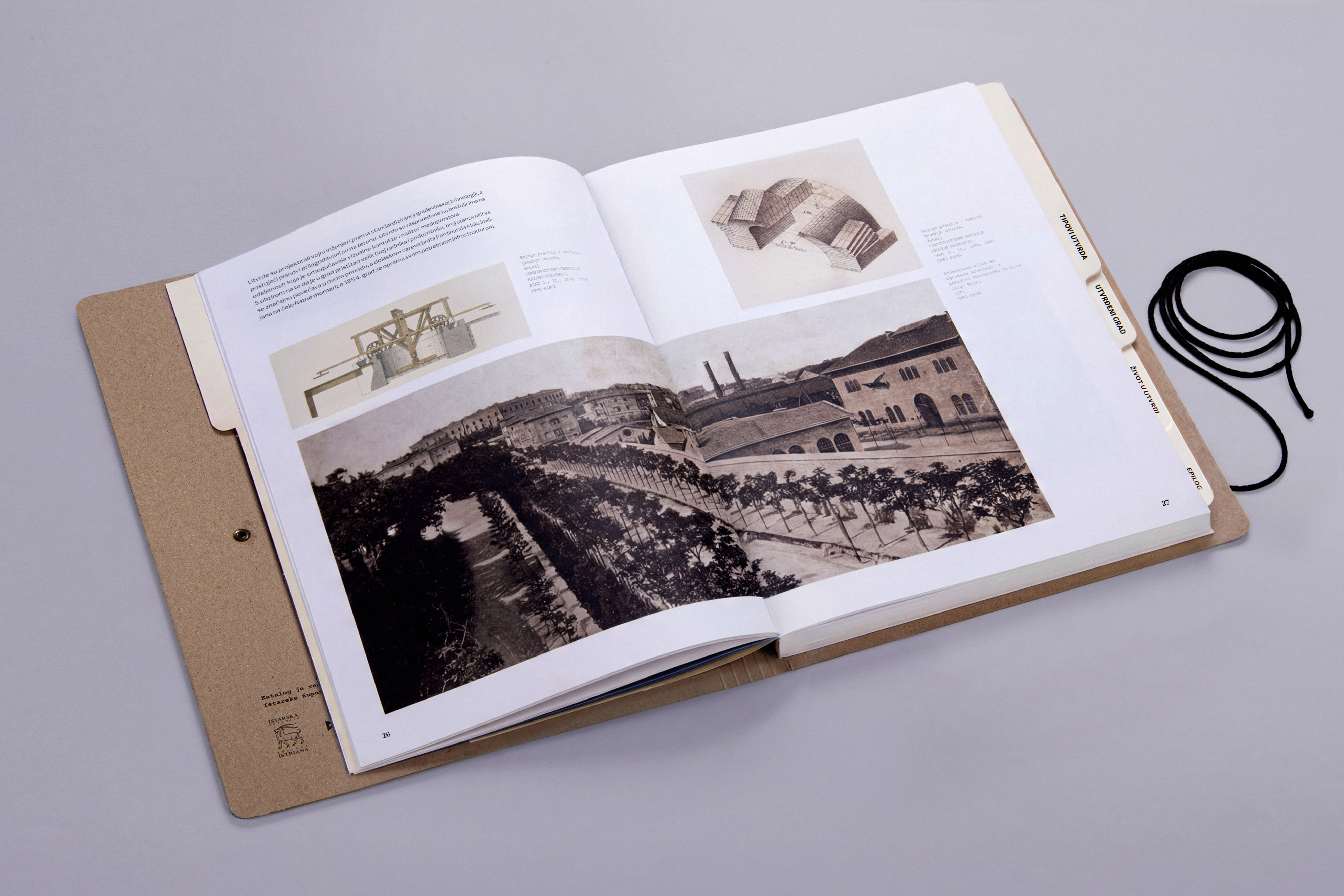
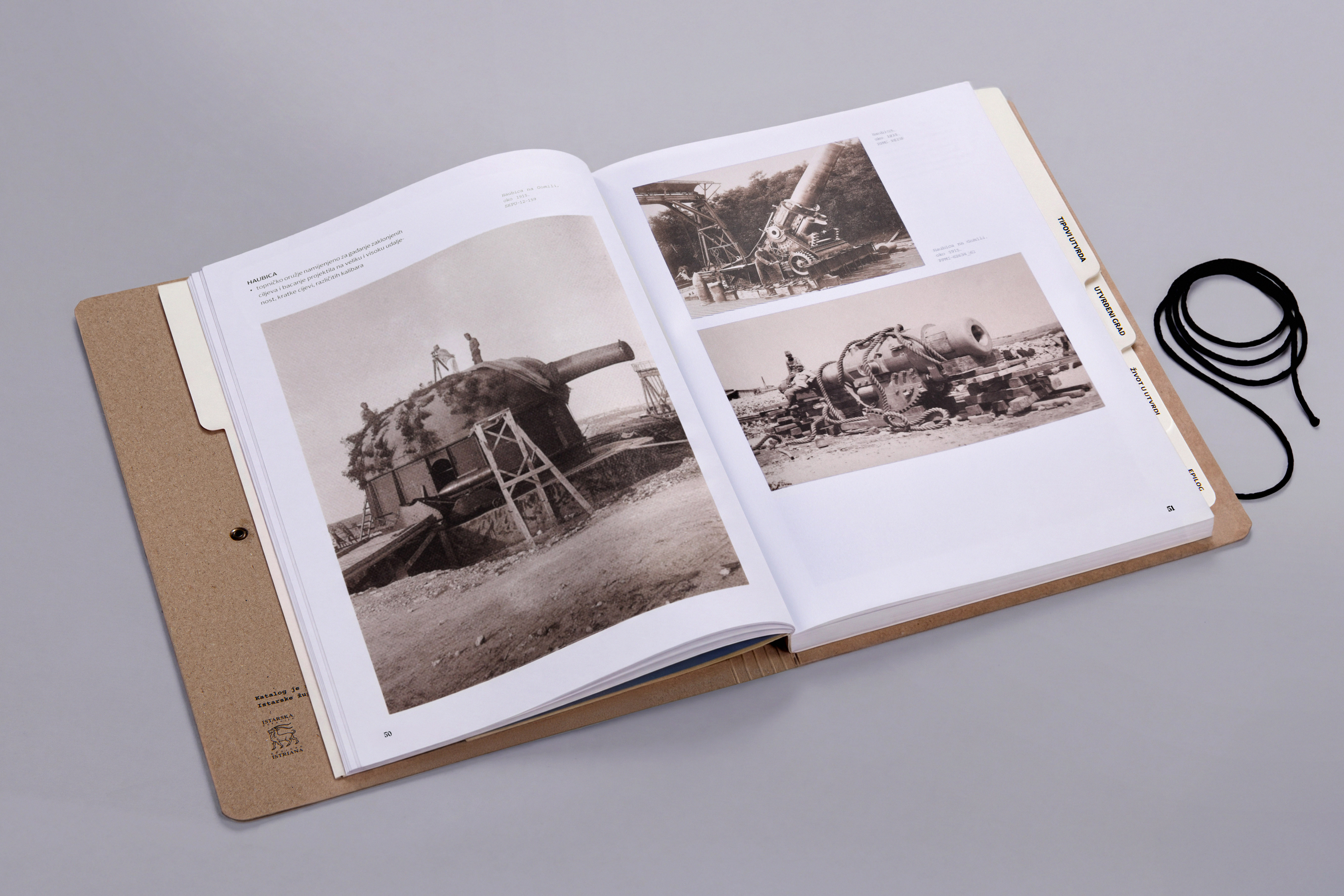
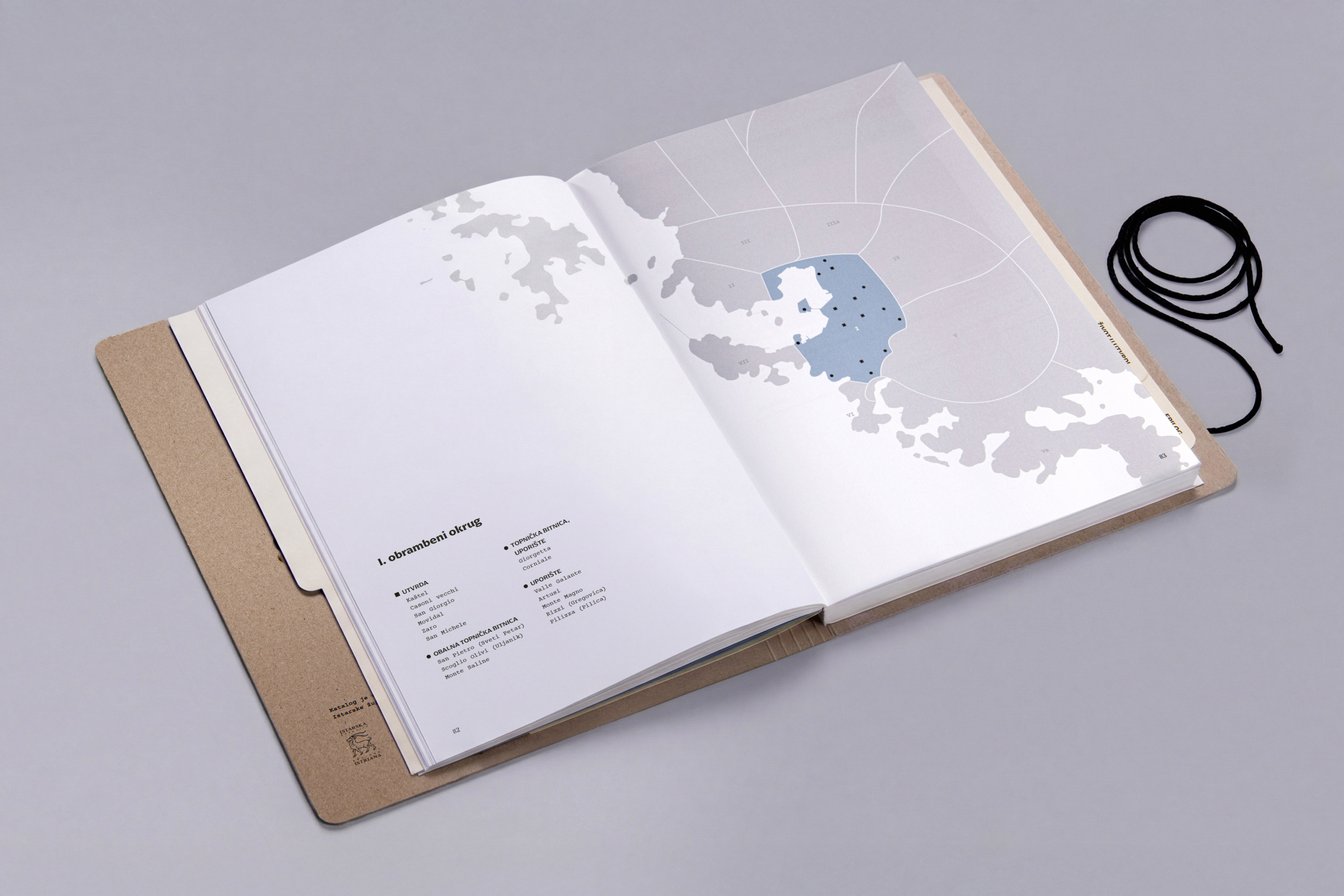
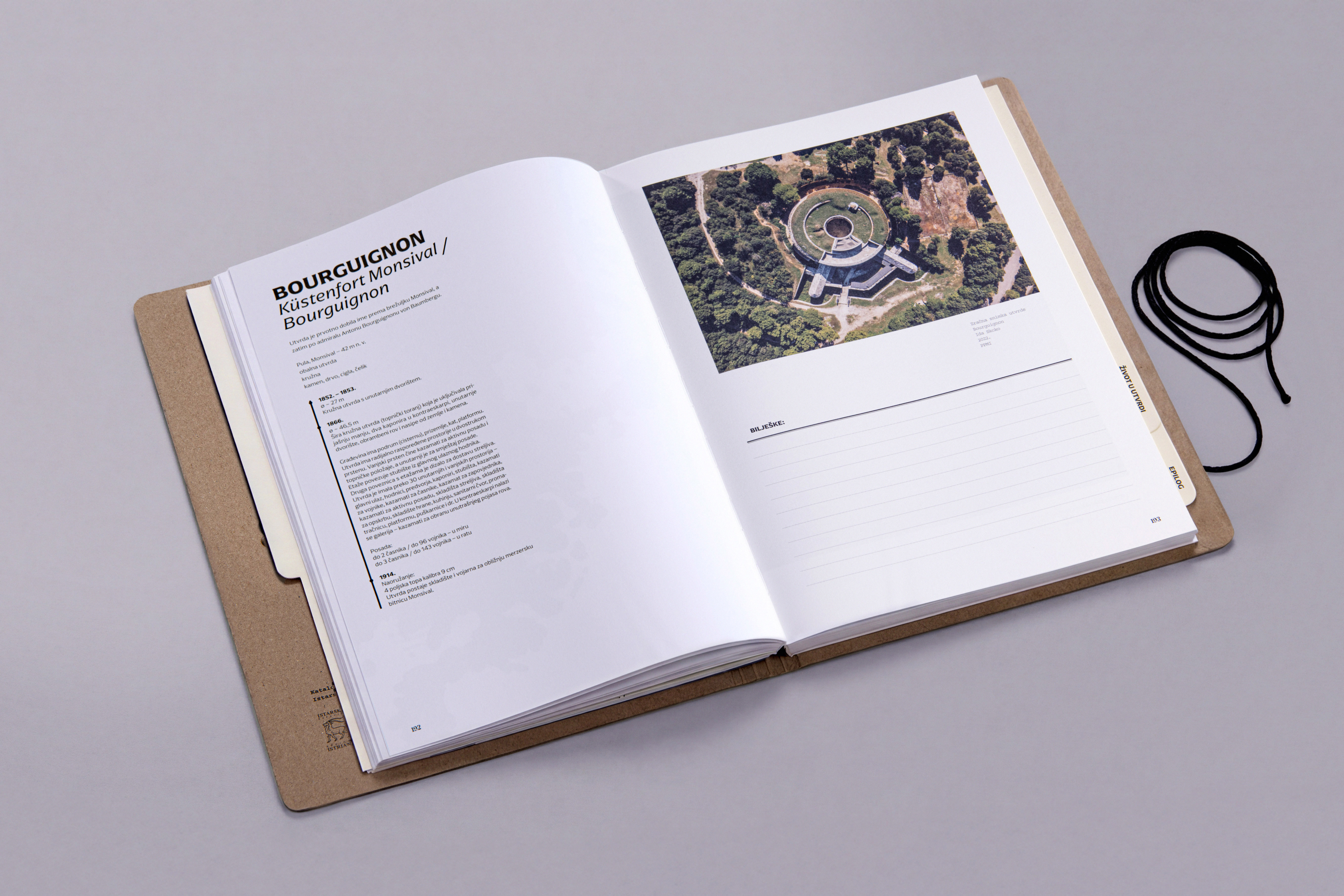
The materials featured in the publication are notably diverse, both in content and visual quality: from contemporary photographs to old black-and-white images of varying states of preservation, as well as numerous maps, plans, and technical drawings of fortresses. This diversity naturally led to the choice of a design that highlights the layered character of the material.
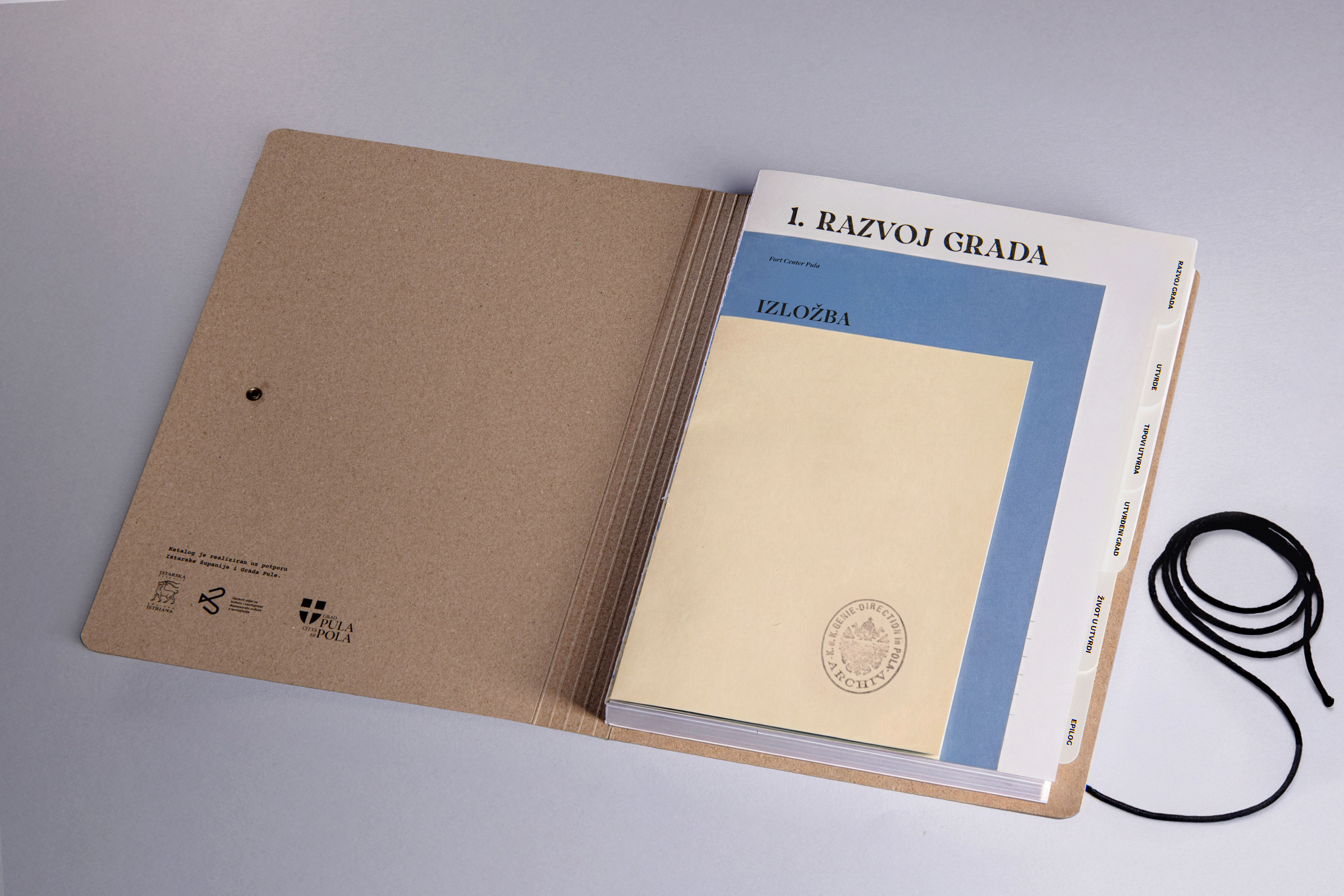
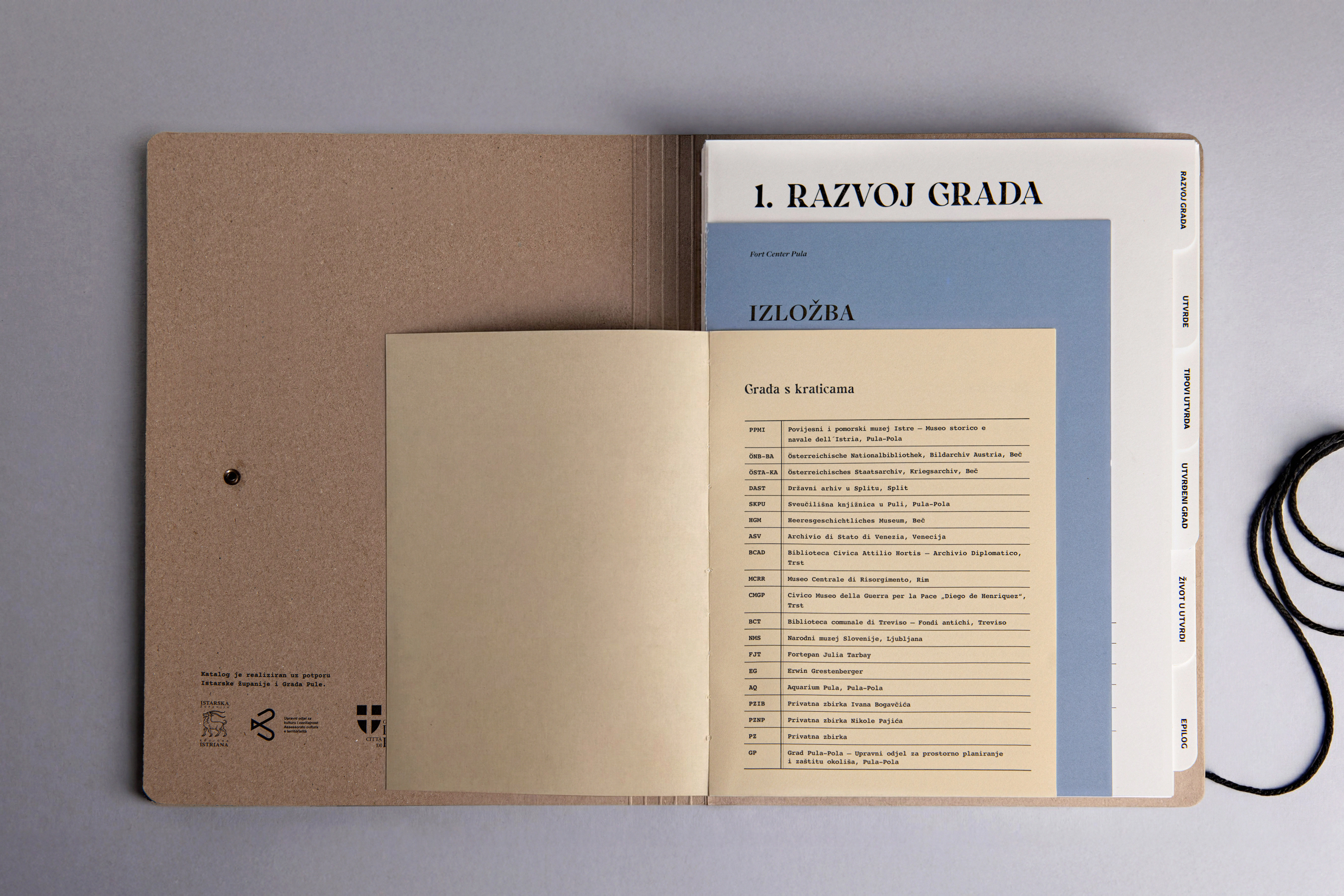
The book was envisioned as a kind of “official file” belonging to a former naval officer or military captain, a place for keeping documents, notes, photographs, and plans. For that reason, the publication does not have a traditional spine; instead, the binding is designed to evoke the appearance of old administrative folders. The covers are made of kraft paper, reinforcing that reference, while details such as the metal eyelet and the tying cord emphasize the impression of a utilitarian working document.
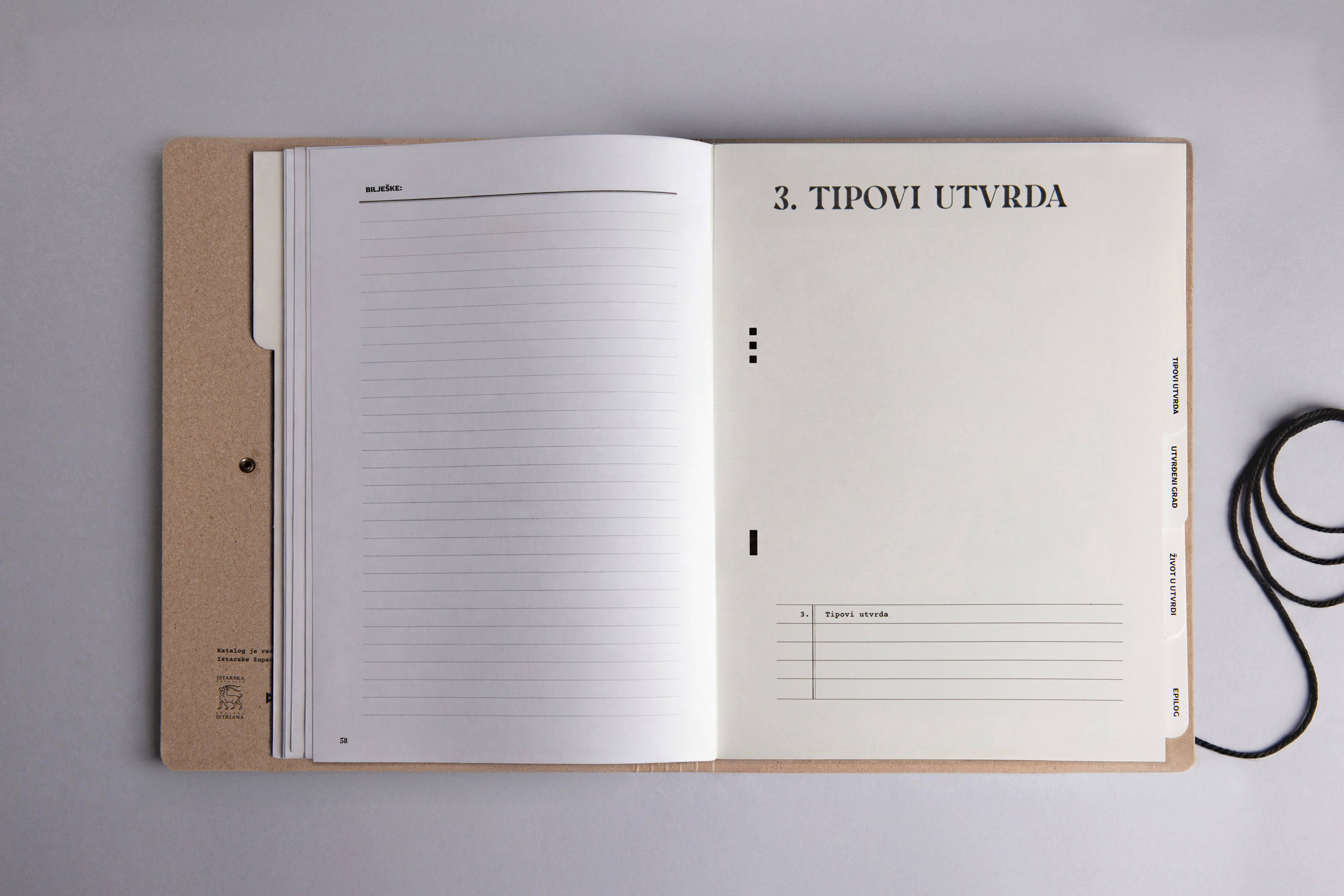
Upon opening the book, readers encounter pages of varying formats and tones, evoking the visual dynamism and slight “scatteredness” typical of files filled with heterogeneous materials. The thicker separator sheets function like smaller folders within the larger one, improving clarity and navigation while visually structuring the publication.
The catalogue is intended for active use: selected pages feature horizontal lines for handwritten notes. It is also designed for fieldwork, allowing users to jot down observations while visiting the fortresses. The more the catalogue is handled, the more its appearance naturally approaches the intended concept: an object that develops the patina of frequent use, gradually becoming a personal file filled with materials that spontaneously shift and accumulate over time.
Credits