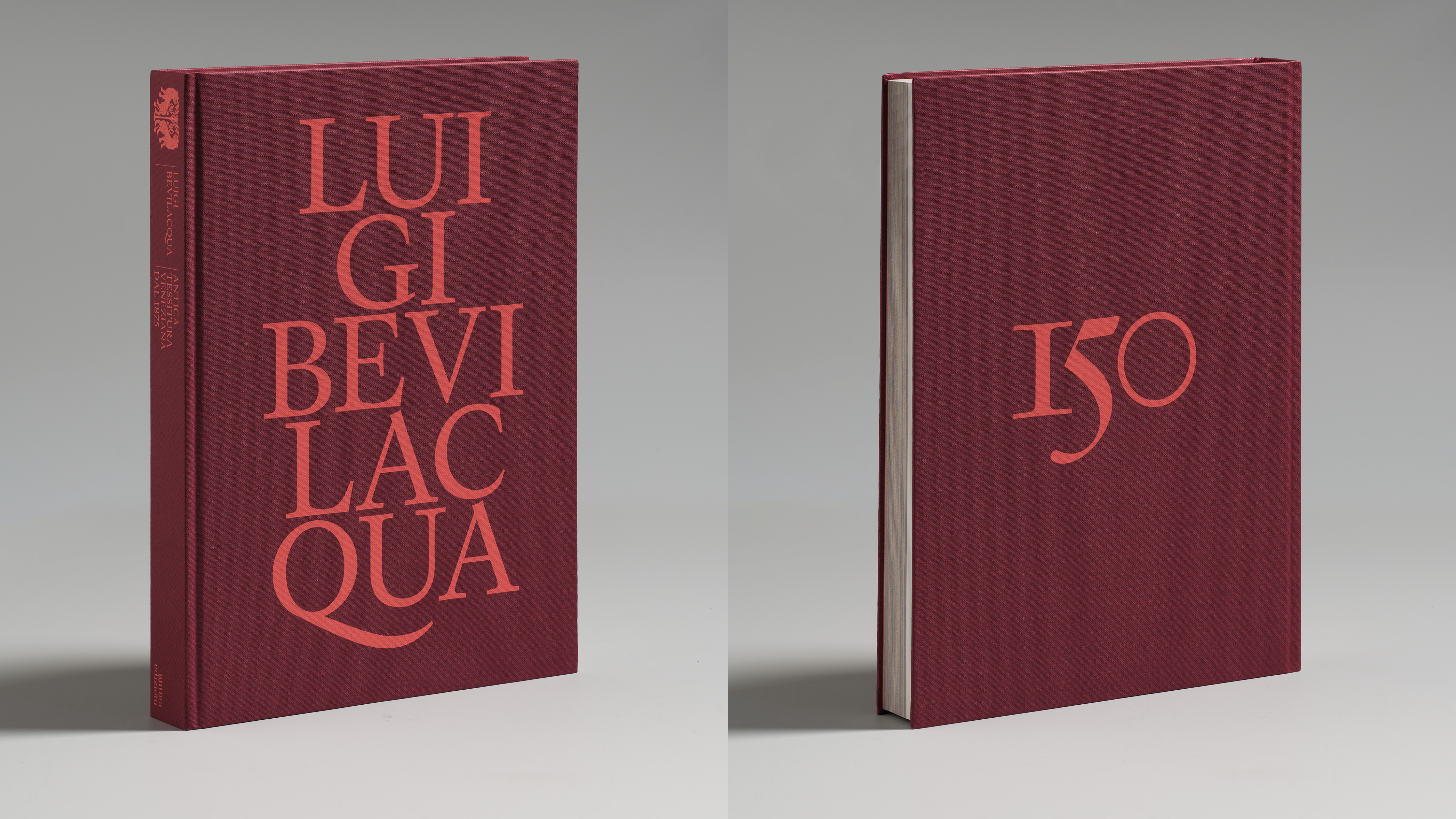
Luigi Bevilacqua 150
Since 1875, Tessitura Luigi Bevilacqua has preserved and renewed Venetian textile art. Every thread brought to life on the ancient eighteenth-century looms expresses a precious heritage: the ability to transform material into beauty, technique into art, and memory into contemporary vision. The backdrop is Venice, a city that has always intertwined cultures, trade, and distant horizons. Here, weaving becomes a universal language, capable of expressing identities, values, and stories through warp and weft.
The commemorative volume for its 150th anniversary pays tribute to this extraordinary journey, demonstrating the role of Tessitura Bevilacqua in protecting and promoting an ancient skill that continues to live on and inspire. The publication is the culmination of extensive and rigorous archival work, realized thanks to the PNRR-TOCC grant. This process allowed us to trace the original commissions, identifying historic fabrics and drawings, as well as preparatory sketches, business correspondence, and period photographs, thus reconstructing a complex web of relationships, patrons, and figures.
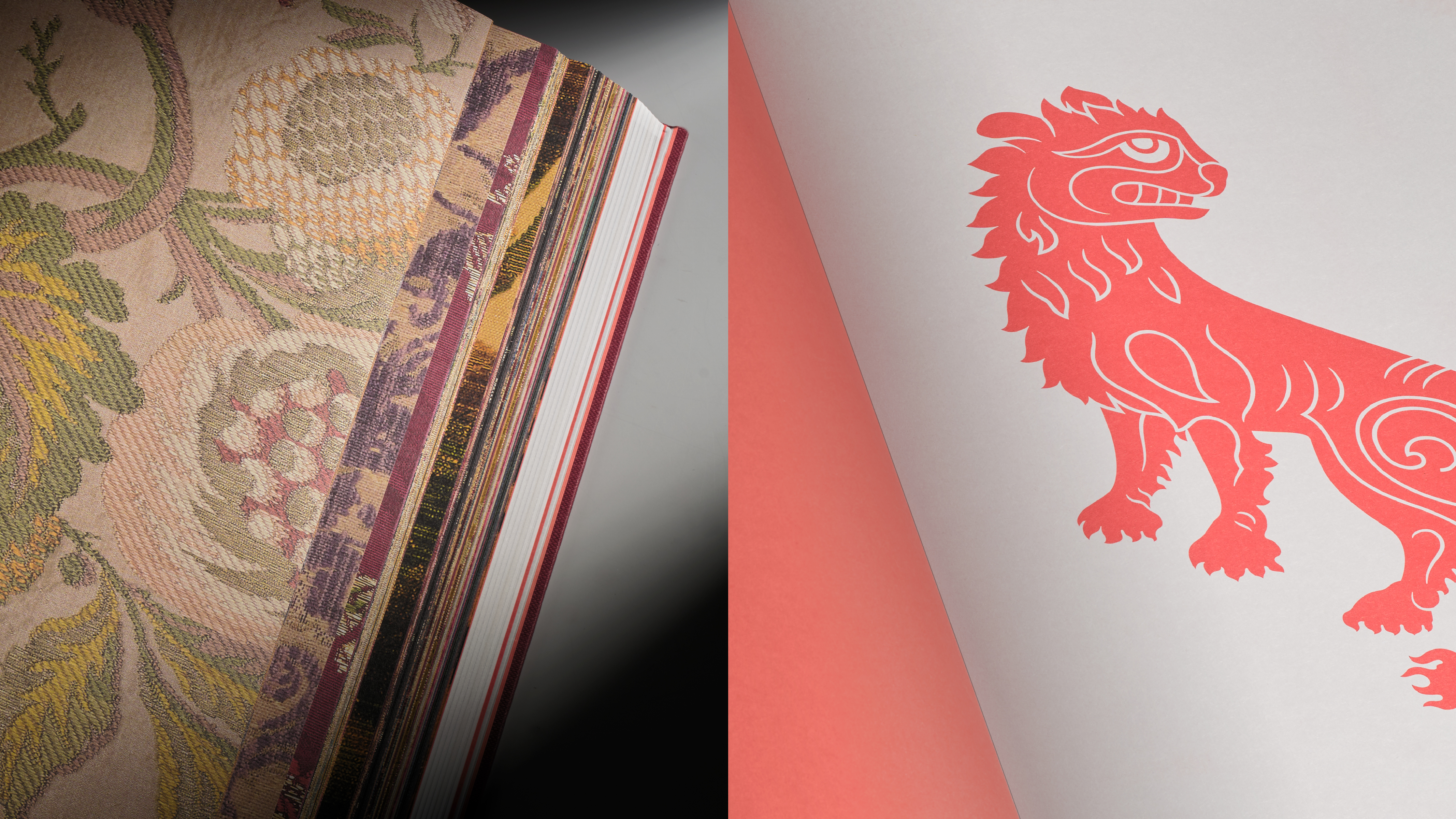
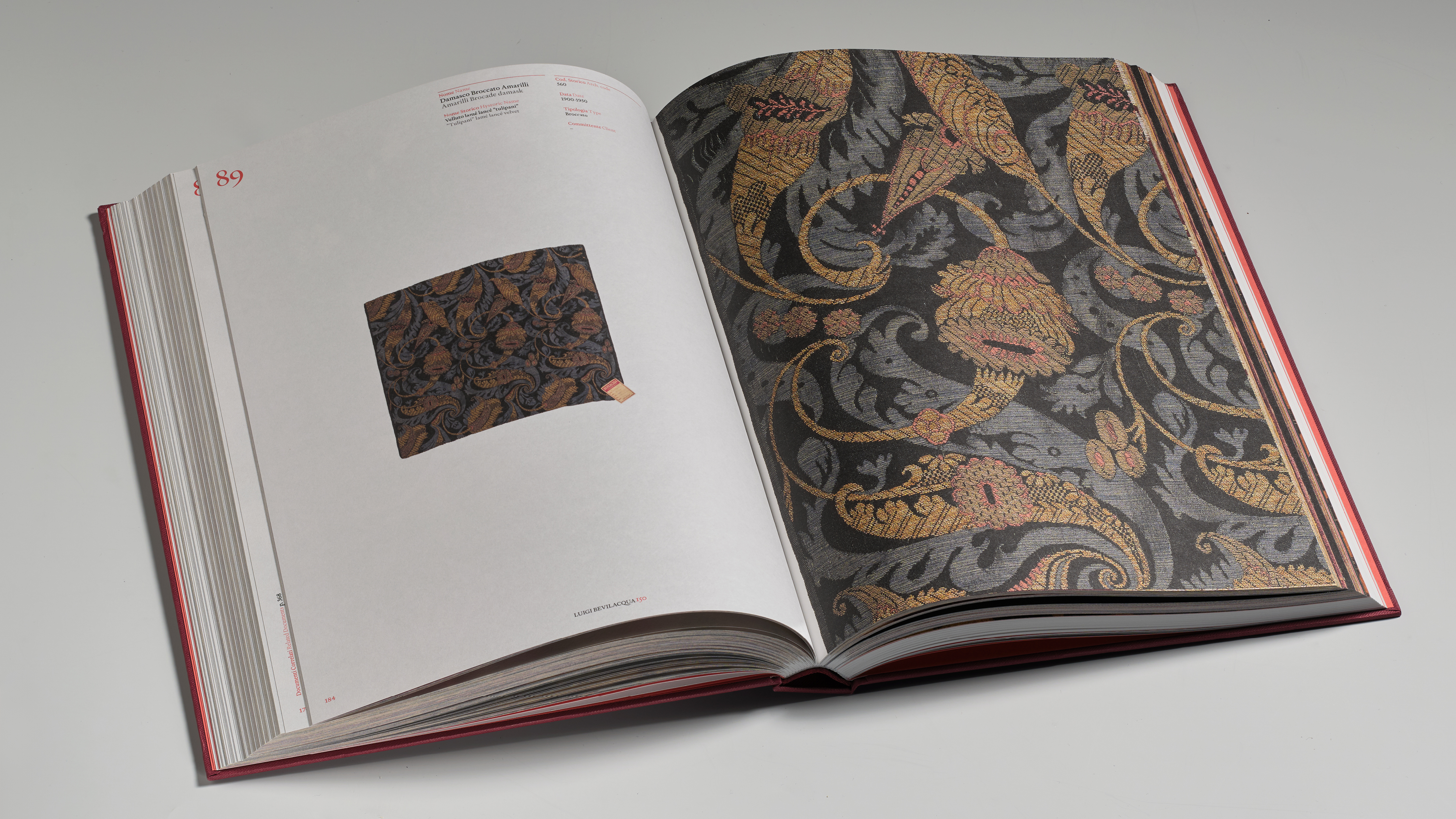
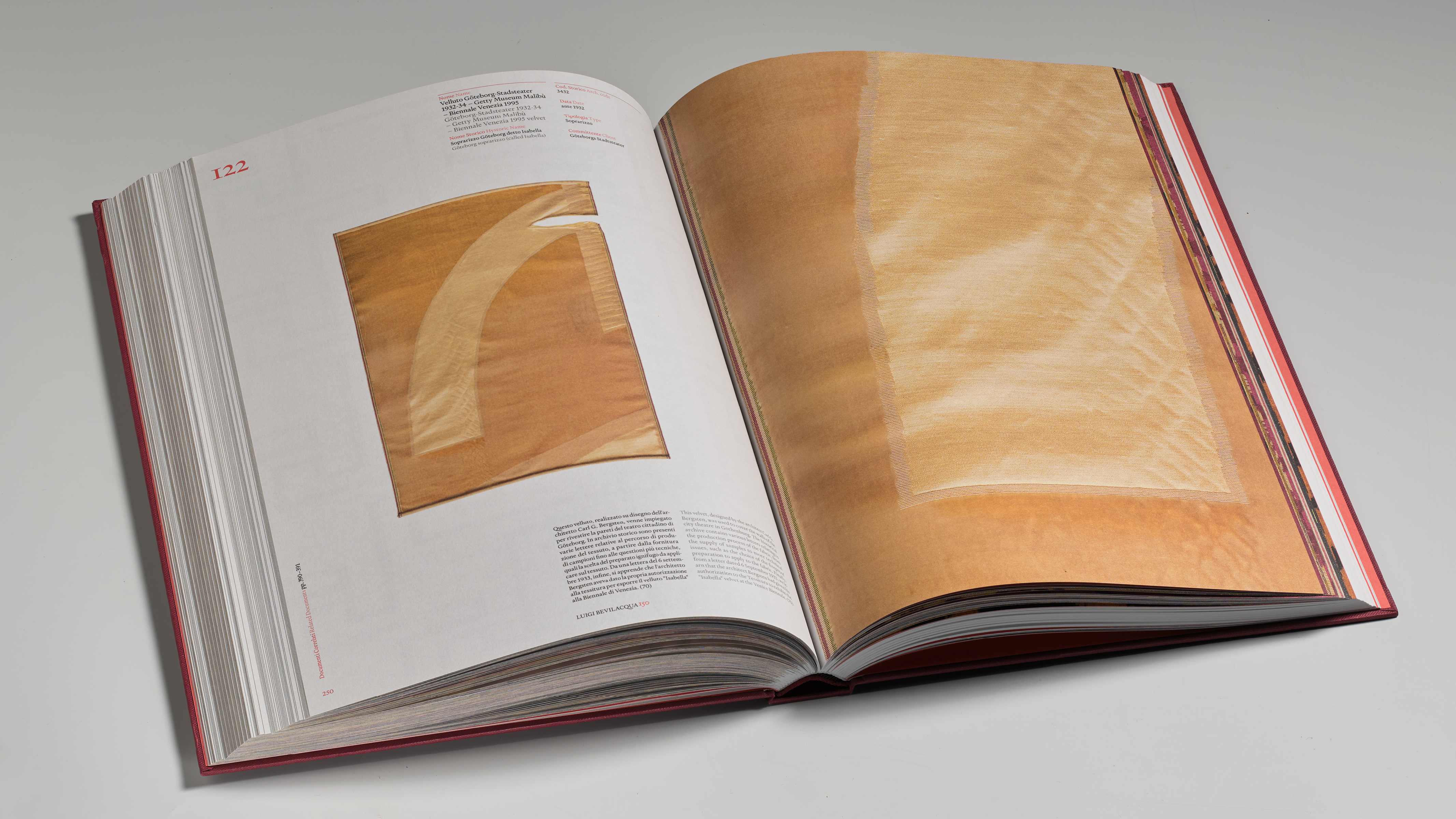
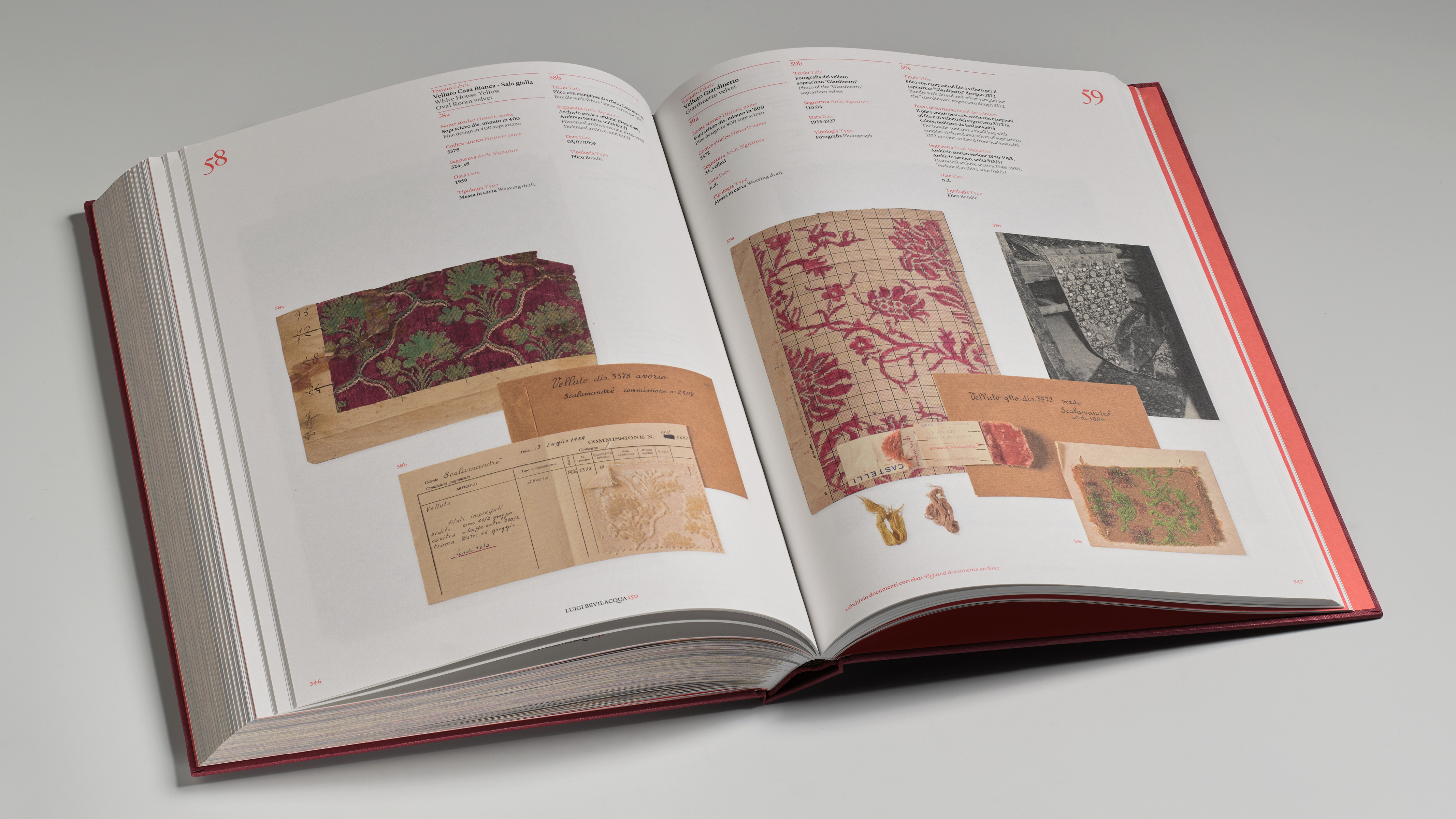
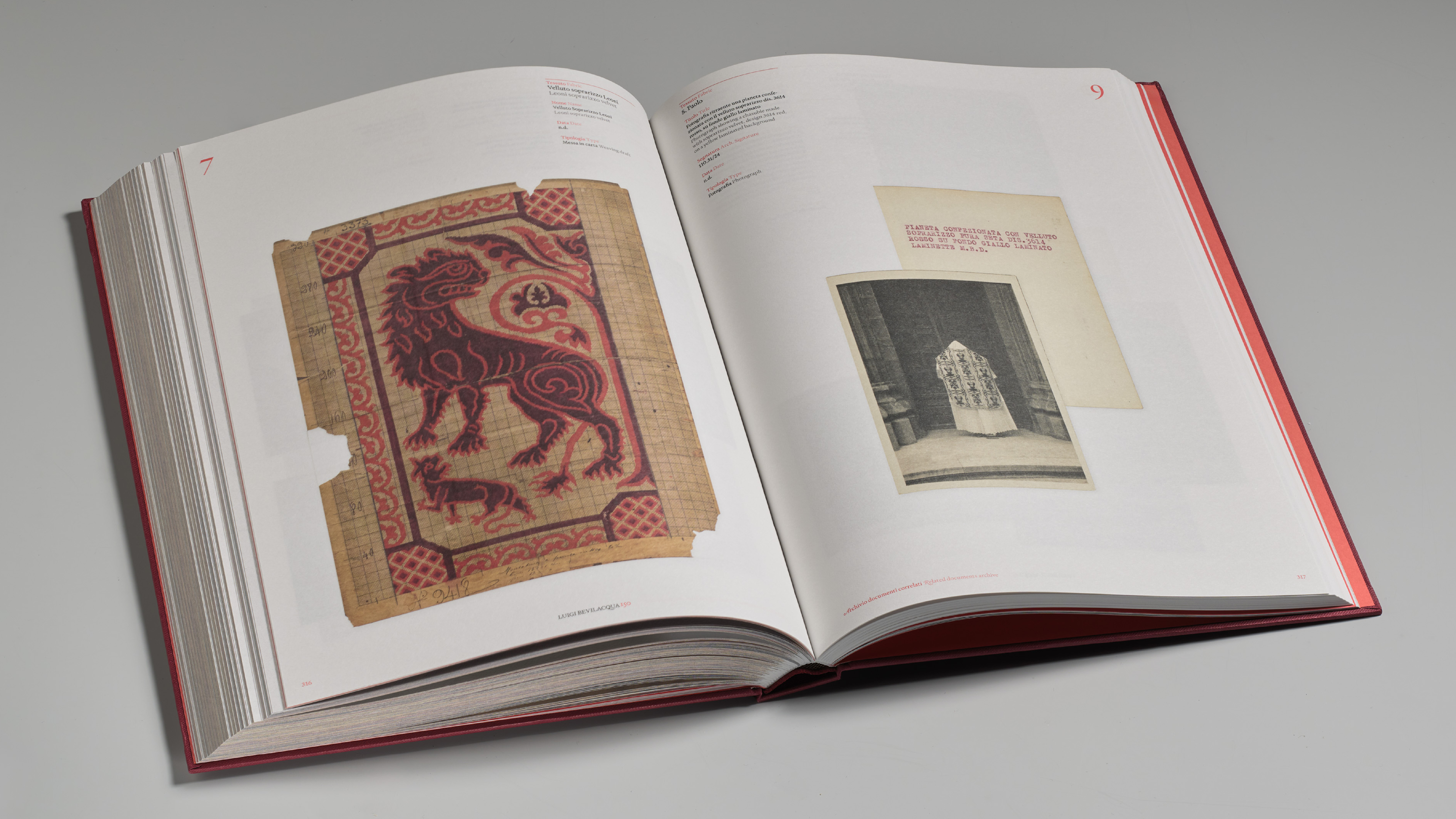
From this in-depth systematization, 150 iconic fabrics were selected, digitized for the first time, and presented in the volume. Each fabric is reproduced in the volume through a full-scale (1:1) portion, to accurately convey its technical refinement and material quality; this is accompanied by an archive file with the complete image at a 1:5 scale. Alongside the works, related documents that emerged during the research are also included: letters, sketches, photographs, and drawings are directly related to the artifacts for the first time, giving rise to 150 stories that, intertwined, offer a broad and organic vision of this ancient Venetian art.
The book is divided into three sections.
The first section contains a selection of 150 fabrics from the historical archive, numbered and arranged with a full-scale representation of the object on the left page and a 1:1 scale detail on the right.
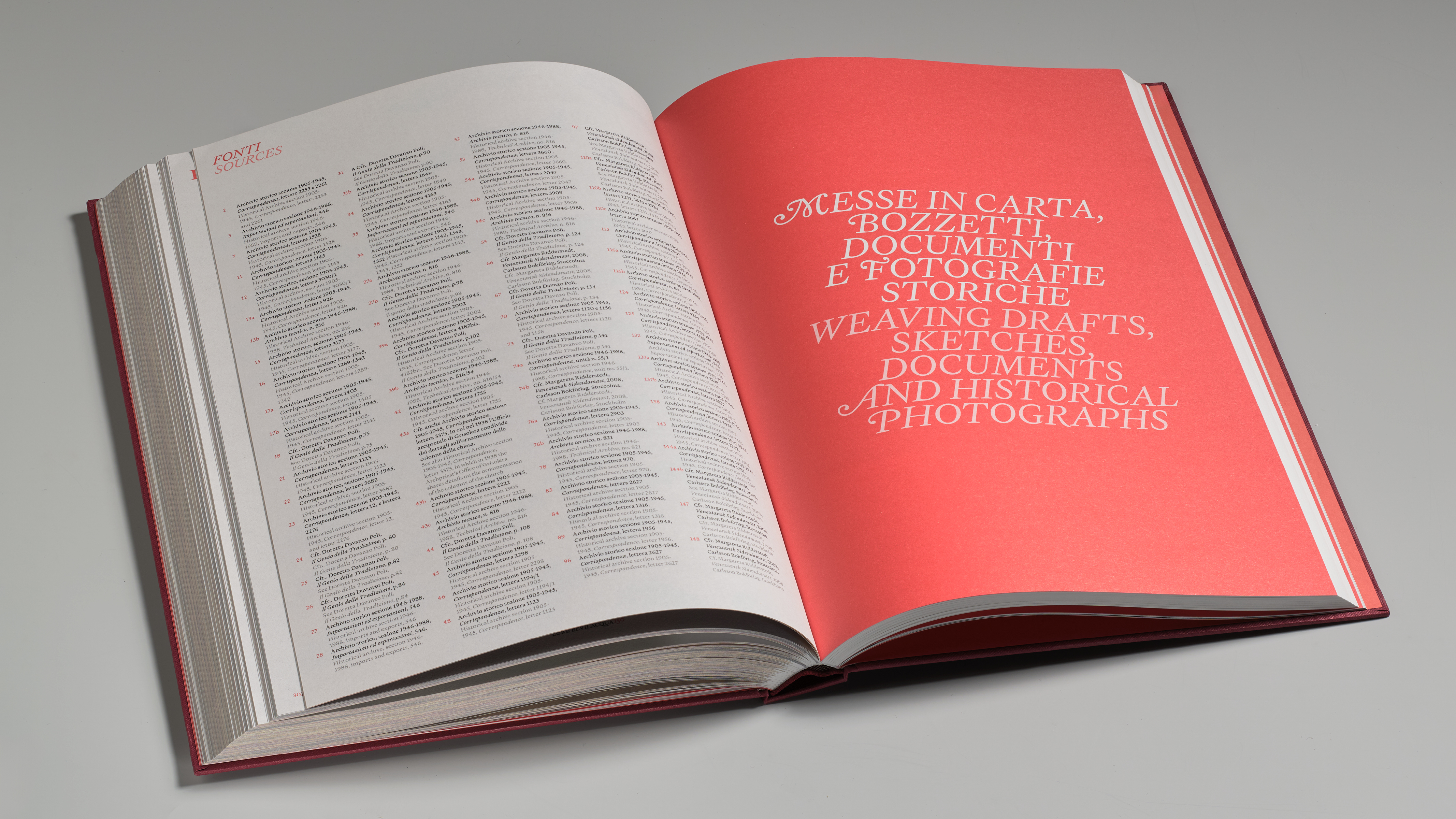
The second section brings together the documentary material related to the fabrics, making the wealth of materials that recount their genesis, development, and historical context accessible to the public.
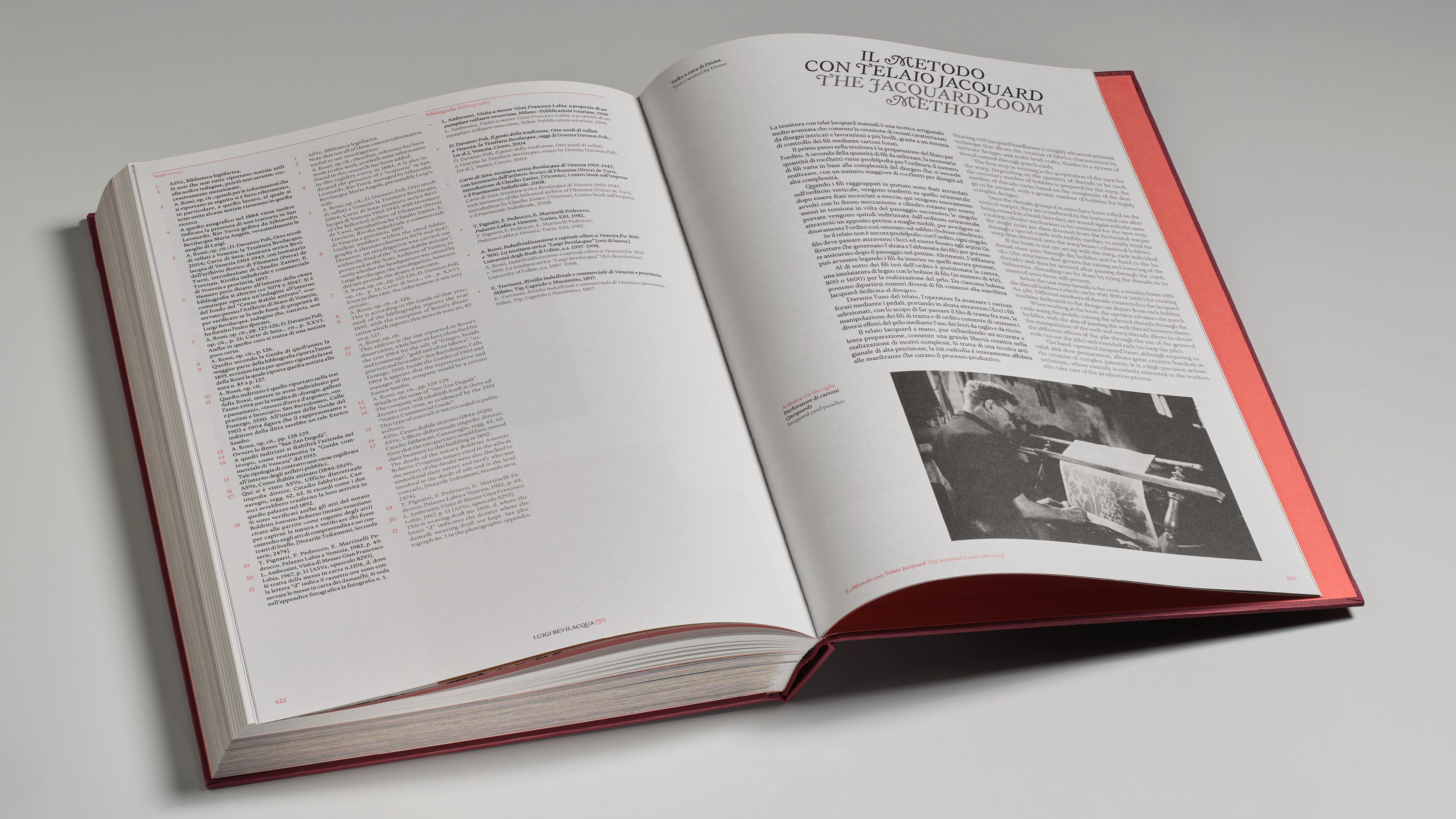
The final section is dedicated to historical research, which traces the origins of Tessitura Luigi Bevilacqua, its weaving method, and its cultural legacy from its founding to the present day, weaving the threads of 150 years of history into a coherent and informed narrative.
Credits